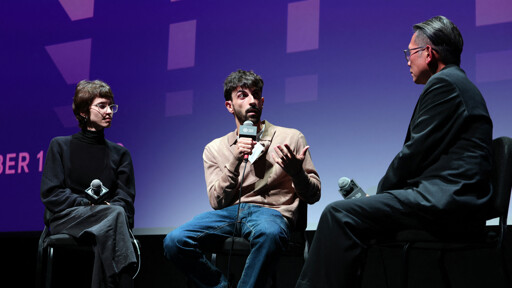
What stayed with me, though, was less a statistic than the tone. These men and women are billed as whistleblowers, but whistleblowing implies conscience. What I heard instead was procedure: targets sketched on notepads, strikes recounted like shift handovers, homes full of families reduced to a ratio. Some had doubts about strategy, or about whether any of it worked, but remorse for the people they killed was almost entirely absent.
Their faces are hidden and their names will never be known. Palestinians and their supporters who have criticised the film for shielding self-confessed war criminals are right to ask what accountability looks like when perpetrators are granted both anonymity and a festival premiere.
Doctors are trained to listen for what patients leave out. What these soldiers leave out is “sorry”.
We never needed them to confess, because the genocide has been recorded on camera, in full, from the beginning, filmed by the people living through it and by those who went in to treat them.
Why does NAZA get the red carpet when Palestinian testimony so rarely does? Part of the answer is uncomfortable, and we should say it plainly.
Western audiences have been trained to treat Palestinian testimony as suspect, and for three years Palestinian doctors and journalists were dismissed as propagandists. The death toll, now more than 74,000, was footnoted as “according to the Hamas-run health ministry” until it could no longer be denied. Palestinian journalists have been killed in record numbers telling this story, and still their reporting was treated as a claim rather than a fact.