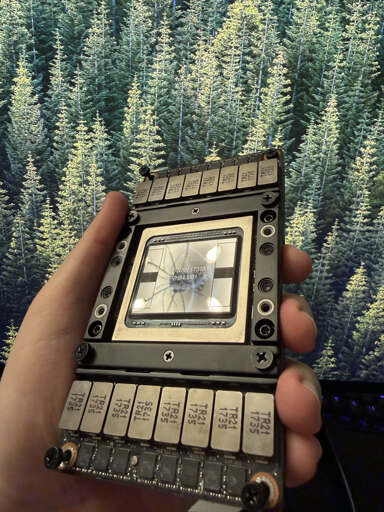
I bought a datacenter GPU that doesn't fit in a normal motherboard, macgyvered the fan with jumper wires, and now I'm running a model that ties with Claude Sonnet 4.6 on benchmarks, all for £200.
You are mistaken. Power consumption is lower because the VRAM is what’s primarily being utilized, not the GPU. Not only that, but GPU & VRAM are used non-stop while gaming, but only intermittently while performing LLM inference. And it’s asynchronous, only processing when replying, while the rest of the time it’s idle, while waiting for the next prompt. Gaming uses a LOT more electricity than local LLM usage.
If you’re going to count the processes that had to occur prior to the current usage, then gaming uses a magnitude more electricity because of all the electricity of the developers who made the game, and the artists, and the sound designers, and the composers, and the compilers, etc.
Let’s just leave it at both use substantial energy, and both are difficult to justify. I still personally love and will use both, as a game developer with a focus on novel AI usage in games.


You are mistaken. Power consumption is lower because the VRAM is what’s primarily being utilized, not the GPU. Not only that, but GPU & VRAM are used non-stop while gaming, but only intermittently while performing LLM inference. And it’s asynchronous, only processing when replying, while the rest of the time it’s idle, while waiting for the next prompt. Gaming uses a LOT more electricity than local LLM usage.
If you’re going to count the processes that had to occur prior to the current usage, then gaming uses a magnitude more electricity because of all the electricity of the developers who made the game, and the artists, and the sound designers, and the composers, and the compilers, etc.
Let’s just leave it at both use substantial energy, and both are difficult to justify. I still personally love and will use both, as a game developer with a focus on novel AI usage in games.