

Referred to by Geely as its 16-in-1 Intelligent E-Drive system, it consolidates a long list of key electric drive hardware into a single unit weighing 165 lbs (75 kg). Tucked inside are the motor, the DC-to-DC converter, the on-board charger, the vehicle control unit, the motor controller, and the high-voltage battery management systems.
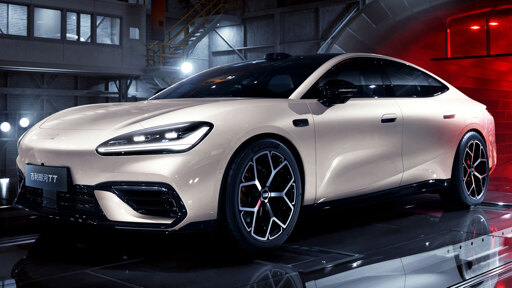
Geely says the Galaxy TT averaged just 8.2 kWh/100 km during an efficiency run around China’s Qinghai Lake, taking a Guinness World Record for the lowest energy consumption on a circumnavigation of the lake by a production battery-electric sedan.
As much sense as measuring efficiency by running at constant speed around a lake.
So long as everyone goes that speed (that is different cars are not measured at a different speed), and the speed is realistic it it good enough. The US measured highway and city fuel efficiency (MPG) - because those are two somewhat realistic but different ways to driving that result in different measures. Nobody gets the measurement, but we all have a good idea how our driving is different and thus it gives us a good clue as to what we will see in the real world if you buy that car.
This is a fixed test, they used a route designed to extend range, not mimic reality. Like Tesla Semi range estimates on routes half downhill.
All loop routes are half downhill.
That gives the absolute maximum which isn’t a bad data point to start with.