

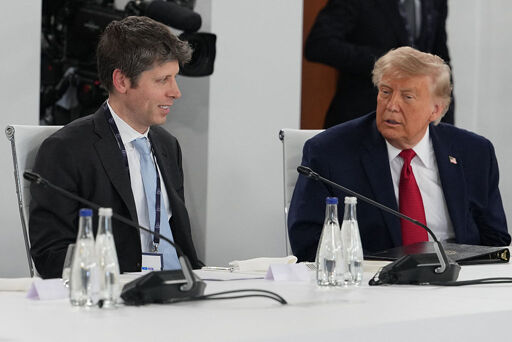
worse still — we aren’t even talking about socialization. What Sanders is talking about is (partial) nationalization. The question we are debating is not “Should the workers take over?” but “Should the government?” It may have escaped the notice of those in that debate, but the current government is not particularly sympathetic to socialist interests. That Donald Trump and Bernie Sanders have both “called for the nationalization of AI firms” is presented by Guastella as a positive thing, as transcending the partisan divide. We think it represents a grave strategic error.
This is particularly crucial precisely because AI is attacking many of the most privileged workers, bringing the logic of mass production to realms that have so far been relatively protected from it. Take, for example, therapists. It’s easy to picture the capitalist AI future for mass-produced therapy: it’s not the rosy picture of full automation, in which a chatbot can provide competent therapy for the masses. The future in which we all have dozens of “agents” working on our behalf (or whatever the current sales pitch may be) will look bleak — like a single therapist overseeing window after window of AI chat interfaces. Client after client is talking to a language model, the trained professional is there to oversee the chats — scanning them for dangers and possible liabilities. The provided care will be of dubious quality — but boy, will it be cheap.
(still guild-related thought pattern (is it proudhonism or whatever it’s called?), but at least approaching humane thought rather than previous drivel (linked at the top of the article)
no mentions of ai weapons systems, of course.
Also this.
I do believe Ha-Joon Chang’s spiel about how the washing machine has been more transformative than the Internet, but when I went to live with quasi-Luddites, they were doing pretty fine with their half-barrel hand-cranked washing machines.
Before 4 years ago, “AI” meant programming, it meant a kind of software design. There’s a huge difference between using just the electricity you need to automate something versus stretching the entire electricity supply to cram everything into something that replaces human interaction and human capability.