Pictures are expensive (data wise), and on-device facial identification is not very accurate, especially at a distance in a variable environment
Cameras inside the vehicle? Those might be worth mining for data. You can easily detect if there’s a person in frame, and snapshot all the passengers. Insurance and law enforcement would be interested in that
Cameras outside? You could search for human faces or license plates and upload them off peak hours… But how much is that information valuable? What percent of the time is a car even driving? Is palantir even set up to ingest that kind of disparate moving data sources?
Flock cameras just yield much more useful data… They’re designed to sit somewhere and capture those pictures. Even if public outcry gets them removed, they’re just going to wait until the public gets bored and then put up less noticeable cameras… We really need to fight this forever
All that being said, I have a car with no cameras and I’d only budge on that if the car reliably could drive itself. I don’t like having cameras pointed at me
not really. you don’t want to keep frames without movement, faces or license plates. then you can throw away most frames from a 60 FPS recording. 2 frames per second is better than nothing for running a portable surveillance station. then you can encode them in some efficient format with acceptable compression, and it’s not that much anymore. massive 5G rollout was explicitly happening for IoT devices, to be able to handle the load.
expensive (data wise), and on-device facial identification is not very accurate
debatable. google picasa had pretty good on-device facial recognition more than a decade ago, on average desktop computer hardware. ente.io runs something similar in their smartphone app today, fully locally. detects faces very well even in memes.
tech that can go into a smartphone can go into any smart car too, and likely does.
But how much is that information valuable?
plenty valuable for “partners” like clearview AI and flock, or if you want to become a competitor in that field.
What percent of the time is a car even driving?
that’s a wrong question. the correct question is what percent of the time is a car outside of the garage. lots of cars are parked on the street all the time while not driving.
Is palantir even set up to ingest that kind of disparate moving data sources?
how the fuck no. It’s less data than what people upload daily to youtube, funded from government money basically.
and then put up less noticeable cameras…
like cameras appearing nowhere any time, like camera cars.
not really. you don’t want to keep frames without movement, faces or license plates. then you can throw away most frames from a 60 FPS recording. 2 frames per second is better than nothing for running a portable surveillance station. then you can encode them in some efficient format with acceptable compression, and it’s not that much anymore. massive 5G rollout was explicitly happening for IoT devices, to be able to handle the load.
Let’s do some order of magnitude math… Let’s say each car on average “sees” 100 things a day (which is very conservative since there’s multiple cameras and with basic object recognition you’re going to have a lot of false duplicates). Let’s say each picture is cropped to a megabyte with compression, which would be pretty low res to grab identifying information from
You can’t do much in the way of video compression, because this isn’t a video - we’re cropping pictures, too much will change frame to frame
So 100MB a day per car, that’s nothing… For one car. How many cars are doing this? 10 million? 50 million?
(Oh, and btw 5G is basically just 4G or 3G outside of Metro areas in the US)
debatable. google picasa had pretty good on-device facial recognition more than a decade ago, on average desktop computer hardware. ente.io runs something similar in their smartphone app today, fully locally. detects faces very well even in memes.
tech that can go into a smartphone can go into any smart car too, and likely does.
It detects faces well, that’s easy enough, and it can generally label the people because you only have so many in the pool of subjects. If you want to identify people in a population? You’re not doing that on a phone. Even the best systems have a big problem with false matches
that’s a wrong question. the correct question is what percent of the time is a car outside of the garage. lots of cars are parked on the street all the time while not driving.
Parking lots are not usually good vantage points… That’s where most cars live
And as for disparate data points… Unless ever auto company is using the same system, it’s going to take non negligible amounts of work to integrate different systems. Palantir is probably going after the lower hanging and more juicy fruit, like Ring doorbells and commercial security systems. Or, you know, phones
That’s what it comes down to. All this for what? I’m not saying they wouldn’t do it, or it couldn’t be done, I’m saying there’s better options that they are already using for surveillance
If they were to do it, you’d pick Tesla - they have the cameras and sell monitoring as a feature. They’re reasonably widespread, so you’ll get almost the same coverage as if all automakers were on board - remember, this is about tracking people and vehicles, if we’re recording them we’re in a whole different ballpark
Or, you know, set up 100k cameras at key intersections and get a more comprehensive system with a lot less moving pieces
to add to the image processing, first gen ryzen desktop CPUs can handle basic object classification on live camera feed. not effortlessly, but they handle it, and performance has only ever improved with time.
Considering that the gen 1 ryzen 3 1200 (the lowest end model) is more than double the performance of the automotive processor in my car from 2023 (3.1ghz quad core vs 2.4ghz dual core)…
But, the car does do some onboard image recognition to support Hands-free driving, so there is enough compute onboard to manage that. However, avoiding objects and following a line is something you can do with a Lego mindstorm from 2000, not exactly super demanding computationally.
I reiterate, I think cars certainly have the hardware to spy on other people and drivers, but the practicality of using them for that purpose is pretty limited in regards to how much useful data you would get, how hard it is to get that data, and how much easier it is to collect better data from other sources.
Considering that the gen 1 ryzen 3 1200 (the lowest end model) is more than double the performance of the automotive processor in my car from 2023 (3.1ghz quad core vs 2.4ghz dual core)…
what architecture is the CPU in the car? my smartphone is no 3 GHz, and it too can handle image recognition.
But, the car does do some onboard image recognition to support Hands-free driving, so there is enough compute onboard to manage that.
possibly hardware accelerated with some specialized hardware. there’s this thing called google coral, it can be connected through PCIe or USB, and can do the heavy lifting for multiple cameras.


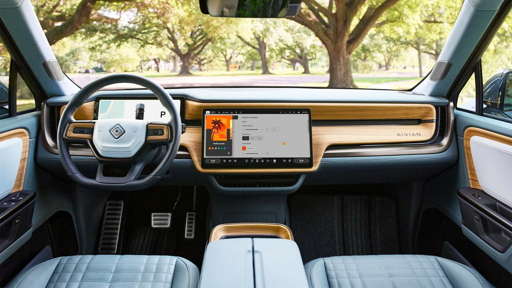
Well, the cars all have modems and quite a lot of processing. They don’t need to send a lot of data anywhere to check if it has seen familiar faces.
Modern cars are literally cameras with wheels.
I will admit that changing the settings on the safety tech changes nothing in this regard.
Pictures are expensive (data wise), and on-device facial identification is not very accurate, especially at a distance in a variable environment
Cameras inside the vehicle? Those might be worth mining for data. You can easily detect if there’s a person in frame, and snapshot all the passengers. Insurance and law enforcement would be interested in that
Cameras outside? You could search for human faces or license plates and upload them off peak hours… But how much is that information valuable? What percent of the time is a car even driving? Is palantir even set up to ingest that kind of disparate moving data sources?
Flock cameras just yield much more useful data… They’re designed to sit somewhere and capture those pictures. Even if public outcry gets them removed, they’re just going to wait until the public gets bored and then put up less noticeable cameras… We really need to fight this forever
All that being said, I have a car with no cameras and I’d only budge on that if the car reliably could drive itself. I don’t like having cameras pointed at me
not really. you don’t want to keep frames without movement, faces or license plates. then you can throw away most frames from a 60 FPS recording. 2 frames per second is better than nothing for running a portable surveillance station. then you can encode them in some efficient format with acceptable compression, and it’s not that much anymore. massive 5G rollout was explicitly happening for IoT devices, to be able to handle the load.
debatable. google picasa had pretty good on-device facial recognition more than a decade ago, on average desktop computer hardware. ente.io runs something similar in their smartphone app today, fully locally. detects faces very well even in memes.
tech that can go into a smartphone can go into any smart car too, and likely does.
plenty valuable for “partners” like clearview AI and flock, or if you want to become a competitor in that field.
that’s a wrong question. the correct question is what percent of the time is a car outside of the garage. lots of cars are parked on the street all the time while not driving.
how the fuck no. It’s less data than what people upload daily to youtube, funded from government money basically.
like cameras appearing nowhere any time, like camera cars.
Let’s do some order of magnitude math… Let’s say each car on average “sees” 100 things a day (which is very conservative since there’s multiple cameras and with basic object recognition you’re going to have a lot of false duplicates). Let’s say each picture is cropped to a megabyte with compression, which would be pretty low res to grab identifying information from
You can’t do much in the way of video compression, because this isn’t a video - we’re cropping pictures, too much will change frame to frame
So 100MB a day per car, that’s nothing… For one car. How many cars are doing this? 10 million? 50 million?
(Oh, and btw 5G is basically just 4G or 3G outside of Metro areas in the US)
It detects faces well, that’s easy enough, and it can generally label the people because you only have so many in the pool of subjects. If you want to identify people in a population? You’re not doing that on a phone. Even the best systems have a big problem with false matches
Parking lots are not usually good vantage points… That’s where most cars live
And as for disparate data points… Unless ever auto company is using the same system, it’s going to take non negligible amounts of work to integrate different systems. Palantir is probably going after the lower hanging and more juicy fruit, like Ring doorbells and commercial security systems. Or, you know, phones
That’s what it comes down to. All this for what? I’m not saying they wouldn’t do it, or it couldn’t be done, I’m saying there’s better options that they are already using for surveillance
If they were to do it, you’d pick Tesla - they have the cameras and sell monitoring as a feature. They’re reasonably widespread, so you’ll get almost the same coverage as if all automakers were on board - remember, this is about tracking people and vehicles, if we’re recording them we’re in a whole different ballpark
Or, you know, set up 100k cameras at key intersections and get a more comprehensive system with a lot less moving pieces
to add to the image processing, first gen ryzen desktop CPUs can handle basic object classification on live camera feed. not effortlessly, but they handle it, and performance has only ever improved with time.
Considering that the gen 1 ryzen 3 1200 (the lowest end model) is more than double the performance of the automotive processor in my car from 2023 (3.1ghz quad core vs 2.4ghz dual core)…
But, the car does do some onboard image recognition to support Hands-free driving, so there is enough compute onboard to manage that. However, avoiding objects and following a line is something you can do with a Lego mindstorm from 2000, not exactly super demanding computationally.
I reiterate, I think cars certainly have the hardware to spy on other people and drivers, but the practicality of using them for that purpose is pretty limited in regards to how much useful data you would get, how hard it is to get that data, and how much easier it is to collect better data from other sources.
what architecture is the CPU in the car? my smartphone is no 3 GHz, and it too can handle image recognition.
possibly hardware accelerated with some specialized hardware. there’s this thing called google coral, it can be connected through PCIe or USB, and can do the heavy lifting for multiple cameras.
Tesla employees have shared the in car camera videos they record just for fun:
https://www.reuters.com/technology/tesla-workers-shared-sensitive-images-recorded-by-customer-cars-2023-04-06/
Luckily, not all cars are made by Tesla.
but too much have internet connected cameras in them