This is a rather common misconception about sensitivity, it is only true under the constraint where you are unable to increase the amplitude of your measurement.
You are always limited by shot noise (counting noise, quantisation noise, Poisson noise, whatever name you give it). And people love to say that you can only beat it by squeezing (increase noise in one quadrature to reduce it in another). But another option is to just increase N, turn up the laser power to have more photons or atoms in your sensor and watch your noise floor drop way faster than you will ever get using squeezing.
Now the cold atom sensors are an interesting case. No one has managed to laser cool atoms faster than an overall rate of around 10^9 atoms per second. And we have been stuck there since the mid 2000s. As a result, the fundamental noise limit from shot noise hampers these cold atom accelerometers significantly in short term sensitivity, as they just don’t have enough N of atoms in free fall. In this case, you might look to squeeze to get a better signal, but that’s a lot of complexity for not much gain.
There are only 2 examples I know of where squeezing has made a difference to a real world measurement. LIGO, can’t increase photons without thermally heating the mirrors too much, and confocal microscopes looking at biological samples, cant turn up the laser power without burning the tissue. In 99% of cases, just increase N to make a better sensor.
This is a rather common misconception about sensitivity, it is only true under the constraint where you are unable to increase the amplitude of your measurement.
Aren’t there plenty of situations where you can’t increase the amplitude of your measurement? Isn’t that why we use SQUIDS for high sensitivity magnetic measurements for example?
Quadrature squeezing is great, but I don’t think it’s the only way (or main way?) quantum sensors compete with classical sensors.


This is a rather common misconception about sensitivity, it is only true under the constraint where you are unable to increase the amplitude of your measurement.
You are always limited by shot noise (counting noise, quantisation noise, Poisson noise, whatever name you give it). And people love to say that you can only beat it by squeezing (increase noise in one quadrature to reduce it in another). But another option is to just increase N, turn up the laser power to have more photons or atoms in your sensor and watch your noise floor drop way faster than you will ever get using squeezing.
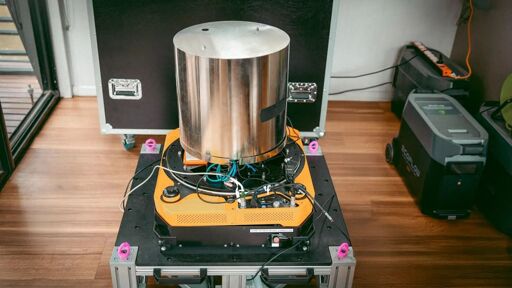
Now the cold atom sensors are an interesting case. No one has managed to laser cool atoms faster than an overall rate of around 10^9 atoms per second. And we have been stuck there since the mid 2000s. As a result, the fundamental noise limit from shot noise hampers these cold atom accelerometers significantly in short term sensitivity, as they just don’t have enough N of atoms in free fall. In this case, you might look to squeeze to get a better signal, but that’s a lot of complexity for not much gain.
There are only 2 examples I know of where squeezing has made a difference to a real world measurement. LIGO, can’t increase photons without thermally heating the mirrors too much, and confocal microscopes looking at biological samples, cant turn up the laser power without burning the tissue. In 99% of cases, just increase N to make a better sensor.
Aren’t there plenty of situations where you can’t increase the amplitude of your measurement? Isn’t that why we use SQUIDS for high sensitivity magnetic measurements for example?
Quadrature squeezing is great, but I don’t think it’s the only way (or main way?) quantum sensors compete with classical sensors.