Never been a fan of the “we shouldn’t make the smaller, easier improvements because we need to do the bigger, harder things instead” argument…
Yes, we need more and better public transit, but that is going to take a whole lot of time, money, and effort to work towards. Yes, it’s worthwhile, and we shouldn’t STOP working towards it because of this, but I don’t think that’s a reason to balk at a smaller, easier incremental change that encourages safer driving while also simply being more efficient.
Nothing that involves the phrase “more cars” is more efficient. Cars are massively inefficient monuments to toxic individualism and ecocidal narcissism.
Nobody is forcing cities and counties to only build for the carbrained, they do that on their own. If they’d make driving less convenient and transit more convenient, the number of cars would decrease significantly.
If they’d make driving less convenient and transit more convenient, the number of cars would decrease significantly.
Of course you’re talking about billions of dollars in construction projects, is it you in the construction industry, or a family member? It took 100 years of infrastructure build to get here, it’s going to take quite a few to change course.
For public transportation in the US you need medium density living. So you’re talking about getting everyone on board and uprooting everyone as you upgrade cities or build new cities for that.
“Anything except making incremental improvements that are practical instead of doing nothing because the preferred goal is impossible, at least practically impossible” - not as catchy, I admit :P
I’d argue the even bigger deal is mixed zoning. You can even be in a fairly spread out, small town, if you can just walk to the local grocery store, hardware store, etc, that’s even better than needing to transit.
I rarely leave my neighborhood even in a very transit heavy city because I’ve got 3 grocery stores, a green grocer, two bakeries, a hardware store, etc, all within ~5 minutes walk. Both my kids’ schools, a pre-K-K and an elementary, are within a block or two.
A lot of this can be accomplished by simply rezoning and letting the infill slowly change.
Big box grocery is a big part of the problem. We’ve got a relative abundance of grocery stores here - in US terms, but that means a 2-5 mile interval between then, and who is going to walk several miles carrying groceries? It doesn’t help when competing groceries open directly across the street from each other, but even fixing that and making distribution of the current stores more even, there would still be a lot of the population 2+ miles to the nearest store, in our relatively high density suburban “core”. Get that down to a maximum of 1km from every home to the nearest grocery and you’re starting to have a walkable / bikeable solution for food.
As for bikes, we also have near-zero practical support for biking to get your groceries - starting to get something calling itself bike lanes, but they’re not terribly safe looking, and then you get to the store and you’re extremely lucky if there’s even a rack provided to lock the bike to - the racks that do exist seem to be in direct conflict with pedestrian use of the sidewalks.
That is very true and it’s wild how fast it changed. I remember still having small grocery stores in the 90’s, but they’ve all closed down now. A few still exist as discount stores, but they aren’t true full service grocery stores, mostly frozen stuff and junk food. It definitely exacerbated the “food desert” problem a lot of the US has… a lot of folks with limited mobility only have access to these shitty faux-grocery stores, it’s kind of no wonder so many people eat like shit.
I’m not in the US anymore but that big box transformation was well and truly completed by the time I left.
I had a friend who had an apartment in Hamburg, roughly 600m from an S-Bahn station. within 50m of that station was the neighborhood grocery. You walk up to take the train to wherever, and on your way home you stop off in the Biergarten first, have a few, then stop in the grocery before walking home - downhill no less for the arms full of packages side of the trip. Not a bad layout, but about half the residents still had cars parked all over the streets which they used more or less daily. So, in some ways, the US arrangement just doesn’t bother with the under-utilized trains, but it also eliminates them as an option which really sucks when you want to go to the airport, or take an inter-city train somewhere…
I agree - I should have said medium mixed zoning as that’s what I was intending to convery :)
Also, for wheelchair users like me, higher density would probably lead to cheaper delivery services of all kinds - Walmart has that market cornered at the moment, and I hate that it’s Walmart that figured it out. :|
Do you want traffic lights to only turn every 5-10 minutes? Lights were always going to be changing more than transit was arriving, if altering how it changes slows speeding drivers why wouldn’t you want that?
I don’t want traffic lights. If you design your cities properly (with no personal cars) traffic lights are not needed at all. Outside cities traffic lights don’t make sense anyways, intersections there are better off as roundabouts.
Sounds great, but I don’t live there and do have to deal with drivers and traffic lights, and I would like to implement whatever measures will slow them down. If the first and easiest is altering traffic light patterns, cool, do it. I’m supposed to not want this?
It depends on whether this is about retiming existing lights (which is relatively cheap) or building new ones. Retiming existing lights is fine, building new ones just shows that engineers don’t care about the problem and would rather waste millions of $ on a non-solution.


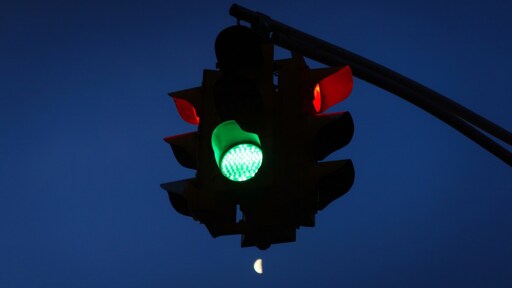
Anything except public transportation
Never been a fan of the “we shouldn’t make the smaller, easier improvements because we need to do the bigger, harder things instead” argument…
Yes, we need more and better public transit, but that is going to take a whole lot of time, money, and effort to work towards. Yes, it’s worthwhile, and we shouldn’t STOP working towards it because of this, but I don’t think that’s a reason to balk at a smaller, easier incremental change that encourages safer driving while also simply being more efficient.
More efficient is more cars per hour. When cars move faster, you can get more cars per hour through those intersections when the lights are green.
Nothing that involves the phrase “more cars” is more efficient. Cars are massively inefficient monuments to toxic individualism and ecocidal narcissism.
More cars per hour is less cars stuck in traffic on the roads… the number of cars is a given, getting them off the road ASAP is the goal.
No the number of cars is a policy choice.
Nobody is forcing cities and counties to only build for the carbrained, they do that on their own. If they’d make driving less convenient and transit more convenient, the number of cars would decrease significantly.
Of course you’re talking about billions of dollars in construction projects, is it you in the construction industry, or a family member? It took 100 years of infrastructure build to get here, it’s going to take quite a few to change course.
For public transportation in the US you need medium density living. So you’re talking about getting everyone on board and uprooting everyone as you upgrade cities or build new cities for that.
“Anything except making incremental improvements that are practical instead of doing nothing because the preferred goal is impossible, at least practically impossible” - not as catchy, I admit :P
I’d argue the even bigger deal is mixed zoning. You can even be in a fairly spread out, small town, if you can just walk to the local grocery store, hardware store, etc, that’s even better than needing to transit.
I rarely leave my neighborhood even in a very transit heavy city because I’ve got 3 grocery stores, a green grocer, two bakeries, a hardware store, etc, all within ~5 minutes walk. Both my kids’ schools, a pre-K-K and an elementary, are within a block or two.
A lot of this can be accomplished by simply rezoning and letting the infill slowly change.
Big box grocery is a big part of the problem. We’ve got a relative abundance of grocery stores here - in US terms, but that means a 2-5 mile interval between then, and who is going to walk several miles carrying groceries? It doesn’t help when competing groceries open directly across the street from each other, but even fixing that and making distribution of the current stores more even, there would still be a lot of the population 2+ miles to the nearest store, in our relatively high density suburban “core”. Get that down to a maximum of 1km from every home to the nearest grocery and you’re starting to have a walkable / bikeable solution for food.
As for bikes, we also have near-zero practical support for biking to get your groceries - starting to get something calling itself bike lanes, but they’re not terribly safe looking, and then you get to the store and you’re extremely lucky if there’s even a rack provided to lock the bike to - the racks that do exist seem to be in direct conflict with pedestrian use of the sidewalks.
That is very true and it’s wild how fast it changed. I remember still having small grocery stores in the 90’s, but they’ve all closed down now. A few still exist as discount stores, but they aren’t true full service grocery stores, mostly frozen stuff and junk food. It definitely exacerbated the “food desert” problem a lot of the US has… a lot of folks with limited mobility only have access to these shitty faux-grocery stores, it’s kind of no wonder so many people eat like shit.
I’m not in the US anymore but that big box transformation was well and truly completed by the time I left.
I had a friend who had an apartment in Hamburg, roughly 600m from an S-Bahn station. within 50m of that station was the neighborhood grocery. You walk up to take the train to wherever, and on your way home you stop off in the Biergarten first, have a few, then stop in the grocery before walking home - downhill no less for the arms full of packages side of the trip. Not a bad layout, but about half the residents still had cars parked all over the streets which they used more or less daily. So, in some ways, the US arrangement just doesn’t bother with the under-utilized trains, but it also eliminates them as an option which really sucks when you want to go to the airport, or take an inter-city train somewhere…
I agree - I should have said medium mixed zoning as that’s what I was intending to convery :)
Also, for wheelchair users like me, higher density would probably lead to cheaper delivery services of all kinds - Walmart has that market cornered at the moment, and I hate that it’s Walmart that figured it out. :|
Do you want traffic lights to only turn every 5-10 minutes? Lights were always going to be changing more than transit was arriving, if altering how it changes slows speeding drivers why wouldn’t you want that?
I don’t want traffic lights. If you design your cities properly (with no personal cars) traffic lights are not needed at all. Outside cities traffic lights don’t make sense anyways, intersections there are better off as roundabouts.
Sounds great, but I don’t live there and do have to deal with drivers and traffic lights, and I would like to implement whatever measures will slow them down. If the first and easiest is altering traffic light patterns, cool, do it. I’m supposed to not want this?
Spike strips?
It depends on whether this is about retiming existing lights (which is relatively cheap) or building new ones. Retiming existing lights is fine, building new ones just shows that engineers don’t care about the problem and would rather waste millions of $ on a non-solution.
I don’t see anything in the article about building more lights, just altering the timing so that the default light state is red instead of green.