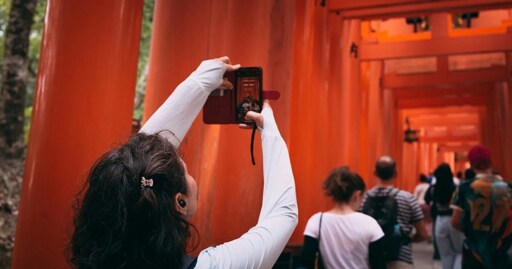
Ya I get that but they are treated like tourism spots. Mosques and churches where a bad example. Here’s a passage (the last bit was in bold in the article) and pic from the link. It just seems like the shrine itself doesn’t really treat it with reverence so dumb tourist behavior is kind of to be expected.
I get it but we also live in a society where people will sometimes dance at locations they perceive as public enough. I find it annoying no matter the location but it doesn’t seem like a big deal either.
Many of Japan’s religious sites do not have or cultivate a heavily solemn atmosphere. The streets leading to major shrines and temples are often lined with restaurants and souvenir shops, and a mood of levity isn’t seen, in and of itself, as sinful or inappropriate, even on shrine/temple grounds. The sprawling layout of sites such as Fushimi Inari can also contribute to a casual atmosphere, as moving about the spaces between structures can feel like a walk in the woods or stroll in a garden. As such, while shrines and temples are religious sites, they might not necessarily feel like “sacred ground,” in that they don’t impose the same sets of strict regulations and restrictions that term might imply in other cultures. However, just because visitors aren’t expected to be somber at Japan’s shrines and temples doesn’t mean it’s OK for them to be flippant.
It just seems like the shrine itself doesn’t really treat it with reverence so dumb tourist behavior is kind of to be expected.
That’s certainly not what I took away from the bit you quoted. I read it more as “Since acceptable attitudes aren’t limited to the super solemn, dour ones common in Western churches and holy sites, you can understand somewhat how foreigners might not understand where exactly the limit is in acceptable behavior, but this is definitely past it, so don’t do it.”
Your very statement about them not treating the site with reverence reveals the crux of your misunderstanding. You keep considering this situation with your norms, by which the shrine’s staff fall short of their duties, ergo they’re not being reverent. The whole point of the article is that, while standards for behavior and attitude at holy sites in Japan do permit a wider range of expressions than is common in the West, it doesn’t mean you have carte blanche to act as you please, and while Japanese people will overlook gaffs relating to the finer points of their etiquette, this is too grave a faux pas and risks significant consequences as concerns Japan’s attitude towards foreign tourists in the future.


Sharing your culture also means to let people access sacred places to some extent. Think about famous Mosques in Istanbul for example.
Ya I get that but they are treated like tourism spots. Mosques and churches where a bad example. Here’s a passage (the last bit was in bold in the article) and pic from the link. It just seems like the shrine itself doesn’t really treat it with reverence so dumb tourist behavior is kind of to be expected.
I get it but we also live in a society where people will sometimes dance at locations they perceive as public enough. I find it annoying no matter the location but it doesn’t seem like a big deal either.
That’s certainly not what I took away from the bit you quoted. I read it more as “Since acceptable attitudes aren’t limited to the super solemn, dour ones common in Western churches and holy sites, you can understand somewhat how foreigners might not understand where exactly the limit is in acceptable behavior, but this is definitely past it, so don’t do it.”
Your very statement about them not treating the site with reverence reveals the crux of your misunderstanding. You keep considering this situation with your norms, by which the shrine’s staff fall short of their duties, ergo they’re not being reverent. The whole point of the article is that, while standards for behavior and attitude at holy sites in Japan do permit a wider range of expressions than is common in the West, it doesn’t mean you have carte blanche to act as you please, and while Japanese people will overlook gaffs relating to the finer points of their etiquette, this is too grave a faux pas and risks significant consequences as concerns Japan’s attitude towards foreign tourists in the future.