They’re basically a compliance car from a couple reviews I’ve seen
Obviously it depends on the market but in Canada, this was true between 2021 and 2025; in 2026 most of these BEVs received a substantial revamp and are now pretty competitive in terms of specs with other BEVs. For example, the first bZ had a terrible range of 290 Km in 2021 (dead last for its category in the market). Since 2026, that range is now 400 or 468 depending on the trim, not top of class but very competitive
There’s a group of customers who won’t buy anything but Toyota or at a stretch Honda because of the reliability reputation, which in turn damages EV adoption
I have only had 1 Toyota of my own, driven it for 9 years until I got rear ended and insurance wrote it off. EVERYTHING worked on that car just as well as it did the day I bought it (full disclosure, I was spot on with its maintenance but other than that, it was just a great car)
I would agree that between 2015 and 2021 or so, if you had to buy a car and would not look past Toyota you’d wind up with a Hybrid not an EV because how Toyota was betting on Hydrogen but today they have 14 Hybrid models (basically the entire line is now available hybrid), 2 Plug in Hybrids and 3 more BEV.
I think Toyota needs a leadership change before they take BEV seriously, but at least there’s an entry point for those customers.
I would have agreed to this statement 5 years ago, but I don’t think it applies today. Many other brands are now behind Toyota, even on this, again. And the cherry on top (for me at least) is that Toyota’s hybrid tech is pretty mature and goes very easily into their BEV line now
I agree with everything you’re saying, including how you believe Toyota has changed its corporate attitude towards BEVs between 2021 and 2026.
The most important sign that Toyota is serious about BEVs, though, is that they’re releasing a BEV Lexus ES (the top selling Lexus model), selling the all-electric version for cheaper than the hybrid, and manufacturing it in China for the Chinese market.
That, to me, shows a level of commitment that is surprising, coming out of the same company that was doing things completely differently a few years ago.
And in the end, they have manufactured many millions of cars with hybrid drivetrains, with batteries, motors, regenerative braking, etc., so they have the engineering know-how and the supply chains to be able to manufacture all parts of an EV, and are better positioned than most traditional automakers at switching to electric.
Toyota has changed its corporate attitude towards BEVs between 2021 and 2026.
Why: because Toyota is a company not supported by a religious cult, they need to make profit to survive. While the internet manbuns and sandals crowd is telling us we need to make EVs…very few bought EVs in 2021. Given poor charging infrastructure in the US and overnight charging impossible for apartment dwellers, hybrids made much more sense. And they sold hundreds of thousands.
You wanna go broke fast? Listen to the internet about how to make cars.
Millions, actually. Toyota North America sales in 2025 showed that 47% of the 2.5 million vehicles sold had some kind of electrification. Add up prior years, plus whatever they’ve sold in the first 9 months of 2026, and it’s pretty obvious they’ve sold several million electrified vehicles in North America alone.
Toyota hybrids use no belts. The CV transmissions use no belts, they use magnetic couplers, nothing wears. Decades ahead of anyone. They had hybrids in 1997, 12 years before F1.
Ironically, hybrid concept was created and patented in Detroit in 1965, but the patent died without making a dollar because no one in Detroit cared about efficiency.


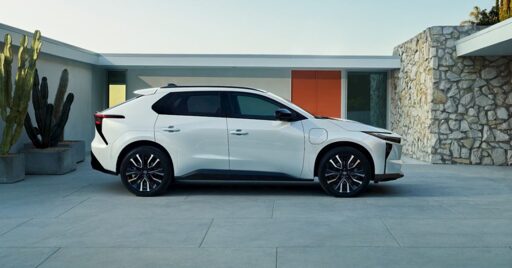
Obviously it depends on the market but in Canada, this was true between 2021 and 2025; in 2026 most of these BEVs received a substantial revamp and are now pretty competitive in terms of specs with other BEVs. For example, the first bZ had a terrible range of 290 Km in 2021 (dead last for its category in the market). Since 2026, that range is now 400 or 468 depending on the trim, not top of class but very competitive
I have only had 1 Toyota of my own, driven it for 9 years until I got rear ended and insurance wrote it off. EVERYTHING worked on that car just as well as it did the day I bought it (full disclosure, I was spot on with its maintenance but other than that, it was just a great car)
I would agree that between 2015 and 2021 or so, if you had to buy a car and would not look past Toyota you’d wind up with a Hybrid not an EV because how Toyota was betting on Hydrogen but today they have 14 Hybrid models (basically the entire line is now available hybrid), 2 Plug in Hybrids and 3 more BEV.
I would have agreed to this statement 5 years ago, but I don’t think it applies today. Many other brands are now behind Toyota, even on this, again. And the cherry on top (for me at least) is that Toyota’s hybrid tech is pretty mature and goes very easily into their BEV line now
I agree with everything you’re saying, including how you believe Toyota has changed its corporate attitude towards BEVs between 2021 and 2026.
The most important sign that Toyota is serious about BEVs, though, is that they’re releasing a BEV Lexus ES (the top selling Lexus model), selling the all-electric version for cheaper than the hybrid, and manufacturing it in China for the Chinese market.
That, to me, shows a level of commitment that is surprising, coming out of the same company that was doing things completely differently a few years ago.
And in the end, they have manufactured many millions of cars with hybrid drivetrains, with batteries, motors, regenerative braking, etc., so they have the engineering know-how and the supply chains to be able to manufacture all parts of an EV, and are better positioned than most traditional automakers at switching to electric.
Why: because Toyota is a company not supported by a religious cult, they need to make profit to survive. While the internet manbuns and sandals crowd is telling us we need to make EVs…very few bought EVs in 2021. Given poor charging infrastructure in the US and overnight charging impossible for apartment dwellers, hybrids made much more sense. And they sold hundreds of thousands.
You wanna go broke fast? Listen to the internet about how to make cars.
Millions, actually. Toyota North America sales in 2025 showed that 47% of the 2.5 million vehicles sold had some kind of electrification. Add up prior years, plus whatever they’ve sold in the first 9 months of 2026, and it’s pretty obvious they’ve sold several million electrified vehicles in North America alone.
Toyotas hybrid tech is so good that Ford licenses it because they couldn’t make something even close to as good.
Toyota hybrids use no belts. The CV transmissions use no belts, they use magnetic couplers, nothing wears. Decades ahead of anyone. They had hybrids in 1997, 12 years before F1.
Ironically, hybrid concept was created and patented in Detroit in 1965, but the patent died without making a dollar because no one in Detroit cared about efficiency.