The problem is that businesses are now going to lift their prices and they are going to lift at more than the small percentage that the credit card companies were charging and that they were passing on.
I work in software and we’ve been dealing with this with our customers for months leading up to it and in our tests not one of them was rising the prices the same amount as their credit card surcharge.
Watching, you will see a credit card surcharge of say 1.2%, but in the end they are rising their prices 2.5 to 3%.
They round up when they rise their price and they don’t just round up in cents, they round up in dollars.
So, unfortunately, Albanese did not just save the country billions. He just raised inflation considerably. Watch your mortgage go up and watch the rents rise.
I mostly agree, but it would be way better if we provided an at cost-service.
This is infrastructure we’re allowing private companies to extract profit from.
Until we have such a at-cost service, I’m of the opinion we should pass on 100% of the card fee, as determined by the card issuer (not the terminal), incentivising people to ditch rewards and BNPL cards.
Square charging businesses a flat rate would have to be undone for this to work.
I mean the RBA cut the credit card cap here from 0.8% to 0.3%. EFTPOS is down to 0.16% I’m pretty sure this places us near the lowest card fees in the world now.
Last I checked, the cost of cash handling here was over 1% of a transaction.
My reading of it is that it does. How it is enforced I don’t know. I assume the business would need to report someone for over charging them in transaction fees given that we don’t see what the fee is.
To be entirely fair (and I say this as someone who uses cash 95% of the time) cash also has processing costs, not sure what the fees were in oz but I have a inkling they were likely taking the mick with it.
I think it is reasonable for there to be a requirement for a reasonable fee-free way to get that price (and even an electronic way).
But saying that a merchant’s options are to not accept a payment method, or to accept it and pass the fees on to all consumers, is effectively playing into the hands of the big American card networks, and is not a pro-consumer action long term at all.
What happens then is:
Networks incentivise people to pay using their cards, e.g. by providing small kickbacks.
Networks start raising the rates on merchants. Merchants pass on the costs to consumers. Consumers who get the kickbacks get a cheaper effective price than cash-paying consumers, but more of the rates go to the network. So cash paying consumers are significantly worse off than if the fee could be passed on, card paying consumers are a bit worse off, and the networks are profiting from it.
Merchants can’t stop offering the ability to pay by the network’s card at this point without losing a lot of business.
Other networks cannot enter the market (and even get pushed out) by competing on price because then they can’t offer the kickbacks. Consumers of the new cheaper method would still be cross-subsidising the fees of the other cards, while not getting the kickback.
Card networks gain power from this duopoly, and use that to decide what types of business are allowed and what is banned or censored, essentially setting the de facto laws of commerce with no democratic input.
This whole thing is one of the late stage capitalism anti-public dynamic that America has (alongside things like the American way of doing tipping) that we should be fighting tooth and nail against. The RBA and Labor should never have allowed this.
What does this even mean? Money handling has been a cost in currency based society since forever. Long before credit cards, business baked their cash processing costs into their goods and services.
Also, read the article. They are 100% allowed to offer a discount for cash payments. Hell they are allowed to offer a discount for electronic payments and charge full rate for cash. Paying less than the sticker price has never been an issue.
No hidden taxes tips or fees. It’s a core tenant of Australia, I should never pay more than the sticker price for an item or service.
Lastly, everything I have read indicates that the card rewards systems are suffering and getting worse as a result of this change. But I doubt they will ever die fully (unfortunately).

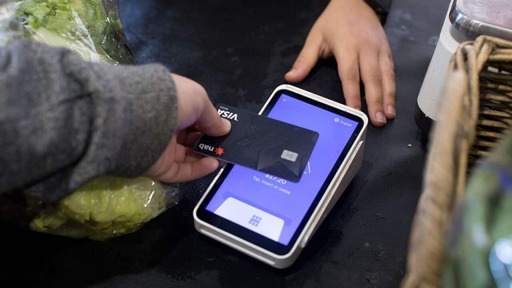
“When card surcharging ends, the sticker price will be the price that consumers end up paying,”
So keen for this. The number on the sticker should never be larger than the amount I pay. It’s that simple.
I genuinely cannot understand the issue and the dismissive attitude some people seem to have about this concept.
The problem is that businesses are now going to lift their prices and they are going to lift at more than the small percentage that the credit card companies were charging and that they were passing on.
I work in software and we’ve been dealing with this with our customers for months leading up to it and in our tests not one of them was rising the prices the same amount as their credit card surcharge.
Watching, you will see a credit card surcharge of say 1.2%, but in the end they are rising their prices 2.5 to 3%.
They round up when they rise their price and they don’t just round up in cents, they round up in dollars.
So, unfortunately, Albanese did not just save the country billions. He just raised inflation considerably. Watch your mortgage go up and watch the rents rise.
I mostly agree, but it would be way better if we provided an at cost-service.
This is infrastructure we’re allowing private companies to extract profit from.
Until we have such a at-cost service, I’m of the opinion we should pass on 100% of the card fee, as determined by the card issuer (not the terminal), incentivising people to ditch rewards and BNPL cards.
Square charging businesses a flat rate would have to be undone for this to work.
I mean the RBA cut the credit card cap here from 0.8% to 0.3%. EFTPOS is down to 0.16% I’m pretty sure this places us near the lowest card fees in the world now.
Last I checked, the cost of cash handling here was over 1% of a transaction.
Does that apply to the payment provider (the services that provide the terminals, etc?)
Or are we just relying on the “free market”, which failed until this intervention, to re-price their services now that card fees are lower?
Genuinely curious as I couldn’t find the info
My reading of it is that it does. How it is enforced I don’t know. I assume the business would need to report someone for over charging them in transaction fees given that we don’t see what the fee is.
You’re forcing people paying cash to subsidize your service fees. They did not get rid of the fees, they just rolled them into the prices.
No, people paying by card are subsidising the cash users. The cost of handling cash is an order of magnitude greater than the debit card fees.
To be entirely fair (and I say this as someone who uses cash 95% of the time) cash also has processing costs, not sure what the fees were in oz but I have a inkling they were likely taking the mick with it.
I think it is reasonable for there to be a requirement for a reasonable fee-free way to get that price (and even an electronic way).
But saying that a merchant’s options are to not accept a payment method, or to accept it and pass the fees on to all consumers, is effectively playing into the hands of the big American card networks, and is not a pro-consumer action long term at all.
What happens then is:
This whole thing is one of the late stage capitalism anti-public dynamic that America has (alongside things like the American way of doing tipping) that we should be fighting tooth and nail against. The RBA and Labor should never have allowed this.
“fee-free way to get that price”
What does this even mean? Money handling has been a cost in currency based society since forever. Long before credit cards, business baked their cash processing costs into their goods and services.
Also, read the article. They are 100% allowed to offer a discount for cash payments. Hell they are allowed to offer a discount for electronic payments and charge full rate for cash. Paying less than the sticker price has never been an issue.
No hidden taxes tips or fees. It’s a core tenant of Australia, I should never pay more than the sticker price for an item or service.
Lastly, everything I have read indicates that the card rewards systems are suffering and getting worse as a result of this change. But I doubt they will ever die fully (unfortunately).
Tenet
I think you got this the wrong way around:
Indeed I did. The cost should never be larger.
Out of pocket cost ≤ sticker price.