The point is that you do not have that precision. But it absolutely is good enough for pretty much everything. A 0.8 % error is often well below measurement error. Like in any mass balance in a chemical system, say a refinery or whatever. You can ignore argon and all other gases except N2 and O2 in air for the same reason in almost every application.
But even if we apply the same logic, 1.008 is “incorrec” too, it is 1.00794.
And that is incorrect too, not because of higher precision, but because of binding energy. Two separate hydrogen atoms (2 H) have slightly more mass than one hydrogen molecule (H₂) because forming the H–H chemical bond releases energy, reducing the system’s mass according via E= m*c²
That extends to every single compound. They all have different atomic masses in them.


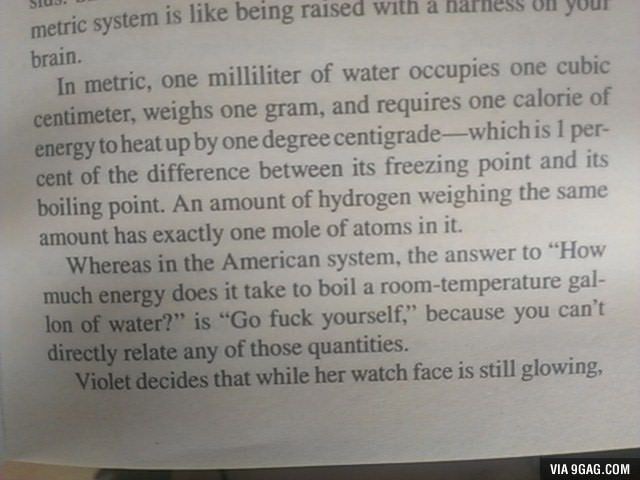
The point is that you do not have that precision. But it absolutely is good enough for pretty much everything. A 0.8 % error is often well below measurement error. Like in any mass balance in a chemical system, say a refinery or whatever. You can ignore argon and all other gases except N2 and O2 in air for the same reason in almost every application.
But even if we apply the same logic, 1.008 is “incorrec” too, it is 1.00794.
And that is incorrect too, not because of higher precision, but because of binding energy. Two separate hydrogen atoms (2 H) have slightly more mass than one hydrogen molecule (H₂) because forming the H–H chemical bond releases energy, reducing the system’s mass according via E= m*c² That extends to every single compound. They all have different atomic masses in them.
I think the point is made.