Solar is great but so is nuclear. They have different use cases, we need both.
Nukes are very expensive to build, but easily the cheapest energy is that you have a nuclear power plant up already and you keep it running. Germany royally fucked that one up.
Nuclear is not there when you need it. It’s prohibitively expensive to build, it takes decades to finish. If we wait for nuclear power to replace coal, we’ll be at 4°C.
Better stop complaining about that fantastical technology and use the tools that are there. They’re quite good already, we can do it.
What about using both instead of being idiots who fight about which is better? They clearly have their use cases.
We can use all kind of renewables to decommission coals and meanwhile build nuclear reactors.
Nuclear waste can mostly be reused and what remaiin can just be sealed off, also, they are experimentig with thorium rn which is a LOT more safe; you also ignore that solar energy uses a lot of terrain
And also the mining and manufacturing and disposal/recycling for the panels. They don’t just pop into existence at the supply warehouse. Any full analysis should include the environmental entire manufacturing chain, regardless of whether it’s solar, wind, or nuclear.
Should also included the conseguences of installing them: will it disrupt any habitat? Will the color of the materials/object affect the temperature of the zone? Etc etc
I live in Finland, in a few months it’ll be -20C outside and about 0-10 hours of sun per month, depending on cloud coverage. Solar is not really an option for half the time here. Wind is bit better, but unfortunately doesn’t quite work at the coldest times.
You’ve got some valid points in your criticism of nuclear. They are also points that could be addressed - we built lots of nuclear power plants within budget and timelines, once. Like solar, and like everything, nuclear benefits from scale.
Similarly, there are valid points of criticism that solar gushing ignores: Power is needed 24/7, solar doesn’t deliver power 24/7 and batteries (pumped hydro, chemical, heat etc) are nowhere near large enough to see the whole of society powered through the winter. If we built renewables like we built traditional power plants we would say “I’d like 1 GW, 95% availability, steerable down to 0.6 GW”. Solar right now goes “weeell, not really my problem what you want - I can give you power sometimes and sometimes not”.
So like coal power socialises the cost of pollution, renewables socialises the cost of consistency.
We could instead say “storage is the solar field operators’ concern” and then you’d be able to see what solar really costs”.
And hear me right; I’m ALL in on renewables. I’m also ALL in on nuclear. We need everything that can deliver power with low carbon output. If nuclear goes away, you’ll have to start a tonne of gas peaker plants when there’s not enough wind and not enough sun to power everything.
It’s a mix, not a battle. Kill nuclear and you pretty much kill decarbonisation.
batteries haven’t been built in the past because they weren’t needed, but they’re being built today (look up sodium-ion batteries) and they’re cheap and effective.
It’s a mix, not a battle. Kill nuclear and you pretty much kill decarbonisation.
We need some nuance here. In e.g. South Korea, I agree. Nuclear is needed.
But here in Australia, nuclear is unfathomably stupid. Not only do we not need nuclear, but it’d take decades to build (because we haven’t built one before so we’d have to first write the laws, then build the supply chain, train the workforce, design a nuclear plant to build (again: we haven’t built one on this continent before, we can’t just assume a design from a different climate will work) and then build it (with a construction workforce we might have to import or train). All up, it’ll take longer than building 100% renewables.
Which is exactly why our far right-wing lunatics are advocating it as an alternative to renewables (note that I said alternative, not complement), and to build more coal plants in the mean time.
The whole battery discussion is similarly stupid. In Australia, you don’t need storage for more than a week. And within that week, renewables rarely reach less than 70% average (note that “fucktons of energy on Monday and fuck all on Tues through Sunday” can still add up to 70% of an average week’s energy, though), and never reaches 50%. What that means is that we will need at most 2x the renewables and half a week’s worth of batteries. And of course realistically it means we only need ~1.43x the renewables (it’s not always worth building to meet every possible once-in-a-blue-moon outage when we can pay people (especially commercial customers) to take their demand offline) and to diversify our energy sources (read: offshore wind and onshore wind peak at dusk and nighttime).
More importantly, sooner or later the combination of renewables and batteries will make the marginal Watt-hour from a battery cheaper than the marginal Watt-hour from burning a unit of gas in a turbine. Especially when chasing reliability will inevitably produce cheap surplus energy to store - e.g. suppose solar has collapsed the market for midday power but a new solar farm might still be profitable just by selling more power from 3PM onwards and before 9AM in the morning. That solar farm still wants a customer for its otherwise-wasted midday power and will take basically any price above zero, which means the cost of battery power is effectively just the cost of the battery itself since the midday solar is essentially free and infinite.
This is already in the process of happening (again, in Australia) and gas turbines are dying.
And seriously, fuck nuclear (in Australia). It’s main advocates here deny global warming is real (or at least deny that humans caused it), reject Net Zero by 2050 as radical and unaffordable, and want to block wind/solar farms and transmission lines as much as they can get away with. They are fucking clowns.
To be fair, I don’t think they actually want to build nuclear, they’re just pushing it as a bad-faith ploy to kill renewables, and if they succeed will immediately pivot to “nuclear unsafe, we should build coal plants instead”. They already need a stopgap since our current coal plants will shut down ~2035 and there’s no way we’ll have nuclear up by then, so if not renewables then we’ll need to build coal or gas as a stopgap (and there’s no way that those coal/gas plants will be profitable if they’re shut down 10 years after construction due to the nuclear plant being ready, so they’ll be even more expensive in that context).
Seriously, the Liberal Party (a conservative party), the National party (rural party, also conservative) and Pauline Hanson’s One Nation Party (PHON is like Nigel Farage’s party I think, BTW I’m assuming you’re British because your instance is feddit.uk) are absolute clowns on climate policy (and nuclear). Although it doesn’t help that the Libs have completely collapsed to the point that One Nation is looking to eat their lunch in the next election, so they’re currently trying to out-One Nation One Nation, which they’re obviously failing because they can never be as One Nation as One Nation so voters will just vote for the genuine article. And One Nation’s policies (assuming they have any) are unfettered by any concern about actually getting into power and implementing them, with Pauline Hanson (and her fellow party members) will respond to questions about their policy by trying to pick a fight and throwing names (a comparison to Trump isn’t too far off).
Anyway, I don’t know whether nuclear would be a good idea in UK, and it might well be, but it’s stupid in Australia and so is basically everyone who advocates for it (in Australia) at this point.
Completely agree on your nuance point. There are regions that can run on 100% renewables; Australia may be one on solar, the Nordics another with abundant hydro and wind + small area so interconnect is cheap.
That doesn’t matter. Uranium isn’t that rare, and we only need a power source that kicks the can down the road long enough to build renewable alternatives. Once we start running out of uranium, its price will increase and it’ll be profitable to replace nuclear plants.
The only reason the same logic doesn’t apply to fossil fuels is that climate change is an externality that will kill us long before we run out of fossil fuels.
If nuclear solves the problem for a century, then in 2126 our solar, wind, batteries, enhanced geothermal, wave etc will be very mature and able to replace nuclear quite easily.
I hear your argument, it’s old. But I also listen to news, and the storage problem seems to not be a technological problem anymore. Battery storages for the evenings/nights are almost trivial today, it’s a matter of just allowing investors to build.
For winters, the solution could be green methane in existing storages, and for that we’ll also need gas plants. Green methane is sorta inefficient to produce, I get that, but we’re still in a phase where we need much more solar and wind to get across spring and fall. Simultaneously we need to shut the existing production off in summer. Let’s not do that, and produce inefficient methane instead.
But for this transformation we’re constantly held up by the “what about nuclear” argument straight from the fossil lobby playbook. Sorry to say that, but if you are pro sustainability you should be careful whose arguments you repeat. Just like the individual CO2 footprint, there are a number of popular stories propagated by the fossil lobby with the purpose to sow doubt, and therefore stagnation.
Let’s take a country like the UK, which is well ahead in the renewable transition compared to most other countries. In the last 3 years we’ve had 619 periods where renewables covered less than than 50% of our mix, the longest lasting 19 days (October-November 2024), where the average cover was 16%. Let’s work out on the basis of just that single dunkelflaute as an instructive example.
To see us through that period Britain would have needed 12 TWh of storage. How much is that? Well, we have 0.04 TWh of total storage, across pumped storage and batteries (pumped storage almost double our grid batteries - and when I say grid batteries that counts for every single battery installation at home too, because they are tracked when they are installed in the G98/G99 application).
So you need to make our storage 300x larger just in Britain. And don’t say “we will just import electricity from other countries”, the dunkelflaute covered almost all of Europe.
How did we get through that one? Gas, gas, gas, burning all across Europe, plus a lot of coal in Eastern Europe.
Could we conceivably install 300x more storage in every country (bear in mind the situation is worse in most other countries, so adopting 300x across Europe is optimistic)?
Yes sure, everything is conceivable. You could dig out every mountain for water storage and strip mine the whole planet for the metals you need for batteries.
But if you add nuclear to the mix, prices fall dramatically, since nuclear adds baseload, meaning your dunkelflautes get much smaller and fewer. It’s a lot more conceivable with nuclear in the mix.
Look, I’m not one of those “nuclear will fix everything” people. Nuclear has downsides, but so does everything else. The key is to mix upside and downsides, not rely on one single thing out of philosophy (whether renewable or nuclear).
If you think “storage is solved” I urge you to speak to someone who works in grid management.
The fossil fuel industry was the one stopping nuclear in the 20th century because they were worried about being replaced. Maybe you should also look at who’s talking points you’re copying
Lithium-ion has pretty big operational safety concerns (thermal runaway) and as far as I know we haven’t completely figured out the recycling either.
Pumped storage has massive environmental implications and is typically very difficult to get approved by local governments.
Flow batteries are still a very infant technology. There’s very big design differences between manufacturers that have very big tradeoffs. But I do believe these will “win” the storage race, eventually.
Flywheel and gravity storage don’t have the magnitude and duration requirements for grid-level storage solutions.
Lithium grid batteries are a non-issue for safety, in practice. They’re LFP (which is really forgiving heatwise, as lithium batteries go) and adding a ton of passive cooling isn’t a big deal since weight isn’t a problem when it’s stationary. And sodium-ion will only be better in this regard.
Recycling is overblown as a problem. Like any industry, recycling needs scale to be economical, and every new tech isn’t recycled at scale until 1) it’s produced at scale, and 2) that generation produced at scale reaches EOL and needs to be recycled.
In practice, recycling lithium batteries is a non-issue because a lithium battery contains an entire battery’s worth of lithium (it’s ~10%+ lithium - and that lithium is a liquid that, when drained out, is >99% lithium!), whereas lithium brine is like 0.1% lithium. It’s not hard to recycle most of the battery, and the other parts will only be learned after we have mountains of free dead batteries to practice on, not before.
I listen to news, some of them dedicated to sustainable energy markets, but I’m not an engineer nor so I pretend to be. That news reported in depths about how many large scale battery power plants want to get permission, being blocked primarily by regulation, not technology.
Not in France, Great Britain or Germany either. Or Poland or Spain. To my knowledge not in Japan either.
Probably you are talking about some countey with lax regulations. Which is curious , because proponents of nuclear power always say Chernobyl could not have happened in a country with good regulations (so Japan probably is not included in that list either)
That…is remarkable brain acrobatics to paint Fukushima somehow in a good light. Tell that shit to yourself. The lucky thing that happened to them was the wind blowing seaside, and not towards Tokyo, else they’d have to evacuate a 30 million inhabitant metropolis. That’s not an achievement of well controlled technology.
People say nuclear power is cheap, but I love near a failed nuclear plant that was too expensive to ever turn on. Nuclear shills consistently downvote me for this, but like I’m sorry, I’m just not very impressed by how “cheap” this technology is. I understand that it’s cheap once it’s running, but crucially, that doesn’t matter because it’s so dang expensive to get it running in the first place.
I also love that lemmy is apparently big enough to get nuclear shills
Nuclear plants that are already running are very cheap to continue running.
That’s mostly beside the point, though, because, as you explain, they’re very expensive to construct, and that’s before even getting to the ones that never get completed because the cost overruns get the project canceled.
So I’m always in favor of running existing nuclear plants as long as possible, but am pretty skeptical of building any new nuclear plants.
This is such a cheap shot, nuclear power generation and waste disposal is mostly a solved and highly regulated and enforced problem. I can just as easily ask what is the solution to the waste regarding batteries/panels? I know the industry is saying recycling, may I ask the figures, especially regarding normal folks at home.
Don’t get me wrong, I am pro solar just as much pro nuclear. The future should be a mix of what works best at a given location and constraints. Solar saved my country South Africa, read about how a corrupt government destroyed a world class energy company, built the most cost and time overrun and largest two coal plants in the world, they fucked up. We sat for years in the dark and the private sector built the same capacity, using mostly solar, as the two coal plants within 4 years.
Recurring blackouts, load shedding, are a thing of the past.
It’s highly regulated to evade them just dumping it in your backyard. As for solved… A decade after shutting down the power plants, Germany is still looking for a final storage.
I hate that this is the arguement that nuclear bros always make. It is not the same, and you know that. And if you don’t, you are not educated enough to have an opinion on this, broken glass, metal, and batteries do not give people cancer and poisoning for just standing within a few feet of them.
We actually have kind of solved that problem in Finland. It’s essentially burying the waste in our backyard, but the backyard is half a kilometer underground.
If you use breeder reactors there is very little waste. And they extract significantly more energy from uranium than something like a light water reactor.


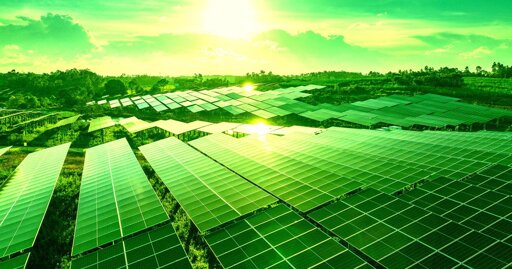
Solar is great but so is nuclear. They have different use cases, we need both.
Nukes are very expensive to build, but easily the cheapest energy is that you have a nuclear power plant up already and you keep it running. Germany royally fucked that one up.
Nuclear is not there when you need it. It’s prohibitively expensive to build, it takes decades to finish. If we wait for nuclear power to replace coal, we’ll be at 4°C.
Better stop complaining about that fantastical technology and use the tools that are there. They’re quite good already, we can do it.
What about using both instead of being idiots who fight about which is better? They clearly have their use cases. We can use all kind of renewables to decommission coals and meanwhile build nuclear reactors.
Or if you’re Germany, use renewables to decommission your nuclear reactors while continuing to burn Russian natural gas and Polish coal 🙄
Because it can be accomplished without nuclear, meaning nuclear is a huge expense and a lot of toxic waste for no advantage?
Nuclear waste can mostly be reused and what remaiin can just be sealed off, also, they are experimentig with thorium rn which is a LOT more safe; you also ignore that solar energy uses a lot of terrain
And also the mining and manufacturing and disposal/recycling for the panels. They don’t just pop into existence at the supply warehouse. Any full analysis should include the environmental entire manufacturing chain, regardless of whether it’s solar, wind, or nuclear.
Should also included the conseguences of installing them: will it disrupt any habitat? Will the color of the materials/object affect the temperature of the zone? Etc etc
For the last 50 years.
There’s a reason why Texas bought 8 CANDU reactors.
Because nuclear is just an expensive and time consuming distraction at this point. Itis usually brought up mostly to delay the energy transition
I live in Finland, in a few months it’ll be -20C outside and about 0-10 hours of sun per month, depending on cloud coverage. Solar is not really an option for half the time here. Wind is bit better, but unfortunately doesn’t quite work at the coldest times.
It’s possible that nobody should live in Finland…
You guys may be fine with 4°C and already have nuclear power. Weird country.
You’ve got some valid points in your criticism of nuclear. They are also points that could be addressed - we built lots of nuclear power plants within budget and timelines, once. Like solar, and like everything, nuclear benefits from scale.
Similarly, there are valid points of criticism that solar gushing ignores: Power is needed 24/7, solar doesn’t deliver power 24/7 and batteries (pumped hydro, chemical, heat etc) are nowhere near large enough to see the whole of society powered through the winter. If we built renewables like we built traditional power plants we would say “I’d like 1 GW, 95% availability, steerable down to 0.6 GW”. Solar right now goes “weeell, not really my problem what you want - I can give you power sometimes and sometimes not”.
So like coal power socialises the cost of pollution, renewables socialises the cost of consistency.
We could instead say “storage is the solar field operators’ concern” and then you’d be able to see what solar really costs”.
And hear me right; I’m ALL in on renewables. I’m also ALL in on nuclear. We need everything that can deliver power with low carbon output. If nuclear goes away, you’ll have to start a tonne of gas peaker plants when there’s not enough wind and not enough sun to power everything.
It’s a mix, not a battle. Kill nuclear and you pretty much kill decarbonisation.
batteries haven’t been built in the past because they weren’t needed, but they’re being built today (look up sodium-ion batteries) and they’re cheap and effective.
The underlying issue with energy is always storage. That has always been the appeal of fossil fuels and now nuclear.
Shelf stable energy ready to be unlocked in a rock or liquid that nature provides right out of the ground.
We need some nuance here. In e.g. South Korea, I agree. Nuclear is needed.
But here in Australia, nuclear is unfathomably stupid. Not only do we not need nuclear, but it’d take decades to build (because we haven’t built one before so we’d have to first write the laws, then build the supply chain, train the workforce, design a nuclear plant to build (again: we haven’t built one on this continent before, we can’t just assume a design from a different climate will work) and then build it (with a construction workforce we might have to import or train). All up, it’ll take longer than building 100% renewables.
Which is exactly why our far right-wing lunatics are advocating it as an alternative to renewables (note that I said alternative, not complement), and to build more coal plants in the mean time.
The whole battery discussion is similarly stupid. In Australia, you don’t need storage for more than a week. And within that week, renewables rarely reach less than 70% average (note that “fucktons of energy on Monday and fuck all on Tues through Sunday” can still add up to 70% of an average week’s energy, though), and never reaches 50%. What that means is that we will need at most 2x the renewables and half a week’s worth of batteries. And of course realistically it means we only need ~1.43x the renewables (it’s not always worth building to meet every possible once-in-a-blue-moon outage when we can pay people (especially commercial customers) to take their demand offline) and to diversify our energy sources (read: offshore wind and onshore wind peak at dusk and nighttime).
More importantly, sooner or later the combination of renewables and batteries will make the marginal Watt-hour from a battery cheaper than the marginal Watt-hour from burning a unit of gas in a turbine. Especially when chasing reliability will inevitably produce cheap surplus energy to store - e.g. suppose solar has collapsed the market for midday power but a new solar farm might still be profitable just by selling more power from 3PM onwards and before 9AM in the morning. That solar farm still wants a customer for its otherwise-wasted midday power and will take basically any price above zero, which means the cost of battery power is effectively just the cost of the battery itself since the midday solar is essentially free and infinite.
This is already in the process of happening (again, in Australia) and gas turbines are dying.
And seriously, fuck nuclear (in Australia). It’s main advocates here deny global warming is real (or at least deny that humans caused it), reject Net Zero by 2050 as radical and unaffordable, and want to block wind/solar farms and transmission lines as much as they can get away with. They are fucking clowns.
To be fair, I don’t think they actually want to build nuclear, they’re just pushing it as a bad-faith ploy to kill renewables, and if they succeed will immediately pivot to “nuclear unsafe, we should build coal plants instead”. They already need a stopgap since our current coal plants will shut down ~2035 and there’s no way we’ll have nuclear up by then, so if not renewables then we’ll need to build coal or gas as a stopgap (and there’s no way that those coal/gas plants will be profitable if they’re shut down 10 years after construction due to the nuclear plant being ready, so they’ll be even more expensive in that context).
Seriously, the Liberal Party (a conservative party), the National party (rural party, also conservative) and Pauline Hanson’s One Nation Party (PHON is like Nigel Farage’s party I think, BTW I’m assuming you’re British because your instance is feddit.uk) are absolute clowns on climate policy (and nuclear). Although it doesn’t help that the Libs have completely collapsed to the point that One Nation is looking to eat their lunch in the next election, so they’re currently trying to out-One Nation One Nation, which they’re obviously failing because they can never be as One Nation as One Nation so voters will just vote for the genuine article. And One Nation’s policies (assuming they have any) are unfettered by any concern about actually getting into power and implementing them, with Pauline Hanson (and her fellow party members) will respond to questions about their policy by trying to pick a fight and throwing names (a comparison to Trump isn’t too far off).
Anyway, I don’t know whether nuclear would be a good idea in UK, and it might well be, but it’s stupid in Australia and so is basically everyone who advocates for it (in Australia) at this point.
Completely agree on your nuance point. There are regions that can run on 100% renewables; Australia may be one on solar, the Nordics another with abundant hydro and wind + small area so interconnect is cheap.
My point is globally. Globally we need nuclear.
Australia has a perfect proposal -https://www.aemo.com.au/-/media/files/major-publications/isp/2024/2024-integrated-system-plan-isp.pdf
the planet has a finite amount of uranium. It’s rare.
That doesn’t matter. Uranium isn’t that rare, and we only need a power source that kicks the can down the road long enough to build renewable alternatives. Once we start running out of uranium, its price will increase and it’ll be profitable to replace nuclear plants.
The only reason the same logic doesn’t apply to fossil fuels is that climate change is an externality that will kill us long before we run out of fossil fuels.
If nuclear solves the problem for a century, then in 2126 our solar, wind, batteries, enhanced geothermal, wave etc will be very mature and able to replace nuclear quite easily.
New nuclear power plants and current reprocessing can absolutely make this a non-problem. There’s plenty of radioactive material.
I hear your argument, it’s old. But I also listen to news, and the storage problem seems to not be a technological problem anymore. Battery storages for the evenings/nights are almost trivial today, it’s a matter of just allowing investors to build.
For winters, the solution could be green methane in existing storages, and for that we’ll also need gas plants. Green methane is sorta inefficient to produce, I get that, but we’re still in a phase where we need much more solar and wind to get across spring and fall. Simultaneously we need to shut the existing production off in summer. Let’s not do that, and produce inefficient methane instead.
But for this transformation we’re constantly held up by the “what about nuclear” argument straight from the fossil lobby playbook. Sorry to say that, but if you are pro sustainability you should be careful whose arguments you repeat. Just like the individual CO2 footprint, there are a number of popular stories propagated by the fossil lobby with the purpose to sow doubt, and therefore stagnation.
Storage isn’t a technological problem anymore?!
Let’s take a country like the UK, which is well ahead in the renewable transition compared to most other countries. In the last 3 years we’ve had 619 periods where renewables covered less than than 50% of our mix, the longest lasting 19 days (October-November 2024), where the average cover was 16%. Let’s work out on the basis of just that single dunkelflaute as an instructive example.
To see us through that period Britain would have needed 12 TWh of storage. How much is that? Well, we have 0.04 TWh of total storage, across pumped storage and batteries (pumped storage almost double our grid batteries - and when I say grid batteries that counts for every single battery installation at home too, because they are tracked when they are installed in the G98/G99 application).
So you need to make our storage 300x larger just in Britain. And don’t say “we will just import electricity from other countries”, the dunkelflaute covered almost all of Europe.
How did we get through that one? Gas, gas, gas, burning all across Europe, plus a lot of coal in Eastern Europe.
Could we conceivably install 300x more storage in every country (bear in mind the situation is worse in most other countries, so adopting 300x across Europe is optimistic)?
Yes sure, everything is conceivable. You could dig out every mountain for water storage and strip mine the whole planet for the metals you need for batteries.
But if you add nuclear to the mix, prices fall dramatically, since nuclear adds baseload, meaning your dunkelflautes get much smaller and fewer. It’s a lot more conceivable with nuclear in the mix.
Look, I’m not one of those “nuclear will fix everything” people. Nuclear has downsides, but so does everything else. The key is to mix upside and downsides, not rely on one single thing out of philosophy (whether renewable or nuclear).
If you think “storage is solved” I urge you to speak to someone who works in grid management.
The fossil fuel industry was the one stopping nuclear in the 20th century because they were worried about being replaced. Maybe you should also look at who’s talking points you’re copying
Which battery technology are you referring to?
Lithium-ion has pretty big operational safety concerns (thermal runaway) and as far as I know we haven’t completely figured out the recycling either.
Pumped storage has massive environmental implications and is typically very difficult to get approved by local governments.
Flow batteries are still a very infant technology. There’s very big design differences between manufacturers that have very big tradeoffs. But I do believe these will “win” the storage race, eventually.
Flywheel and gravity storage don’t have the magnitude and duration requirements for grid-level storage solutions.
Lithium grid batteries are a non-issue for safety, in practice. They’re LFP (which is really forgiving heatwise, as lithium batteries go) and adding a ton of passive cooling isn’t a big deal since weight isn’t a problem when it’s stationary. And sodium-ion will only be better in this regard.
Recycling is overblown as a problem. Like any industry, recycling needs scale to be economical, and every new tech isn’t recycled at scale until 1) it’s produced at scale, and 2) that generation produced at scale reaches EOL and needs to be recycled.
In practice, recycling lithium batteries is a non-issue because a lithium battery contains an entire battery’s worth of lithium (it’s ~10%+ lithium - and that lithium is a liquid that, when drained out, is >99% lithium!), whereas lithium brine is like 0.1% lithium. It’s not hard to recycle most of the battery, and the other parts will only be learned after we have mountains of free dead batteries to practice on, not before.
I listen to news, some of them dedicated to sustainable energy markets, but I’m not an engineer nor so I pretend to be. That news reported in depths about how many large scale battery power plants want to get permission, being blocked primarily by regulation, not technology.
Ah, the “fantastical technology” of the 1950s.
It’s only prohibitively expensive the way that we’re currently doing it in the US, there are better ways.
Not in France, Great Britain or Germany either. Or Poland or Spain. To my knowledge not in Japan either.
Probably you are talking about some countey with lax regulations. Which is curious , because proponents of nuclear power always say Chernobyl could not have happened in a country with good regulations (so Japan probably is not included in that list either)
Fukushima survived an earthquake and then a tsunami before partly going prompt critical. The meltdown was incredibly controlled compared to Chernobyl.
That…is remarkable brain acrobatics to paint Fukushima somehow in a good light. Tell that shit to yourself. The lucky thing that happened to them was the wind blowing seaside, and not towards Tokyo, else they’d have to evacuate a 30 million inhabitant metropolis. That’s not an achievement of well controlled technology.
People say nuclear power is cheap, but I love near a failed nuclear plant that was too expensive to ever turn on. Nuclear shills consistently downvote me for this, but like I’m sorry, I’m just not very impressed by how “cheap” this technology is. I understand that it’s cheap once it’s running, but crucially, that doesn’t matter because it’s so dang expensive to get it running in the first place.
I also love that lemmy is apparently big enough to get nuclear shills
Nuclear plants that are already running are very cheap to continue running.
That’s mostly beside the point, though, because, as you explain, they’re very expensive to construct, and that’s before even getting to the ones that never get completed because the cost overruns get the project canceled.
So I’m always in favor of running existing nuclear plants as long as possible, but am pretty skeptical of building any new nuclear plants.
Sure, we’ll put it down your street and bury all the waste in your backyard if you don’t mind.
This is such a cheap shot, nuclear power generation and waste disposal is mostly a solved and highly regulated and enforced problem. I can just as easily ask what is the solution to the waste regarding batteries/panels? I know the industry is saying recycling, may I ask the figures, especially regarding normal folks at home.
Don’t get me wrong, I am pro solar just as much pro nuclear. The future should be a mix of what works best at a given location and constraints. Solar saved my country South Africa, read about how a corrupt government destroyed a world class energy company, built the most cost and time overrun and largest two coal plants in the world, they fucked up. We sat for years in the dark and the private sector built the same capacity, using mostly solar, as the two coal plants within 4 years.
Recurring blackouts, load shedding, are a thing of the past.
It’s highly regulated to evade them just dumping it in your backyard. As for solved… A decade after shutting down the power plants, Germany is still looking for a final storage.
We’ll find it any day now! Promise! /s
Batteries can be recycled into… new batteries. The panels are mostly glass and metals.
I hate that this is the arguement that nuclear bros always make. It is not the same, and you know that. And if you don’t, you are not educated enough to have an opinion on this, broken glass, metal, and batteries do not give people cancer and poisoning for just standing within a few feet of them.
Unclear waste disposal is “solved” by saying “just leave it”. Thats not an answer
We actually have kind of solved that problem in Finland. It’s essentially burying the waste in our backyard, but the backyard is half a kilometer underground.
Great solution. Will you take ours, too? Sincerely, Germany.
I think you guys also have an underground. Have you checked?
Endlessly, and with no results.
If you use breeder reactors there is very little waste. And they extract significantly more energy from uranium than something like a light water reactor.
If I could have a small modular reactor in my neighborhood, I would be all over that.
deleted by creator
no problem.