This raises an interesting question in my mind, does tidal power make the earth get closer to the moon? Because if you got all the energy out of it, then the water wouldn’t move, so I guess it’s the same as gravitational potential in that sense, but I guess it’s removing it, so less gravitational potential means either less mass (not the case) or less distance.
actually, the moon gains angular momentum from the tidal movement that it causes, and that’s what makes it move further away. the reason is that it takes Earth about 1 day to rotate once around its axis, but it takes the moon 28 days to rotate once around Earth’s axis. so Earth has a higher angular velocity, and the tidal movement tries to reduce that difference to make the two tidally locked eventually. ironically, this process transfers angular momentum to the moon (to speed it up), which makes it move further away and thus the angular velocity actually decreases. yeah, orbital mechanics is weird.
(btw this is not a joke. it’s really that way, difficult to comprehend i know).
If you mean harvesting tidal energy, the effect on the moon would be minimal. The loss of angular momentum the moon experiences is due to the mass of the earth’s waters. I could not imagine anything humans could build that could extract enough tidal energy that it would disrupt the moon without utterly destroying the environment at the same time (by way of nullifying tides somehow). In fact, to harness tidal energy, one way would be to use underwater turbines. They would have an immediate effect to the local environment but a negligible amount to the moon itself.
I know its minimal, I’m not saying it’s a concern, I’m just saying if we are harvesting it, doesn’t that mean it’s pulling us closer to it? It’s not magically free energy (in the physics sense), so what else could it be other than converting the potential gravitational energy between the earth and moon into something else?
Geothermal comes from friction inside the core, residual heat from planet formation, and radioactive decay. Since all elements heavier than hydrogen were fused inside stars, and heavier actinides like uranium are formed in second gen stars, and the inertia of dust that coalesces into planetary bodies including the earth and the moon originated from dying stars going supernovae, geothermal and tidal energy are products of stellar explosions, either inertial, kinetic, or radioactive. Tides are driven by the moon, whose energy is kinetic, stored from past supernovae
Most usable energy on Earth comes from fusion of hydrogen into helium in the Sun, creating radiation that hits the Earth. That’s solar energy, of course, either thermal or photovoltaics, but also the wind caused by uneven warming, the evaporation and condensation of water that flows downhill for hydro power, the chemical bonds formed by photosynthesis making renewable biofuels or older fossil fuels.
Some portion of energy on Earth is gravitational potential energy and the kinetic energy of stuff moving around settling into a lower energy state: the moon dragging the oceans around, the heat of the Earth’s core spinning and tectonic plates moving from the momentum of all the dust that got pulled into what is now a planet. Geothermal and tidal energy mostly come from these planet scale phenomena.
Some portion of energy is the release of energy stored in nuclei formed from some past supernova, of less stable isotopes of atoms heavier than iron. Some portion of geothermal is traceable to this kind of nuclear decay, and obviously we can isolate and enrich those nuclear elements into fission fuel for nuclear power, as well.
Hard to categorize the second and third categories into solar power, though. Yeah, it comes from astronomical phenomena tracing back to how our solar system and planets were formed, from the materials they’re made out of, and found their way into their current shapes and orbits, but is that solar power?


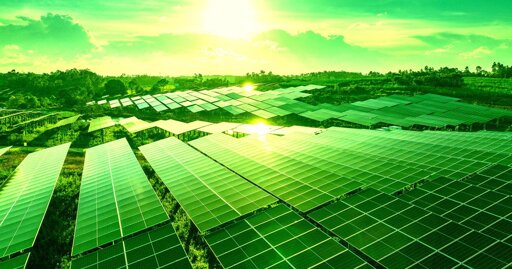
All power is solar power if you go deep enough. Or to be more accurate, stellar power.
Big Bang Power
Tidal and geothermal are not.
Pretty sure if the sun stopped generating heat the oceans would freeze but I’m no astrophysicist.
You’re not deep enough yet, tides and earths core only exist because stars exploded billions of years ago and some particles eventually formed earth
This raises an interesting question in my mind, does tidal power make the earth get closer to the moon? Because if you got all the energy out of it, then the water wouldn’t move, so I guess it’s the same as gravitational potential in that sense, but I guess it’s removing it, so less gravitational potential means either less mass (not the case) or less distance.
The opposite happens. Tidal energy is what causes the moon to drift farther away from the earth, as the moon loses angular velocity.
actually, the moon gains angular momentum from the tidal movement that it causes, and that’s what makes it move further away. the reason is that it takes Earth about 1 day to rotate once around its axis, but it takes the moon 28 days to rotate once around Earth’s axis. so Earth has a higher angular velocity, and the tidal movement tries to reduce that difference to make the two tidally locked eventually. ironically, this process transfers angular momentum to the moon (to speed it up), which makes it move further away and thus the angular velocity actually decreases. yeah, orbital mechanics is weird.
(btw this is not a joke. it’s really that way, difficult to comprehend i know).
But does harvesting it make it go faster or slower away?
If you mean harvesting tidal energy, the effect on the moon would be minimal. The loss of angular momentum the moon experiences is due to the mass of the earth’s waters. I could not imagine anything humans could build that could extract enough tidal energy that it would disrupt the moon without utterly destroying the environment at the same time (by way of nullifying tides somehow). In fact, to harness tidal energy, one way would be to use underwater turbines. They would have an immediate effect to the local environment but a negligible amount to the moon itself.
I know its minimal, I’m not saying it’s a concern, I’m just saying if we are harvesting it, doesn’t that mean it’s pulling us closer to it? It’s not magically free energy (in the physics sense), so what else could it be other than converting the potential gravitational energy between the earth and moon into something else?
see my other reply in this thread
basically it doesn’t move the moon closer, but it makes the Earth rotate slower. that’s where the energy comes from.
basically the tides transfer angular momentum from the Earth to the moon.
Geothermal comes from friction inside the core, residual heat from planet formation, and radioactive decay. Since all elements heavier than hydrogen were fused inside stars, and heavier actinides like uranium are formed in second gen stars, and the inertia of dust that coalesces into planetary bodies including the earth and the moon originated from dying stars going supernovae, geothermal and tidal energy are products of stellar explosions, either inertial, kinetic, or radioactive. Tides are driven by the moon, whose energy is kinetic, stored from past supernovae
All stars came from the Big Bang.
So it’s all Big Bang powered.
Checkmate.
You’re right, we are all just passengers on this bang bus
Planet wouldn’t exist if stars didn’t explode billions of years ago, checkmate.
Most usable energy on Earth comes from fusion of hydrogen into helium in the Sun, creating radiation that hits the Earth. That’s solar energy, of course, either thermal or photovoltaics, but also the wind caused by uneven warming, the evaporation and condensation of water that flows downhill for hydro power, the chemical bonds formed by photosynthesis making renewable biofuels or older fossil fuels.
Some portion of energy on Earth is gravitational potential energy and the kinetic energy of stuff moving around settling into a lower energy state: the moon dragging the oceans around, the heat of the Earth’s core spinning and tectonic plates moving from the momentum of all the dust that got pulled into what is now a planet. Geothermal and tidal energy mostly come from these planet scale phenomena.
Some portion of energy is the release of energy stored in nuclei formed from some past supernova, of less stable isotopes of atoms heavier than iron. Some portion of geothermal is traceable to this kind of nuclear decay, and obviously we can isolate and enrich those nuclear elements into fission fuel for nuclear power, as well.
Hard to categorize the second and third categories into solar power, though. Yeah, it comes from astronomical phenomena tracing back to how our solar system and planets were formed, from the materials they’re made out of, and found their way into their current shapes and orbits, but is that solar power?
Which is ultimately caused or released by gravity.
Stellar? Mmmm never thought about this word much. Constellation? Stars? Stellar?
I have some holes to go down