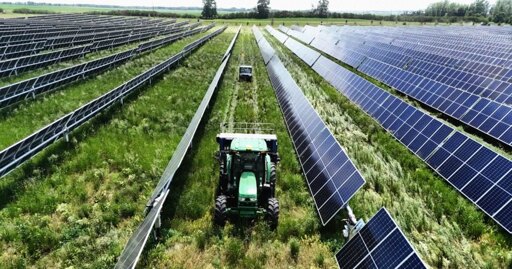
Field solar is mostly to improve micro-climate in hot summers. Plants close their pores if temperature is too hot, air too dry. They stop growing then and focus on survival, which can also negatively affect the produce otherwise. For example, european vegetables + fruits have short shelf life this year, aside from less of it. Solar panels hold back humidity and give some shade, while also cooling a bit.
There’s plenty of crops that actually grow just fine in or even prefer shade, especially those grown for their leaves (arugula, spinach, mustard, lettuce, kale, bok choy…) Rhubarb, currants, gooseberries, pawpaw all are found naturally in shaded areas (under trees for example) or on the edge of tree lines.
Strawberry farmers in particular should all be looking into installing solar panels over their crops.


put solar panels on top of buildings in cities. We need more farms.
Do both! Agrivoltaics are a thing and depending on the crop can be mutually beneficial.
Field solar is mostly to improve micro-climate in hot summers. Plants close their pores if temperature is too hot, air too dry. They stop growing then and focus on survival, which can also negatively affect the produce otherwise. For example, european vegetables + fruits have short shelf life this year, aside from less of it. Solar panels hold back humidity and give some shade, while also cooling a bit.
solar can be on farms
If you mean photosynisis of food items I agree.
There’s plenty of crops that actually grow just fine in or even prefer shade, especially those grown for their leaves (arugula, spinach, mustard, lettuce, kale, bok choy…) Rhubarb, currants, gooseberries, pawpaw all are found naturally in shaded areas (under trees for example) or on the edge of tree lines.
Strawberry farmers in particular should all be looking into installing solar panels over their crops.