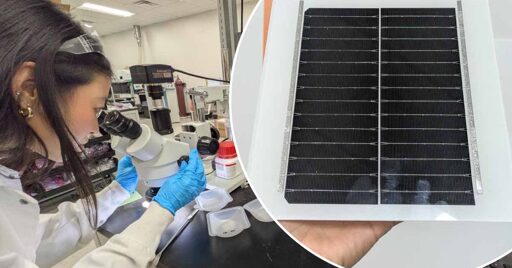
Domino@quokk.au to Technology@lemmy.worldEnglish · 11 months agoThis 50% recycled glass solar panel performs like brand newelectrek.coexternal-linkmessage-square7fedilinkarrow-up1175arrow-down15
arrow-up1170arrow-down1external-linkThis 50% recycled glass solar panel performs like brand newelectrek.coDomino@quokk.au to Technology@lemmy.worldEnglish · 11 months agomessage-square7fedilink
minus-squarecmnybo@discuss.tchncs.delinkfedilinkEnglisharrow-up59·11 months agoOf course there’s no difference. Glass is one of the most recyclable materials there is.
minus-squarewewbull@feddit.uklinkfedilinkEnglisharrow-up15·11 months agoAs long as it hasn’t been coloured I believe.
minus-squaredisco@lemdro.idlinkfedilinkEnglisharrow-up1·11 months agoThis might seem like a dumb question but couldn’t you burn the color out during the recycling process?
minus-squareeleitl@lemmy.ziplinkfedilinkEnglisharrow-up10·11 months agoIt’s metal ions. You can compensate for iron with manganese, but you’ll still get a grayish glass with reduced transmission.
minus-squarewewbull@feddit.uklinkfedilinkEnglisharrow-up5·11 months ago“Burning it out” still leaves contamination. You need to remove it.
minus-squareMonkderVierte@lemmy.ziplinkfedilinkEnglisharrow-up1·10 months agoNo processes to get the coloring out?


Of course there’s no difference. Glass is one of the most recyclable materials there is.
As long as it hasn’t been coloured I believe.
This might seem like a dumb question but couldn’t you burn the color out during the recycling process?
It’s metal ions. You can compensate for iron with manganese, but you’ll still get a grayish glass with reduced transmission.
This makes sense. Thank you
“Burning it out” still leaves contamination. You need to remove it.
No processes to get the coloring out?