Yes, but even this is exaggerating the truth. It was unproven but widely accepted as “almost definitely true” because it kind of has to be. All this did was move the needle from “almost definitely true” to “definitely true” and if it didn’t create any new interesting math to do that or if the proof can’t be distilled down to something usable or understandable by other theoretical mathematicians then it’s not really meaningful. Folks already knew it was going to be proven true eventually, the interesting part is how. This version of how is not interesting or useful. At best this is net neutral, at worst this discourages other mathematicians from creating a creative or elegant solution that actually means something. Rarely in theoretical math is “we proved this” the important bit, it’s almost always “look at the neat trick we used to prove this” because it’s that neat trick that can and often does have real world applications (or is used in another proof). This AI proof has none of this

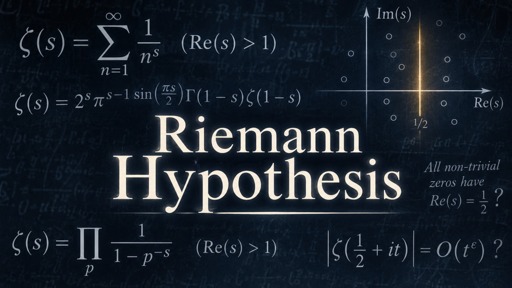
Yes, but even this is exaggerating the truth. It was unproven but widely accepted as “almost definitely true” because it kind of has to be. All this did was move the needle from “almost definitely true” to “definitely true” and if it didn’t create any new interesting math to do that or if the proof can’t be distilled down to something usable or understandable by other theoretical mathematicians then it’s not really meaningful. Folks already knew it was going to be proven true eventually, the interesting part is how. This version of how is not interesting or useful. At best this is net neutral, at worst this discourages other mathematicians from creating a creative or elegant solution that actually means something. Rarely in theoretical math is “we proved this” the important bit, it’s almost always “look at the neat trick we used to prove this” because it’s that neat trick that can and often does have real world applications (or is used in another proof). This AI proof has none of this