The oracle you describe would also be incredibly valuable. To determine if something is true or false, reliably, instantly? Amazing.
Yet you tried to describe it as something bad, something we’d have to blindly trust. And that would indeed be a huge stain. But RH is proven in lean code, which it self is not a trust-me-bro machine, but is well understood and agreed to be valid.
I don’t think you understood the force of my objection regarding mathematical propositions being tautologies.
If I were to write 42=(x), and x was in this instance a randomly generated 500,000 page combination of randomly generated mathematical operations, the Oracle could tell me whether the proposition was true or not. But it would not be USEFUL, and it would not be EXPLANATORY. It would be the equivalent of saying “42=42,” which of course it does, but that is simply a restatement or demonstration of law of identity. Without telling us anything interesting about how the equation works or why, it may as well be like knowing how many grains of sand exist on the Beach of Normandy on the day after D-Day. You might have a fact, but who cares? Is it doing anything in your larger system of knowledge? Could everyone just assume that there was SOME number that was true, and still go about their work and lives without knowing the precise number? That’s roughly where we were at prior to this ‘proof.’
I am not saying the Oracle would be useless. Surely it would be quite useful. But presenting incomprehensible and absurdly complicated mathematical propositions to the Oracle would not tell us anything useful, and would diminish our relationship to mathematical knowledge from deductive to inductive, which is a severe degradation in epistemic status as traditionally understood.


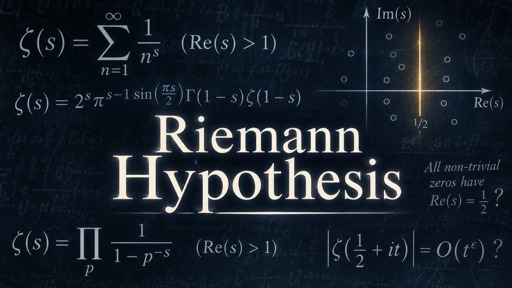
I’m not saying it’s perfect, but it has value.
The oracle you describe would also be incredibly valuable. To determine if something is true or false, reliably, instantly? Amazing.
Yet you tried to describe it as something bad, something we’d have to blindly trust. And that would indeed be a huge stain. But RH is proven in lean code, which it self is not a trust-me-bro machine, but is well understood and agreed to be valid.
I don’t think you understood the force of my objection regarding mathematical propositions being tautologies.
If I were to write 42=(x), and x was in this instance a randomly generated 500,000 page combination of randomly generated mathematical operations, the Oracle could tell me whether the proposition was true or not. But it would not be USEFUL, and it would not be EXPLANATORY. It would be the equivalent of saying “42=42,” which of course it does, but that is simply a restatement or demonstration of law of identity. Without telling us anything interesting about how the equation works or why, it may as well be like knowing how many grains of sand exist on the Beach of Normandy on the day after D-Day. You might have a fact, but who cares? Is it doing anything in your larger system of knowledge? Could everyone just assume that there was SOME number that was true, and still go about their work and lives without knowing the precise number? That’s roughly where we were at prior to this ‘proof.’
I am not saying the Oracle would be useless. Surely it would be quite useful. But presenting incomprehensible and absurdly complicated mathematical propositions to the Oracle would not tell us anything useful, and would diminish our relationship to mathematical knowledge from deductive to inductive, which is a severe degradation in epistemic status as traditionally understood.