

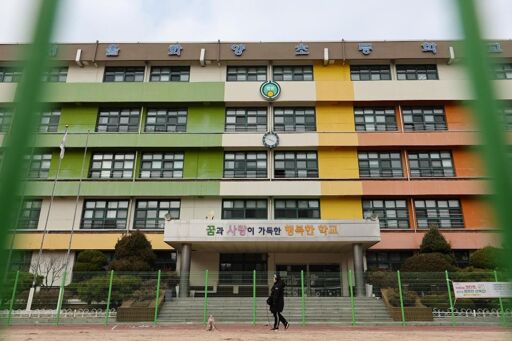
More than 4,000 elementary, middle and high schools across Korea have shut their doors as the country’s student population shrinks, new data shows.
According to the Ministry of Education’s latest figures, revealed on Sunday by Rep. Jin Sun-mee of the ruling Democratic Party of Korea, since 1980, 4,008 schools under 17 regional education offices nationwide have closed as of March this year. During the period, the number of enrolled students decreased from 9.9 million to 5.07 million.
Pollution would make sense if people were trying to have kids but couldn’t. But they’re not trying to have kids at all!
The more likely explanation—related to tech—is that we don’t need kids anymore. For 99% of human history, children were necessary and not having kids was basically impossible (horny kids and no birth control). Kids were how humans kept alive/stable as well as expanded their power and influence! It’s also how they got cared for in old age (though that’s a much lesser concern because I seriously doubt humans of the past thought that hard about such things when living to 40 was considered amazing).
Now we have birth control and—in Western societies—stability/safety is much more likely if you don’t have kids. We’ve basically flipped the script on our evolution.
You want people to have kids? Flip the script back! Make anyone under 30 without kids pay a massive tax that pays for the kids of people who have them! Basically, make everyone who didn’t have kids pay child support.
Make having kids the best damned economic decision anyone can make with diminishing returns after two (kids).
While that’s certainly a contributing factor worldwide, I think the data contradicts it quite a bit. Japan, as an example, has the elderly heavily rely on their children as a retirement plan. Far more so than countries like the US that has a higher birthrate. Also include that while undeveloped countries like Kenya have some of the highest birthrates in the world, it’s far less than similarly developed countries had 100 years ago
There is a bit of a misconception there with average life expectancy. Once you made it to adulthood, your life expectancy was far higher than would be expected from an average life expectancy of ~40. It was brought down heavily by all the young deaths
I don’t doubt this is a strong factor, but if it were the largest factor, wouldn’t we expect countries with strong social programs like Norway to have much higher birth rates? I suppose those social programs would tend to correlate with birth control
I was unfamiliar with Norway’s program so I looked it up…
49 weeks of maternity leave? FUCK YEAH!
$160/month (USD equivalent) for kids under 6? Not nearly enough! That is of negligibe impact and doesn’t come close to offsetting the costs of raising a child.
My two takeaways from this, learning about Norway’s programs:
Also, “when everyone gets a subsidy, no one gets a subsidy” (my own saying). It seems inevitable that daycare costs would increase by the subsidy amount in order to capture it as profit. Basically, long-term subsidies like that ultimately fail because of basic economics. They can work fine in the short term, though.
I still stand by what I said: Having kids makes you less economically stable and until we fix that, fertility rates will continue to decline.
Seems like the biggest thing that needs to be fixed though is housing costs.