

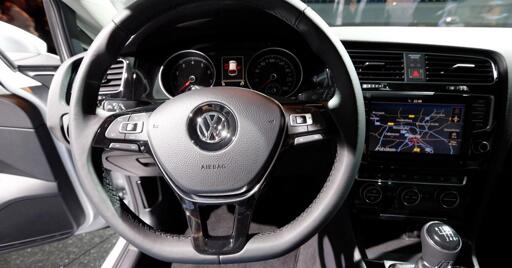
Volkswagen will restore physical buttons to the dashboard in its latest compact car, part of a wider move away from touchscreens.
In a particularly retro touch, the new ID Polo will even have a volume dial.
For a decade or so, automakers rushed to replace knobs and switches with screens, Autoblog noted in October, but users largely disliked them: Controlling the air conditioning, for example, required delving through submenus while driving, which was both difficult and dangerous. Research found that using touchscreens took longer and distracted drivers.
Hyundai, Mercedes-Benz, Porsche, and VW have all announced plans to return to more tactile controls, and US and EU regulators announced last year that cars with touchscreen controls could get worse safety ratings.
The audiobook? The answer was contained in your question. The result varied by type of drive though. They improve drivers during boring drives and well:
I thought I saw another study some yesteryear about spacial reasoning tasks demanded by some audiobooks (describing a scene, what a building looks like, where it is etc) impaired spacial reasoning while driving. While music doesn’t use spatial reasoning hardly at at all. That’s why I stopped using audiobooks while driving, but I can’t find it so maybe I’ve been lying to myself all along.
The takeaway: boring drives secondary tasks could be good. Complex drives secondary tasks could be bad. I’ll stick with music but be more readily muting it for potentially interesting interactions. In a use the secondary task to keep focus and identify the hazard, once identified mute secondary task to react to the hazard.
But I play focus games while driving anyway. I don’t indicate out of habit: I reason if there’s someone to indicate to, then decide whether to indicate. I find it forces observations and space/speed reasoning to infer whether my changing direction presents a hazard to someone somewhere.