

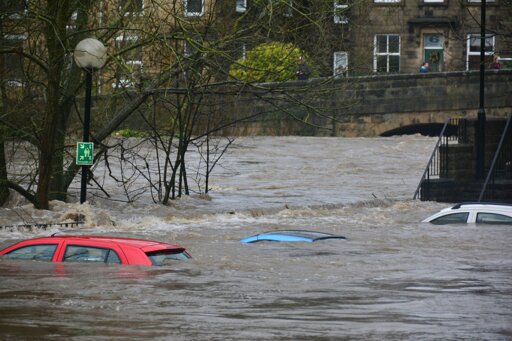
Research conducted by researchers at the University of Gothenburg shows that people tend to rate their own risk of being affected by climate change as lower than that of others. This perception may reduce individuals’ willingness to act and slow down necessary climate measures.
The researchers observed the effect in Europe, the United States and Asia, but the discrepancy was most pronounced among Europeans.
Currently, some of the countries most directly affected by climate change are in Europe, like Spain, Switzerland, Germany and France.
Wouldn’t India and Bangladesh, for example, be worse? In summer they get heat waves above 50º C, and I know there’s at least a river in Bangladesh that is being flooded by salt water , and agriculture is becoming impossible. And a lot of people have been dislocated as well in the last decade because of the rising waters.
Define worse. I’m sure the developed countries will be much worse off in financial terms while developing will be far worse off in human misery.
Bangladesh already has its hands full with floods affecting millions, in addition to its other challenges. How could they cope about gets worse and more frequent every year? India already has serious water issues and huge population they already can’t handle well. Many hot areas risk regular temperatures above habitable levels. There’s no end to the serious impacts
I should have said “Currently, some of the countries” indeed. I’ll correct it.
The biggest difference between, let’s say Bangladesh and Germany is that in Bangladesh, most of the damage happens to people, in richer countries the damages are heavily material…
Their comment feels like they are ignoring their cup that’s on its way to boiling, while their neighbors has already started.
When those places become inhospitable, they need to go somewhere, and if your climate is already stressed, they won’t be able to start doing anything, since it’s already too late.
If affects everyone, even when it appears it’s only your neighbours. It doesn’t affect them less, just later.