

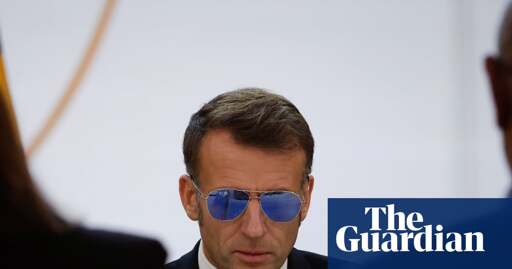
Emmanuel Macron has hit back at Donald Trump’s latest threats to impose tariffs on any country opposing his Greenland takeover, warning that “no amount of intimidation” will persuade European nations to change their course on Greenland.
He was echoed by the Swedish prime minister, Ulf Kristersson, who warned the EU would not be “blackmailed” by the US president, who on Saturday announced 10% tariffs on eight European countries from 1 February, with a further 25% tariff from 1 June.
In a joint statement, EU leaders said “tariffs would undermine transatlantic relations and risk a dangerous downward spiral”.
It is highly likely that the European parliament will halt ratification of last summer’s trade deal with the US after Manfred Weber, the head of the European People’s party, the largest voting bloc in the institute, said they would have to pause the legal rubber stamping process.
You do realize that tariffs do impact the nation being tariffed as well right? They don’t pay the tax directly, but it does make it harder to sell goods in your nation due to an inflated price.
Well that’s how they are usually used. Right now basically everyone is getting tariffed and they change by the hour. Why would I make a new deal with another country for a product that is likely inferior for my purposes to what I was using when that country’s tariff rate could go up tomorrow over some political nonsense? Or the country that exports rubs shoulders and all the sudden the rate falls.
Trade is complicated and deals take time. Stability is still most important.
I do understand that yes, but the tariff itself is placed on the consumer end.
Import tariffs raise the cost of imported goods. For many goods this reduces import volumes and lowers sales for exporters (the tariff’s intended effect). For goods without substitutes, imports continue, and firms often (depending on price elasticity, and competition) pass the higher input cost on to consumers as higher downstream prices rather than absorbing it.