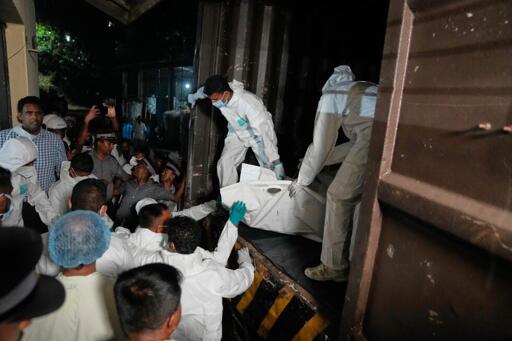
Officials in New Delhi say that an Iranian warship that was sunk by a U.S. submarine near Sri Lanka had participated in naval exercises hosted by India before heading out into international waters in the Indian Ocean on its way home.
And you accuse me of semantics? Is Russia also not at war in your mind, because they did not make some war declaration ritual?
Normally I wouldn’t care this much, but the whole reason for this conversation was that you were defending the murders of unarmed sailors who were not at war. So fuck you, you fucking shitwhistle.
WTF is this argument? Oh no, they did not have ammo in their gun at the particular moment they were killed. I guess any sniper who kills a general or an assassin trying to kill Hitler should go straight to hell, because their target was not holding a gun at that particular moment.
I find it mind boggling that the part that troubles you is the death of soldiers supporting brutal theocratic dictator most well known for killing his own people and supporting terrorist groups throughout the region. However many issues I have with the US military, the US as a whole, and it’s pedophile president, this really isn’t one of them.
One aspect of this is not that anyone is interested in some “war declaration ritual” but that it is an illegal war that lacks justification under international law.
That said, legally speaking it is true that the laws of armed conflict still apply once hostilities have began and the legality of the war itself is a separate question from whether the attack is. Under those laws an enemy warship is a legitimate target whether it has ammunition or not.
Obviously laws are not morals and you could still take issue on moral grounds with an action that is legal though.
That said, legally speaking it is true that the laws of armed conflict still apply once hostilities have began and the legality of the war itself is a separate question from whether the attack is. Under those laws an enemy warship is a legitimate target whether it has ammunition or not.
Exactly.
Obviously laws are not morals and you could still take issue on moral grounds with an action that is legal though.
I think you mean ethical? On moral grounds, you can take issue with anything, including a woman not wearing a Hijab or speaking in public. Since morals are subjective. It is just unethical to impose such morals on others.
And yes, laws are generally often misaligned with what is ethical, though I am not convinced they are in this particular case.
it is an illegal war that lacks justification under international law.
I guess, technically yes? Although that is true for pretty much any war, even arguably just ones. Regardless, that is not relevant to the topic as you pointed out.
I think you mean ethical? On moral grounds, you can take issue with anything, including a woman not wearing a Hijab or speaking in public. Since morals are subjective. It is just unethical to impose such morals on others.
No I meant moral here. The context is that law codifies an ethical standard and I’m not necessarily arguing the standard should be different, just that someone may personally have a different one (which would be their personal ethical standard). Ethics in general is not universal either of course, there are legal systems and thus codes of ethics that take issue with not wearing a Hijab.
I guess, technically yes? Although that is true for pretty much any war, even arguably just ones. Regardless, that is not relevant to the topic as you pointed out.
No, the former (illegality) follows from the latter (lacking legal justification). There is no jus ad bellum under international law here.
Ok. But, I care about internet strangers morals about as much as I care what their favourite icecream is. It has no relevance to anything.
Ethics in general is not universal either of course, there are legal systems and thus codes of ethics that take issue with not wearing a Hijab.
I don’t think ethics have anything to do with law. Ethics is an attempt to create something like objective morals by evaluating how much objective good or harm an action causes. Of course, it is far from universal since it depends how you evaluate seriousness of a harm and good. E.g. is it better to kill one person and save 3. But you would have a hard time creating an ethics system where wearing a Hijab was unethical, since it pretty much does not affect anyone else.
I don’t think ethics have anything to do with law. Ethics is an attempt to create something like objective morals by evaluating how much objective good or harm an action causes. Of course, it is far from universal since it depends how you evaluate seriousness of a harm and good. E.g. is it better to kill one person and save 3. But you would have a hard time creating an ethics system where wearing a Hijab was unethical, since it pretty much does not affect anyone else.
It is true that law and ethics are distinct (I did not argue otherwise), but they do overlap. Laws often reflect ethical principles even if they’re not identical. Ethics isn’t just about calculating harm and benefit; different theories (like deontology or virtue ethics) focus on duties or character rather than consequences. So while wearing a hijab probably wouldn’t be considered harmful in most ethical systems, that’s more a reflection of the framework than an absolute rule.
they did not have ammo in their gun at the particular moment they were killed.
The Geneva convention is something I appreciate, war crimes is not something I appreciate.
Is Russia also not at war in your mind
This is a fallacy: Iran is at war, but that does not mean all Iranians are active combatants.
Moreover, there’s a bit of a difference: Russia illegally attacked Ukraine, while on the other hand Iran was illegally attacked.
brutal theocratic dictator most well known for killing his own people and supporting terrorist groups throughout the region.
Sure I do agree. I’m not sure bombing the country is a good way to help those people. It does not seem to me that people in Libya are much better off after Gaddafi was murdered, same goes with Afghanistan and Kosovo.
The Geneva convention is something I appreciate, war crimes is not something I appreciate.
There is nothing in the Geneva convention that says a combatant has to have ammo or a gun to be a combatant.
This is a fallacy: Iran is at war, but that does not mean all Iranians are active combatants.
There is no fallacy, because I am not arguing about them being combatants in my last comment. I am debunking a straight up lie that they are not at war. But sure, not everyone is a combatant. Military personel on a warship are.
I’m not sure bombing the country is a good way to help those people.
Who is saying it is? There is a world of middle ground between something being a good idea and a war crime. I am just saying the people being bombed are hardly innocent bystanders.


And you accuse me of semantics? Is Russia also not at war in your mind, because they did not make some war declaration ritual?
WTF is this argument? Oh no, they did not have ammo in their gun at the particular moment they were killed. I guess any sniper who kills a general or an assassin trying to kill Hitler should go straight to hell, because their target was not holding a gun at that particular moment.
I find it mind boggling that the part that troubles you is the death of soldiers supporting brutal theocratic dictator most well known for killing his own people and supporting terrorist groups throughout the region. However many issues I have with the US military, the US as a whole, and it’s pedophile president, this really isn’t one of them.
One aspect of this is not that anyone is interested in some “war declaration ritual” but that it is an illegal war that lacks justification under international law.
That said, legally speaking it is true that the laws of armed conflict still apply once hostilities have began and the legality of the war itself is a separate question from whether the attack is. Under those laws an enemy warship is a legitimate target whether it has ammunition or not.
Obviously laws are not morals and you could still take issue on moral grounds with an action that is legal though.
Exactly.
I think you mean ethical? On moral grounds, you can take issue with anything, including a woman not wearing a Hijab or speaking in public. Since morals are subjective. It is just unethical to impose such morals on others.
And yes, laws are generally often misaligned with what is ethical, though I am not convinced they are in this particular case.
I guess, technically yes? Although that is true for pretty much any war, even arguably just ones. Regardless, that is not relevant to the topic as you pointed out.
No I meant moral here. The context is that law codifies an ethical standard and I’m not necessarily arguing the standard should be different, just that someone may personally have a different one (which would be their personal ethical standard). Ethics in general is not universal either of course, there are legal systems and thus codes of ethics that take issue with not wearing a Hijab.
No, the former (illegality) follows from the latter (lacking legal justification). There is no jus ad bellum under international law here.
Ok. But, I care about internet strangers morals about as much as I care what their favourite icecream is. It has no relevance to anything.
I don’t think ethics have anything to do with law. Ethics is an attempt to create something like objective morals by evaluating how much objective good or harm an action causes. Of course, it is far from universal since it depends how you evaluate seriousness of a harm and good. E.g. is it better to kill one person and save 3. But you would have a hard time creating an ethics system where wearing a Hijab was unethical, since it pretty much does not affect anyone else.
It is true that law and ethics are distinct (I did not argue otherwise), but they do overlap. Laws often reflect ethical principles even if they’re not identical. Ethics isn’t just about calculating harm and benefit; different theories (like deontology or virtue ethics) focus on duties or character rather than consequences. So while wearing a hijab probably wouldn’t be considered harmful in most ethical systems, that’s more a reflection of the framework than an absolute rule.
👍
The Geneva convention is something I appreciate, war crimes is not something I appreciate.
This is a fallacy: Iran is at war, but that does not mean all Iranians are active combatants. Moreover, there’s a bit of a difference: Russia illegally attacked Ukraine, while on the other hand Iran was illegally attacked.
Sure I do agree. I’m not sure bombing the country is a good way to help those people. It does not seem to me that people in Libya are much better off after Gaddafi was murdered, same goes with Afghanistan and Kosovo.
There is nothing in the Geneva convention that says a combatant has to have ammo or a gun to be a combatant.
There is no fallacy, because I am not arguing about them being combatants in my last comment. I am debunking a straight up lie that they are not at war. But sure, not everyone is a combatant. Military personel on a warship are.
Who is saying it is? There is a world of middle ground between something being a good idea and a war crime. I am just saying the people being bombed are hardly innocent bystanders.
guys, you are debating the Geneva convention meanwhile the US soldiers have a standing order to ignore all rules of engagements in this American war.
Heheh.
“theocratic dictator” -> “democratic party” idk maybe sth else
“supporting” -> “creating, funding and nationalising”
The rest are pretty much common.
The parts that matter are common.
What do we do? Doesn’t matter who wins, we all lose.
What’s your point? Even if you were right that both sides were evil, should it somehow make me sad they are killing each other?
Should I be deciding what your feelings should be?