

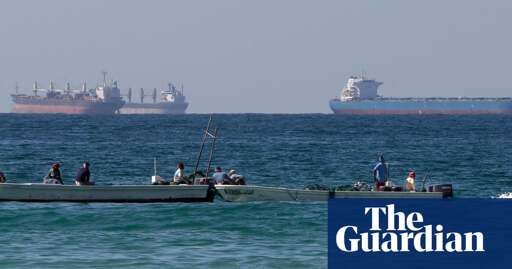
An eerie quiet hangs over Ras Al Khaimah’s industrial port. Usually a thriving maritime hub of the United Arab Emirates, now ships stand docked and silent. Not far out along the hazy horizon, a backlog of hundreds of tankers have lined up in recent days, halted along a waterway flooded with danger.
Any vessel heading past Ras Al Khaimah out to the Arabian Sea must traverse the world’s most treacherous strip of water for shipping today: the strait of Hormuz. Just over 20 nautical miles from Ras Al Khaimah, two oil tankers heading for the strait were attacked by Iranian missiles this week, one catching fire.
It is one of the many consequences facing Gulf states as they are pulled deeper into a war that they did not start and had diplomatically tried to prevent.
For decades, Bahrain, Kuwait, Saudi Arabia, the UAE, Qatar and Oman have allowed US military bases, infrastructure or access on their soil, and have been among the largest buyers of American weapons and technology. In return, the US has stood as the Gulf’s closest and most significant military partner and protector.
But now, Gulf states have growing concerns over the relationship, analysts say, after Donald Trump was seen to wilfully torpedo peaceful diplomatic negotiations in favour of starting a war in the Middle East.
It’s complicated, right? On the one hand, those Arab states couldn’t have predicted this crazy US administration and had no say in the US people voting in somebody like Trump.
On the other hand, however, they are totally involved. First of all, they funneled a lot of money into Trump’s election campaign and therefore are now reaping what they sowed. If you fund somebody like Trump, you get somebody like Trump. And all those conflicts in the regions are also fueled by Saudi, Qatari and Emirate money. You know who is also hosting and funding Hamas? Qatar. Who is funding all those extremist mosques? Saudi Arabia. So if they wanted peace in the region they had a lot of leverage to bring it, and they didn’t.
There was saudi money behind the twitter takeover wasnt there?
Theyve actually contributed to this happening. But perhaps in a dumb way that doesnt give them any control.
Removed by mod
It is conplicated agreed.
They certainly have enough agency to deal with the minor powers in the region. But Iran and Israel are too powerful to deal with, without some outside superpower.
Back in the second Bush Era the Saudi’s heavily influenced the US and were able to convince them to deal with Saddam
But this time round it was the Zionists that contributed more. The Arab powers were also a lot more fragmented in terms of their strategy. They are rivals after all.