

- cross-posted to:
- biology@mander.xyz
- cross-posted to:
- biology@mander.xyz
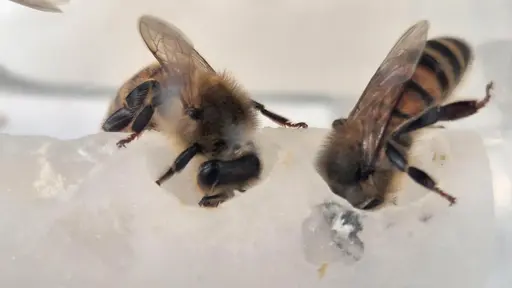
Using CRISPR-Cas9, scientists engineered a yeast to produce the nutrient feed. Farmers could have it in two years.
Using CRISPR-Cas9, scientists engineered a yeast to produce the nutrient feed. Farmers could have it in two years.
Something like this already happened when we traded the long-term health and fertility of the topsoil for the immediate high yield output of artificially fertilized crops.
By outsourcing the repleneshment of fertility to the relatively fragile and unreliable supply chains and social organisations of man, we assumed management over a delicate balance which previously belonged to nature.
I’m not arguing against industrial agriculture and its commodification of fertiliser by the way. If carefully managed it’s possible to imagine an endpoint of equilibrium where global supply chains increase total system fertility by selectively resting soil and relying more on imports to then switch once local fertility peaks and so on. Really just sane and unmolested market forces should in theory discover such a negotiated endpoint.
Fertility alone is not descriptive enough to capture, say, the importance of biological diversity or the load bearing capacity of local environments to support ecosystems, while also producing exportable outputs suitable for maintaining population growth in humanity.
Perennial crops are also ridiculously underused in overall food supply chains. They are more difficult to monetize in existing commodity forms because their overall system value is not captured numerically.
I don’t have an overall solution, but any solution will require at its core a way to assign value to the work which nature already does to replenish its own local fertility and to price that effect very cautiously in such a way that it becomes cheaper for intensive producers to rest unfertile soil until it becomes fertile than it is to compensate for unproductive soil by importing chemical fertiliser from somewhere else
Perennial plants don’t provide the same nutritional yields. Annuals put all their energy into making fruits/seeds that can be harvested. Things like potatoes or onions don’t put all their energy into seeds, but they do put a lot into their roots and that’s what’s harvested.
We need more biodiversity, but we can start by not having brain dead landscaping dictated by office suits.
I think it probably has something to do with this:
(Source for the drawing: my ass)
As plants reach maturity, there’s less additional biomass accumulated year after year. At least that’s how i imagine it, based on animal growth. Like for cattle that’s true. They grow and after 6 months i think they already have like 50% of the weight of a grown-up animal? And if you let them grow for 10 years, they would only have twice the weight than after 6 months but you pay 20x the cost to keep them alive so it doesn’t pay off at all (20x the cost for 2x the yield means only 10% of efficiency). That’s why they’re slaughtered early. I suspect a similar reason applies to plants and why they are eaten early.
Edit: i looked up the numbers for cow and calf (child cow) weights (here and here):