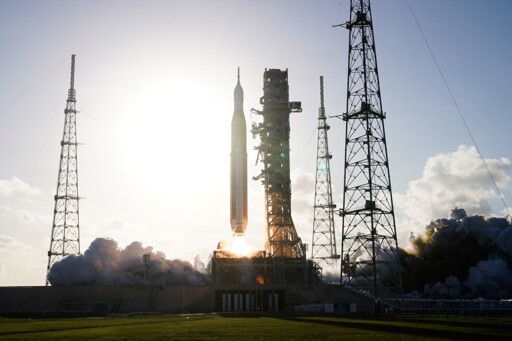
Stamau123@lemmy.world to World News@lemmy.worldEnglish · 2 days agoRocket lifts off with four Artemis II astronauts on a mission to the moon and backapnews.comexternal-linkmessage-square257fedilinkarrow-up1797arrow-down19
arrow-up1788arrow-down1external-linkRocket lifts off with four Artemis II astronauts on a mission to the moon and backapnews.comStamau123@lemmy.world to World News@lemmy.worldEnglish · 2 days agomessage-square257fedilink
minus-squareSam_Bass@lemmy.worldlinkfedilinkEnglisharrow-up9arrow-down1·17 hours agoLong as we have to depend on chemical propellants, the moon is as far as we’ll ever get
minus-squareFordBeeblebrox@lemmy.worldlinkfedilinkEnglisharrow-up4·15 hours agoWell the solar panels all deployed and are charging, but yeah using chemical burns isn’t good for much beyond orbital movement
minus-squareSam_Bass@lemmy.worldlinkfedilinkEnglisharrow-up3·15 hours agoStill need a reliable method to convert the power gained from solar into propulsion with enough force so that it won’t take a decade to get anywhere
minus-squareFordBeeblebrox@lemmy.worldlinkfedilinkEnglisharrow-up1·10 hours agoThe nuclear reflection engine is still our best bet, I feel like it may take actual zero G experiments to solve but I think we can achieve fusion


Long as we have to depend on chemical propellants, the moon is as far as we’ll ever get
Well the solar panels all deployed and are charging, but yeah using chemical burns isn’t good for much beyond orbital movement
Still need a reliable method to convert the power gained from solar into propulsion with enough force so that it won’t take a decade to get anywhere
The nuclear reflection engine is still our best bet, I feel like it may take actual zero G experiments to solve but I think we can achieve fusion