A real-world production migration from DigitalOcean to Hetzner dedicated, handling 248 GB of MySQL data across 30 databases, 34 Nginx sites, GitLab EE, Neo4j, and live mobile app traffic — with zero downtime.
Ok so if I’m reading this correctly: They migrated from an OS and MySQL version receiving no updates since at least 2 years to MySQL 8.0 which will stop getting updates in 4 days. Also every service is running without any containerization and there is a single database for everything… and it all runs on a single host and I didn’t read one word about a backup strategy or disk encryption. Also not a single word about infrastructure as code like ansible so that you can reliably recreate the system… and The whole stuff is hosted in Germany for a Turkish software company - sounds like very good latency.
My personal conclusion: This system WILL fail and the guy who designed it is stuck somewhere 10-20 years in the past.
every service is running without any containerization and there is a single database for everything… and it all runs on a single host and I didn’t read one word about a backup strategy or disk encryption.
Man, a paragraph that can give someone some serious PTSD flashbacks…
The number of times I’ve had to clean up a customer’s environment after they let little Billy play corporate IT and things went boom…
Sounds like my homelab has better redundancy than these guys, and my monthly bill isn’t much different than their new one. I only pay for power and networking, since I own my own hardware. I’m colocating in my city, so my latency to home is about 1ms, and I’ve got a full mirrored server in my house. Certain files are further backed up elsewhere for proper 3-2-1 backup (+ each server running raidz2 with disk encryption). Even if my home Internet goes out, I still have full access to my files at home, and all my public services stay running in the data center. If either server fails, it’s all set up with containers so it’s easy to spin up each service somewhere else.
One thing that’s tricky to get right with disk encryption (especially with encrypted /boot) is having a redundant boot partition. I was able to hack this together by having sofware raid duplicate my boot partition to a second drive. Now if I remove either OS boot drive it falls back to the remaining one. To prevent breaking EFI boot, you need to use the Version 1 RAID format so the metadata is stored at the end of the partition, not the front where EFI reads.


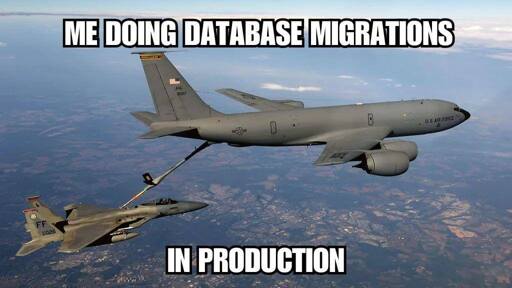
Ok so if I’m reading this correctly: They migrated from an OS and MySQL version receiving no updates since at least 2 years to MySQL 8.0 which will stop getting updates in 4 days. Also every service is running without any containerization and there is a single database for everything… and it all runs on a single host and I didn’t read one word about a backup strategy or disk encryption. Also not a single word about infrastructure as code like ansible so that you can reliably recreate the system… and The whole stuff is hosted in Germany for a Turkish software company - sounds like very good latency.
My personal conclusion: This system WILL fail and the guy who designed it is stuck somewhere 10-20 years in the past.
Man, a paragraph that can give someone some serious PTSD flashbacks…
The number of times I’ve had to clean up a customer’s environment after they let little Billy play corporate IT and things went boom…
Just install Google Ultron and you’ll be fine
Sounds like my homelab has better redundancy than these guys, and my monthly bill isn’t much different than their new one. I only pay for power and networking, since I own my own hardware. I’m colocating in my city, so my latency to home is about 1ms, and I’ve got a full mirrored server in my house. Certain files are further backed up elsewhere for proper 3-2-1 backup (+ each server running raidz2 with disk encryption). Even if my home Internet goes out, I still have full access to my files at home, and all my public services stay running in the data center. If either server fails, it’s all set up with containers so it’s easy to spin up each service somewhere else.
One thing that’s tricky to get right with disk encryption (especially with encrypted /boot) is having a redundant boot partition. I was able to hack this together by having sofware raid duplicate my boot partition to a second drive. Now if I remove either OS boot drive it falls back to the remaining one. To prevent breaking EFI boot, you need to use the Version 1 RAID format so the metadata is stored at the end of the partition, not the front where EFI reads.