Your forgetting inflation. You have to target the amount of saving you need at the end, not at the beginning. Double or triple the amount you are aiming for, if your lucky.
A lot of these calculations solve this by using a lower expected growth rate, to offset the expected inflation. It lets you have the more simple conversations in today’s currency values, which are easier to reason about.
That’s not the case in this particular example, and you’ve correctly identified a deficiency. I raise the point for the benefit of any curious readers who look into other conversations on the topic.
Thats true, but its also inserting some big assumptions into your retirement plans. For example, if you looked at 1955 - 1990 instead of 1990 to 2025 for your historical rate, youd need to double the target again to keep up with inflation. If you went back another 35 years the whole thing implodes on asset yields.


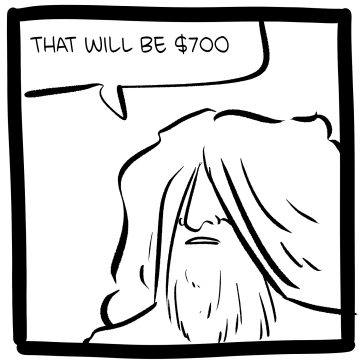
![Inner Peace [SMBC]](https://lemmy.world/pictrs/image/d4a98660-5ee8-4d4d-b915-187d36f58080.png)
Your forgetting inflation. You have to target the amount of saving you need at the end, not at the beginning. Double or triple the amount you are aiming for, if your lucky.
A lot of these calculations solve this by using a lower expected growth rate, to offset the expected inflation. It lets you have the more simple conversations in today’s currency values, which are easier to reason about.
That’s not the case in this particular example, and you’ve correctly identified a deficiency. I raise the point for the benefit of any curious readers who look into other conversations on the topic.
Thats true, but its also inserting some big assumptions into your retirement plans. For example, if you looked at 1955 - 1990 instead of 1990 to 2025 for your historical rate, youd need to double the target again to keep up with inflation. If you went back another 35 years the whole thing implodes on asset yields.