

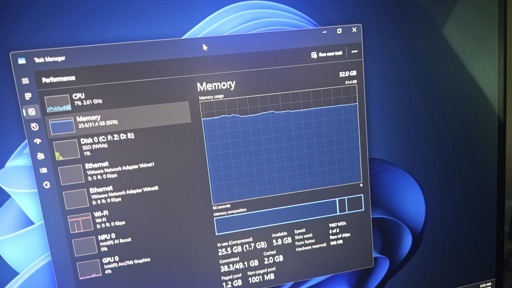
Microsoft has quietly retracted its own documentation that suggested 32GB RAM is the “no worries” upgrade for gaming, and 16GB RAM is the baseline. This support document was likely written using a large language model, and Windows Latest first spotted it before it was taken down. Microsoft also nuked a document that recommended Copilot+ PCs for gaming.
Microsoft has a “Learning Center” where it publishes guides and marketing articles to promote various Windows features, and these rank well in search results. It’s mostly used by Microsoft to push a narrative and also make it easier for users to make a choice when they search the web.
In the first week of April, Microsoft quietly published a support document titled “Gaming features: What the best Windows PC gaming systems have in common.”
At first, the document might appear to be about Windows 11’s gaming features, but it goes a step further and builds a narrative around the memory requirement.
In the support document, Microsoft clearly notes that:
“For most players, 16GB RAM is a practical starting point. Moving to 32GB RAM helps if you run Discord, browsers, or streaming tools alongside your games. That extra memory also gives newer titles more breathing room as memory demands continue to rise.” – Microsoft.
“16GB RAM is the baseline; 32GB is the ‘no worries’ upgrade,” the company concluded in the support document, which was first spotted by Windows Latest.
This was later picked up by other outlets and the gaming community, and it didn’t go well with gamers.
At this point, I’d assume 16GB to be the baseline just for the OS. I gave 8GB to my Windows 10 VM and it chugs.
To be fair, VMs chug no matter how much RAM you give them, because the GPU stuff almost always goes through software rendering instead of to an actual GPU. At least AFAWK.
You can get around that with passthrough but you’d need a dedicated GPU just for the VM.
– Topaz
Theres a couple options from the past 5 or so years, you can find most of them here, most notably DRM native context virgl can approach native speeds.
There is some concerns about isolation, so its not an enterprise solution - but I believe chromeos currently uses DRM native virgl to run a steam gaming VM, and its android subsystem within a VM.
Theres also another couple options that are less async, more secure but quite a lot slower, and less optimised to each device.
(of course there is also passthrough and vGPUs, but like you mentioned these have higher hardware requirements)