From the article, it seems like they just have no way to process them. Correct me if I’m wrong, but I don’t see any sort of obligation to destroy these trees, they just need the farmland back to grow something they can actually sell.
The plant is still there and can process them but the demand has evaporated. The reason: Del Monte was fucking stupid.
Peaches are climacteric. When they ripen they naturally produce the plant hormone ethylene. This triggers a complex ripening process where aromas and volatiles are produced (aka flavor). It also causes rapid softening of the fruit and makes canning them much more difficult.
So what are clingstone peaches. These are peach varieties that have been selected for the down regulation of ethylene production and response. They are hard, sweet, but mostly flavorless, and do not separate from the seed (stone). They ship and process well because of their firmness but taste like shit.
So Del Monte produced good looking but shitty tasting product (extra tin can flavor) and the demand dried up over the years.
Why? Did this happen and why did they go bankrupt? They were allowed to become a regional monopoly.
That’s why they not only preferred the “heavy” syrup (aka sugar water, aka simple syrup) vs. natural jiuce. And worse, they started adding cherry extract to that, likely to add flavor to their flavorless peaches.
“Cherry extract” no doubt. I’ve worked in cherry processing and it’s a crime against nature, they took perfectly good cherries and dumped them in vats with heavy syrup and swished them for hours, dried the cherries that now were empty husks filled with corn syrup and sugar, and presumably used the liquid from the vats as cherry extract, juice cocktails, and the like.
Can’t say I blame them for trying. Selling larger, more robust, and flavourless varieties worked on us with both chicken and tomatoes. The first time I tried a garden tomato was eye-opening. Would love to track down one of the farms selling the old chicken breeds as well, but I hear those are pretty expensive.
The original cardboard tomato contained the rin gene. This completely shutdown the production of ethylene. These tomatoes never turned red until ethylene gas was applied externally.
These types fell out of favor when varieties with down regulated ethylene response and production were developed. These types will turn red but are always firm and mostly flavorless.
My heritage breeds grow slower and have less butcher weight than industrial farm raised chickens. The longer it takes to reach market weight the more feed I have to buy, so yeah, they’re easily twice as expensive per pound. Its insane how cheap they’re able to sell chicken. It gives people sticker shock when they see my price per pound. :(
For sure, you get what you pay for. If it takes twice as long to get them up to weight, it’s no wonder they bred the chicken of tomorrow for mass consumption. I guess it’s better to feed the masses than have chicken as a luxury food only. But as long as you still have the heritage breeds available, I guess we can have both! What do you raise? Any breed in particular that’s worth looking for to try?
If you saw the misshapen horror of a bird that produced a single 2-pound chicken breast at $0.89 per pound, you wouldn’t want to eat it. The amount of growth hormone and antibiotics crammed into these miserable animals is astounding. They have cysts. Open wounds. Broken legs and bald patches.
Every time I see it on sale at the grocery store, I grit my teeth.
Yep. To make things worse, Its actually unhealthy for that breed to live past market weight. They’ll get so heavy they can’t walk anymore and will also devolp all sorts of health problems even if they’re free ranged. A sad state of being.
and you also have to becareful what the description say on how its raise. like cage free, free range this can still be crammed inside a building next other dead birds. you have to look for pasture raised, garden raised.
I raise Rhode Island Reds right now, part time with a foolish hope to full time farm someday. If you can find Bresse chicken it’s supposed to be the Wagyu of the chicken world.
Yeah, that’s what I get through the winter, then I grow tomatoes in the summer. But there youbhave to be careful too. Some seeds end up being the same mass produced crap that industrial farms use. I heard years back that a university in Florida had developed a varietal that solved all conventional problems with tomatoes for the big corporate farms but still managed to prioritize the taste. You could apparently order seeds online. Always wanted to try that.
Don’t bother, those varieties are still pretty bland. They were still bred for shipping AKA firmness. So they were very slightly better than the ones you normally find at the grocery store.
My county’s extension office does a spring fair where they sell about a hundred varieties of heirloom tomato seedlings. They’re not bred for grocery stores and are delicious
Eventually when I retire, I am thinking of doing a little backcross breeding on OP tomatoes. Pulling in all the modern disease resistance package into the older varieties would make growing them much easier.
The hardest part is finding a pathologist to run the screens. I could also speed it up a bit with molecular markers but you can never completely trust them. You have to run the pathology screens.
Well consumers can eat them fresh, but they don’t taste that good. They are slightly sweet with very firm flesh and that’s about it. There’s pretty much no peach flavor and often bitter flavors when you get close to the pit.
Out west especially they have warehouses where they replace all the oxygen with co2 and or nitrogen or whatever, to prevent that ethylene from causing ripening. The result is fruit never goes on sale in those places.
These types of buildings are used mostly for storing apples. They remove the O2 so that molds and fungi stop growing. It’s not really to stop ethylene production which apples do not produce. Apples are harvested in August to October then stored and shipped year round. If you go to the store right now the apples you are getting are around 9 months old.
If they don’t sell all of the apples before the next years crop, they dump them to diaries and feedlots.

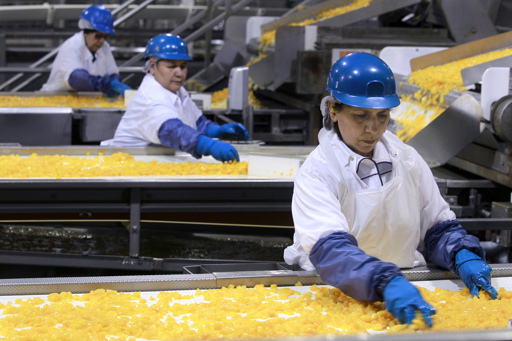
From the article, it seems like they just have no way to process them. Correct me if I’m wrong, but I don’t see any sort of obligation to destroy these trees, they just need the farmland back to grow something they can actually sell.
The plant is still there and can process them but the demand has evaporated. The reason: Del Monte was fucking stupid.
Peaches are climacteric. When they ripen they naturally produce the plant hormone ethylene. This triggers a complex ripening process where aromas and volatiles are produced (aka flavor). It also causes rapid softening of the fruit and makes canning them much more difficult.
So what are clingstone peaches. These are peach varieties that have been selected for the down regulation of ethylene production and response. They are hard, sweet, but mostly flavorless, and do not separate from the seed (stone). They ship and process well because of their firmness but taste like shit.
So Del Monte produced good looking but shitty tasting product (extra tin can flavor) and the demand dried up over the years.
Why? Did this happen and why did they go bankrupt? They were allowed to become a regional monopoly.
North America is so fucked with these horrible monocultures, it’s simply ridiculous.
Yeah but money! Oh…
I’m sure the executives who made those decisions still got to walk away rich while the workers and community get to deal with the consequences.
That’s why they not only preferred the “heavy” syrup (aka sugar water, aka simple syrup) vs. natural jiuce. And worse, they started adding cherry extract to that, likely to add flavor to their flavorless peaches.
“Cherry extract” no doubt. I’ve worked in cherry processing and it’s a crime against nature, they took perfectly good cherries and dumped them in vats with heavy syrup and swished them for hours, dried the cherries that now were empty husks filled with corn syrup and sugar, and presumably used the liquid from the vats as cherry extract, juice cocktails, and the like.
So gross. I have a cherry tree I planted about 7 years ago from a selling. Hoping this is finally its year to shine. It finally flowered enough to be.
I don’t even like cherries and that upsets me.
Can’t say I blame them for trying. Selling larger, more robust, and flavourless varieties worked on us with both chicken and tomatoes. The first time I tried a garden tomato was eye-opening. Would love to track down one of the farms selling the old chicken breeds as well, but I hear those are pretty expensive.
Tomatoes have the largest difference in quality, people often think they don’t like tomatoes until they taste good heirloom ones.
Store tomatoes are bred for firmness.
The original cardboard tomato contained the rin gene. This completely shutdown the production of ethylene. These tomatoes never turned red until ethylene gas was applied externally.
These types fell out of favor when varieties with down regulated ethylene response and production were developed. These types will turn red but are always firm and mostly flavorless.
My heritage breeds grow slower and have less butcher weight than industrial farm raised chickens. The longer it takes to reach market weight the more feed I have to buy, so yeah, they’re easily twice as expensive per pound. Its insane how cheap they’re able to sell chicken. It gives people sticker shock when they see my price per pound. :(
For sure, you get what you pay for. If it takes twice as long to get them up to weight, it’s no wonder they bred the chicken of tomorrow for mass consumption. I guess it’s better to feed the masses than have chicken as a luxury food only. But as long as you still have the heritage breeds available, I guess we can have both! What do you raise? Any breed in particular that’s worth looking for to try?
If you saw the misshapen horror of a bird that produced a single 2-pound chicken breast at $0.89 per pound, you wouldn’t want to eat it. The amount of growth hormone and antibiotics crammed into these miserable animals is astounding. They have cysts. Open wounds. Broken legs and bald patches.
Every time I see it on sale at the grocery store, I grit my teeth.
Yep. To make things worse, Its actually unhealthy for that breed to live past market weight. They’ll get so heavy they can’t walk anymore and will also devolp all sorts of health problems even if they’re free ranged. A sad state of being.
and you also have to becareful what the description say on how its raise. like cage free, free range this can still be crammed inside a building next other dead birds. you have to look for pasture raised, garden raised.
I raise Rhode Island Reds right now, part time with a foolish hope to full time farm someday. If you can find Bresse chicken it’s supposed to be the Wagyu of the chicken world.
The tomatoes on the vine tend to have more flavor. But if you can find some locally grown ones they might be the best.
Yeah, that’s what I get through the winter, then I grow tomatoes in the summer. But there youbhave to be careful too. Some seeds end up being the same mass produced crap that industrial farms use. I heard years back that a university in Florida had developed a varietal that solved all conventional problems with tomatoes for the big corporate farms but still managed to prioritize the taste. You could apparently order seeds online. Always wanted to try that.
Don’t bother, those varieties are still pretty bland. They were still bred for shipping AKA firmness. So they were very slightly better than the ones you normally find at the grocery store.
My county’s extension office does a spring fair where they sell about a hundred varieties of heirloom tomato seedlings. They’re not bred for grocery stores and are delicious
Eventually when I retire, I am thinking of doing a little backcross breeding on OP tomatoes. Pulling in all the modern disease resistance package into the older varieties would make growing them much easier.
The hardest part is finding a pathologist to run the screens. I could also speed it up a bit with molecular markers but you can never completely trust them. You have to run the pathology screens.
maybe heirloom tomatoes?
So all of these trees are clingstone peaches and worthless for consumers?
Well consumers can eat them fresh, but they don’t taste that good. They are slightly sweet with very firm flesh and that’s about it. There’s pretty much no peach flavor and often bitter flavors when you get close to the pit.
Out west especially they have warehouses where they replace all the oxygen with co2 and or nitrogen or whatever, to prevent that ethylene from causing ripening. The result is fruit never goes on sale in those places.
These types of buildings are used mostly for storing apples. They remove the O2 so that molds and fungi stop growing. It’s not really to stop ethylene production which apples do not produce. Apples are harvested in August to October then stored and shipped year round. If you go to the store right now the apples you are getting are around 9 months old.
If they don’t sell all of the apples before the next years crop, they dump them to diaries and feedlots.
eggs all in one basket