

- cross-posted to:
- technology@lemmy.world
- technology@lemmit.online
I cant be bothered to read ‘yet another pie in the sky’ ‘this will solve every thing’, but my two cents:
They still have to move the heat somewhere some how with something or else relaxing the crystals will add the heat back to the system + the work that was done. No work is free
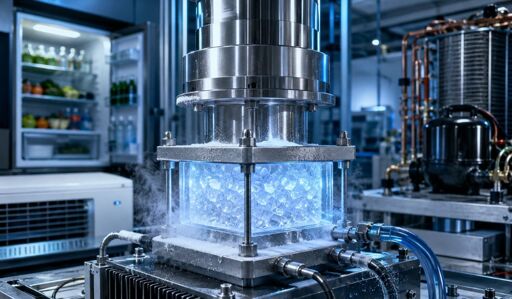
I assume this will work just like any heat pump/fridge. Best case the crystals form a suspension in a liquid like water. Than you just pressurize the water on the hot part and release it in the cold part of the system.
In the end its more about lifetime and costs than anything else. Not sure if anything can beat gasses in that.
Right? My first thought reading the title was “okay sure, the crystals get cold. Then what? Are we going to push the crystals outside so they can warm up again, ready to start the cycle anew?”. How is “cold crystals” working better to transfer heat than a gas/liquid?
I should read the article, I suppose…
I note that the article states the following: “When the pressure is removed, the process reverses, and the solid can absorb heat from the nearby environment.” That would appear to be the opposite of the headline
No it is consistent. Apply pressure => crystal cools, environment heats up. Release pressure => crystals heats up, environment cools.
me too…
from the other post it looks like they are using water to carry the heat away. I guess water and some deforming crystals are better that most of the refrigerants that we currently use
Since we’ve stopped using CFC gases in our air conditioners and fridges, this has been mostly a non issue. The biggest issue also wasn’t the leaking, it was improper recycling. Things were just thrown away, leading to the gas escaping. These days proper recycling is mandatory in most countries and programs have been setup to do so.
Modern airconditioning systems mostly use a pure form of propane (R290). Which is still not the best thing to release, but has a very low environmental impact. Fridges have mainly used R134a for the past 30 years or so, which also doesn’t have a major environmental impact. R32 is also still used a lot, but is being phased out in favor of R290.
I think this is mainly a solved problem. But if they want to spend a few million to figure out if they can do better, more power to them.