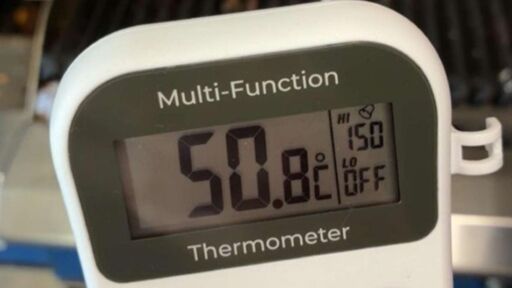
Temperatures in the kitchen at Bistro 8 in Caerphilly hit 51C on the hottest day of the year on Monday. It will re-open on Wednesday with space made in the walk-in fridge for staff to nip in and cool down.
There are worker protection regulations for temperature in the UK, which account for both excessive cold and heat. However, whereas there is an explicitly stated minimum temperature for indoor workplaces (16°C, or 13°C if the work involves rigorous physical exertion), there is no stated upper bound, only that employers must ensure the safety of their workers with respect to heat stress, by maintaining a “reasonable” temperature at work.
We honestly need an update to the regulations, because part of why there isn’t nearly as much guidance for excessive heat is that when the regulations were written, it was assumed that the only workplaces that would be at risk of excessive temperatures were places like bakeries and foundries. Although a kitchen like the one in the article obviously has plenty of equipment outputting additional heat, places like this getting too warm probably wasn’t conceived of when these regulations were written — and it’s only going to get worse.
Unfortunately, the word “reasonable” is pretty fluffy, and I can imagine some workplaces only shutting once workers start experiencing heat stress. And in some cases that I know of, some asshole employers will continue pushing employees past that point — the employees would no doubt succeed if they tried to take action against their employer at this point, because that’s clearly beyond what’s reasonable, but it’s much easier to prove “the temperature was this high” than it is to argue that the temperatures were unreasonable.
I learned a bunch of this from a friend who was concerned for her employees — she was complaining to me about how much work it took for her to figure out what constituted “reasonable” and how the lack of clearer regulations about excessive heat not only made it easier for asshole employers to exploit their workers, but also harder for employers like her to protect her workers (another friend, who was a manager but didn’t directly employ the people working under him concurred, because it took him a lot of arguing to convince the higher ups that AC was necessary in the office)


There are worker protection regulations for temperature in the UK, which account for both excessive cold and heat. However, whereas there is an explicitly stated minimum temperature for indoor workplaces (16°C, or 13°C if the work involves rigorous physical exertion), there is no stated upper bound, only that employers must ensure the safety of their workers with respect to heat stress, by maintaining a “reasonable” temperature at work.
We honestly need an update to the regulations, because part of why there isn’t nearly as much guidance for excessive heat is that when the regulations were written, it was assumed that the only workplaces that would be at risk of excessive temperatures were places like bakeries and foundries. Although a kitchen like the one in the article obviously has plenty of equipment outputting additional heat, places like this getting too warm probably wasn’t conceived of when these regulations were written — and it’s only going to get worse.
Unfortunately, the word “reasonable” is pretty fluffy, and I can imagine some workplaces only shutting once workers start experiencing heat stress. And in some cases that I know of, some asshole employers will continue pushing employees past that point — the employees would no doubt succeed if they tried to take action against their employer at this point, because that’s clearly beyond what’s reasonable, but it’s much easier to prove “the temperature was this high” than it is to argue that the temperatures were unreasonable.
I learned a bunch of this from a friend who was concerned for her employees — she was complaining to me about how much work it took for her to figure out what constituted “reasonable” and how the lack of clearer regulations about excessive heat not only made it easier for asshole employers to exploit their workers, but also harder for employers like her to protect her workers (another friend, who was a manager but didn’t directly employ the people working under him concurred, because it took him a lot of arguing to convince the higher ups that AC was necessary in the office)