A senior figure in the Ukrainian defence industry told New Scientist that a test took place two years ago involving fully autonomous drones set to destroy anything in a given area, with confirmed casualties
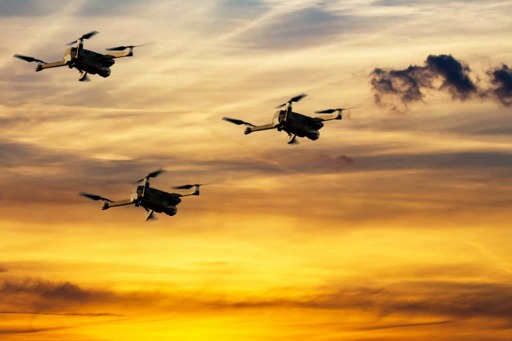
In the current landscape of military technology, what the public conceptually calls “terminator drones” refers to Lethal Autonomous Weapon Systems (LAWS), One-Way Attack (OWA) uncrewed aerial systems, and Collaborative Combat Aircraft (CCA).
Because modern electronic warfare (EW) can instantly sever radio control and jam GPS, these systems cannot rely on a human pilot or cloud computing. They are designed as self-contained, edge-computing robotic hunters.
The physical and technological anatomy of a modern autonomous combat drone is categorized into five core systems:
1. The Neural Architecture (Edge AI Compute Core)
The “brain” is no longer a simple autopilot board; it is an onboard AI accelerator optimized for computer vision and localized decision-making.
The System-on-Chip (SoC): Military-grade edge AI processors (such as ruggedized variants of the Nvidia Jetson Orin series or custom ASICs) capable of executing hundreds of Trillions of Operations Per Second (TOPS).
The Local Model Stack: Instead of connecting to an external server, the drone carries local, highly compressed convolutional neural networks (CNNs). These models are trained on massive synthetic datasets to immediately recognize, classify, and track military hardware (tanks, radar dishes, infantry) even when camouflaged or partially obscured.
2. The Sensor Suite (The Perception Layer)
To operate in “denied environments” where GPS is jammed, the drone relies on a fused sensory array to build an internal map of the world.
Electro-Optical/Infrared (EO/IR) Gimbals: High-resolution thermal and visual cameras that feed raw video directly into the AI computer vision core.
Optical Flow & Visual Inertial Odometry (VIO): Downward-facing cameras that track the movement of the ground pixel-by-pixel. Combined with an Inertial Measurement Unit (IMU), VIO allows the drone to navigate with pinpoint accuracy by “looking” at the terrain, rendering GPS entirely unnecessary.
Solid-State LiDAR / Micro-Radar: Used for low-altitude obstacle avoidance and capturing the 3D geometry of a target during the terminal attack phase.
3. The EW-Resistant Communications & Swarm Mesh
When drones operate collectively, they utilize decentralized mesh networking.
Software-Defined Radios (SDR): Radios that dynamically hop across thousands of frequencies per second to evade electronic jamming.
Inter-Drone Mesh Networking: The drones communicate directly with each other rather than a ground station. If Drone-A detects an air defense system, it instantly updates the target coordinates across the entire swarm mesh. If Drone-A is destroyed, the remaining swarm automatically re-allocates mission roles dynamically.
4. Modular Airframe & Propulsion
Modern mass-production initiatives (like the Pentagon’s Drone Dominance program) prioritize cost-effective, modular structures over exquisite, expensive aerospace frames.
Materials: Carbon fiber composites or high-density 3D-printed polymers designed for rapid assembly.
Propulsion: High-KV brushless electric motors powered by solid-state or high-capacity Lithium-Polymer (LiPo) batteries for small, tactical, low-signature loitering. Larger variants utilize small gas turbines or hybrid-rotary engines for extended range.
Signatures: The geometry is explicitly shaped to minimize both Radar Cross-Section (RCS) and acoustic signatures, allowing them to approach targets completely undetected until the final seconds.
5. The Integrated Kinetic Payload (The Warhead)
Modern military philosophy dictates that an attack drone is not just a vehicle carrying a bomb—the drone is the weapon. New architectures utilize highly specialized, plug-and-play modular payloads (such as the Terminus or Common UAS Payload designs).
Electronic Safe and Arm Devices (ESAD): Microprocessor-controlled safety systems that keep the warhead completely inert until the onboard AI confirms a positive target lock and enters the terminal dive.
Directional Frag/Shaped Charges: Optimized to direct the explosive energy entirely forward into the target upon impact, maximizing lethality while minimizing the structural weight the drone has to carry.
When deployed, the drone is launched into a designated hunt-zone. It navigates purely via visual landmarks. The onboard AI constantly screens the video feed. When an object matches its classification matrix (e.g., a specific mobile missile launcher), the system locks onto the pixel coordinate, arms the ESAD, and executes a terminal dive completely independent of human input.
This tightly integrated anatomy of Edge Compute + Computer Vision + Modular Lethality is what defines the reality of autonomous robotic warfare today.


I suppose that’s the point of it - no comms at all so can’t be jammed.
In the current landscape of military technology, what the public conceptually calls “terminator drones” refers to Lethal Autonomous Weapon Systems (LAWS), One-Way Attack (OWA) uncrewed aerial systems, and Collaborative Combat Aircraft (CCA).
Because modern electronic warfare (EW) can instantly sever radio control and jam GPS, these systems cannot rely on a human pilot or cloud computing. They are designed as self-contained, edge-computing robotic hunters.
The physical and technological anatomy of a modern autonomous combat drone is categorized into five core systems:
1. The Neural Architecture (Edge AI Compute Core)
The “brain” is no longer a simple autopilot board; it is an onboard AI accelerator optimized for computer vision and localized decision-making.
2. The Sensor Suite (The Perception Layer)
To operate in “denied environments” where GPS is jammed, the drone relies on a fused sensory array to build an internal map of the world.
3. The EW-Resistant Communications & Swarm Mesh
When drones operate collectively, they utilize decentralized mesh networking.
4. Modular Airframe & Propulsion
Modern mass-production initiatives (like the Pentagon’s Drone Dominance program) prioritize cost-effective, modular structures over exquisite, expensive aerospace frames.
5. The Integrated Kinetic Payload (The Warhead)
Modern military philosophy dictates that an attack drone is not just a vehicle carrying a bomb—the drone is the weapon. New architectures utilize highly specialized, plug-and-play modular payloads (such as the Terminus or Common UAS Payload designs).
The Functional Workflow (The Autonomy Loop)
[ Launch ] ➔ [ Visual Navigation (No GPS) ] ➔ [ Onboard AI Target Detection ]
                                                          │
[ Terminal Engagement ] 🗲 [ Local Target Classification & Tracking ] ◄────┘
When deployed, the drone is launched into a designated hunt-zone. It navigates purely via visual landmarks. The onboard AI constantly screens the video feed. When an object matches its classification matrix (e.g., a specific mobile missile launcher), the system locks onto the pixel coordinate, arms the ESAD, and executes a terminal dive completely independent of human input.
This tightly integrated anatomy of Edge Compute + Computer Vision + Modular Lethality is what defines the reality of autonomous robotic warfare today.
Thanks, ChatGPT.
No it’s a custom Gemini prompt persona.
No one cares.
If I wanted AI answers, I can ask AI myself.
deleted by creator
Stop spamming this slop.
Ok.