

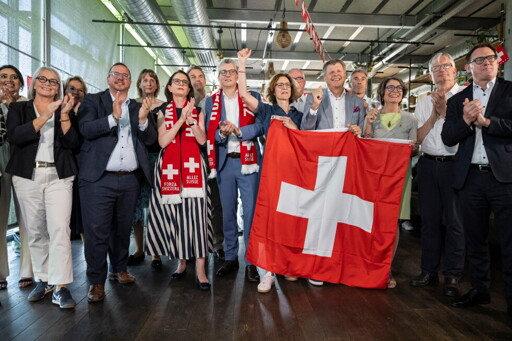
Nearly 55% of voters in Switzerland on Sunday rejected an initiative championed by the top right-wing party to cap the rich Alpine country’s population at 10 million, early results showed.
The populist Swiss People’s Party, which has the most seats in parliament, has stirred up and fostered anti-migration sentiment over the years, notably about an influx of workers from the neighboring European Union.
Some have dubbed the proposal a “Swiss Brexit” because it could jeopardize Switzerland’s deep ties to the European Union anchored by deals that foster economic growth, cultural ties and cross-border travel, among other things. Switzerland is not one of the EU’s 27 member states, but it is all but surrounded by four of them
Switzerland is in the EU’s Single Market and has other important agreements in place with the EU. A key reason for that referendum was the SVP’s ambition to force Switzerland out of the Single market. They can’t get the Swiss to agree to that so they try it in hidden ways, this time with playing the anti-foreigner card, while not mentioning that this is designed in reality to force Switzerland out of the Single Market. So yes, this referndum had a lot to do with the EU. The majority of Swiss voters was not fooled though, again. But also this time, the SVP will not take no for an answer and will try again, with a different construct.
What is the mechanism for being forced out of the EU single market?
What the SVP wanted to get adpoted would force the end of freedom of movement with the EU if population in Switzerland only mildly increases (even if that were to happen purely due to domestic population growth btw). In that case there are guillotine clauses that would automatically kill major treaties with the EU, including the one on being in the Single Market. This is pretty much automatic, as Switzerland would violate the conditions based on which it is part of the Single Market and one-sidedly significantly change the deal. Freedom of Movement is, after all, a majory pillar of the Single Market itself.