Yes… it’s like default settings. The very action of changing a setting on any devices means you are a “power user”. You made a conscious decision on how the device should behave and you suspect it can be done. Meanwhile the vast majority of users do not even consider this a possibility.
Windows users are not using a computer, they are doing another task that happens to required a machine, they don’t learn about what it is, how it works, how it can be modified.
IMHO it was perfectly in the 70s when there was no laptop, desktop, mobile phone, mobile data. Now that one needs to use such infrastructure to interact with others, vote, pay bills, get access to culture, etc then I do believe computer literacy is not optional anymore.
My point isn’t the availability of settings as a meaningful information but rather if somebody did change a setting, or not. If somebody changes a default setting, or a default OS, they are radically more likely to be a power user.
It’s like that, but it’s not the whole picture. That’s how it starts. Then they get to something they can’t change and start trying to figure out why. Then in their web searches they stumble into a Linux forum…


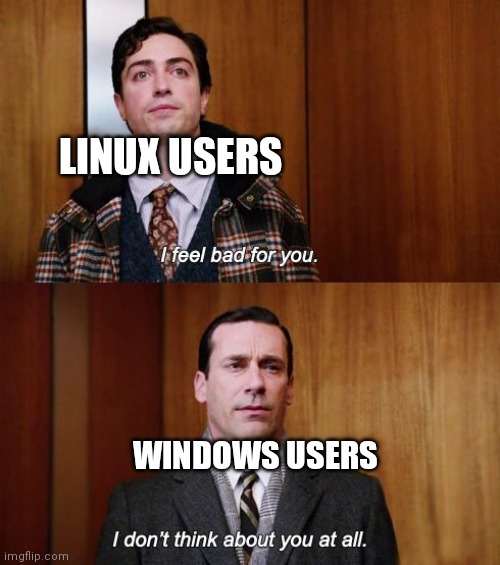
Yes… it’s like default settings. The very action of changing a setting on any devices means you are a “power user”. You made a conscious decision on how the device should behave and you suspect it can be done. Meanwhile the vast majority of users do not even consider this a possibility.
Windows users are not using a computer, they are doing another task that happens to required a machine, they don’t learn about what it is, how it works, how it can be modified.
IMHO it was perfectly in the 70s when there was no laptop, desktop, mobile phone, mobile data. Now that one needs to use such infrastructure to interact with others, vote, pay bills, get access to culture, etc then I do believe computer literacy is not optional anymore.
Pretty sure you can change plenty of settings in Windows.
So they are power users by your own logic.
My point isn’t the availability of settings as a meaningful information but rather if somebody did change a setting, or not. If somebody changes a default setting, or a default OS, they are radically more likely to be a power user.
If I can’t resize the giant taskbar, then what’s the point?
It’s like that, but it’s not the whole picture. That’s how it starts. Then they get to something they can’t change and start trying to figure out why. Then in their web searches they stumble into a Linux forum…
(True story)