

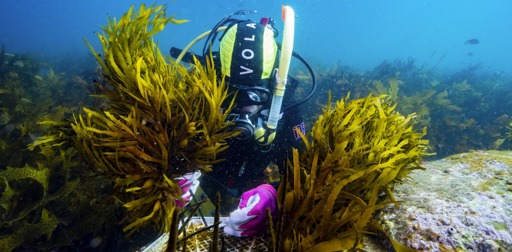
Australia’s Great Southern Reef is built not by coral but by seaweed. The seaweed forests on these rocky reefs stretch more than 8,000 kilometres around southern Australia.
Amid the swaying fronds live seadragons, rock lobsters, giant cuttlefish and southern blue devils. The reef is home to more than 1,500 seaweed species and contributes billions to the economy each year…
To protect these underwater forests, we need to preserve their genetic diversity. We led the first attempt to cryopreserve (freezing and storing reproductive material at ultra-low temperatures) a key Australian seaweed, crayweed, and found the idea shows promise, though the techniques need to be perfected…
We found [crayweed] sperm did well, but the germlings did not (for now). Our ultimate goal is to develop proven methods able to work across a broader range of Australian seaweed species.
Preserving the genetic diversity of seaweed species would mean these genes can be drawn on to bring them back. This buys valuable time and keeps the door open for new methods such as assisted gene flow, where individuals from better-adapted populations are used to help vulnerable ones cope with warmer conditions.