

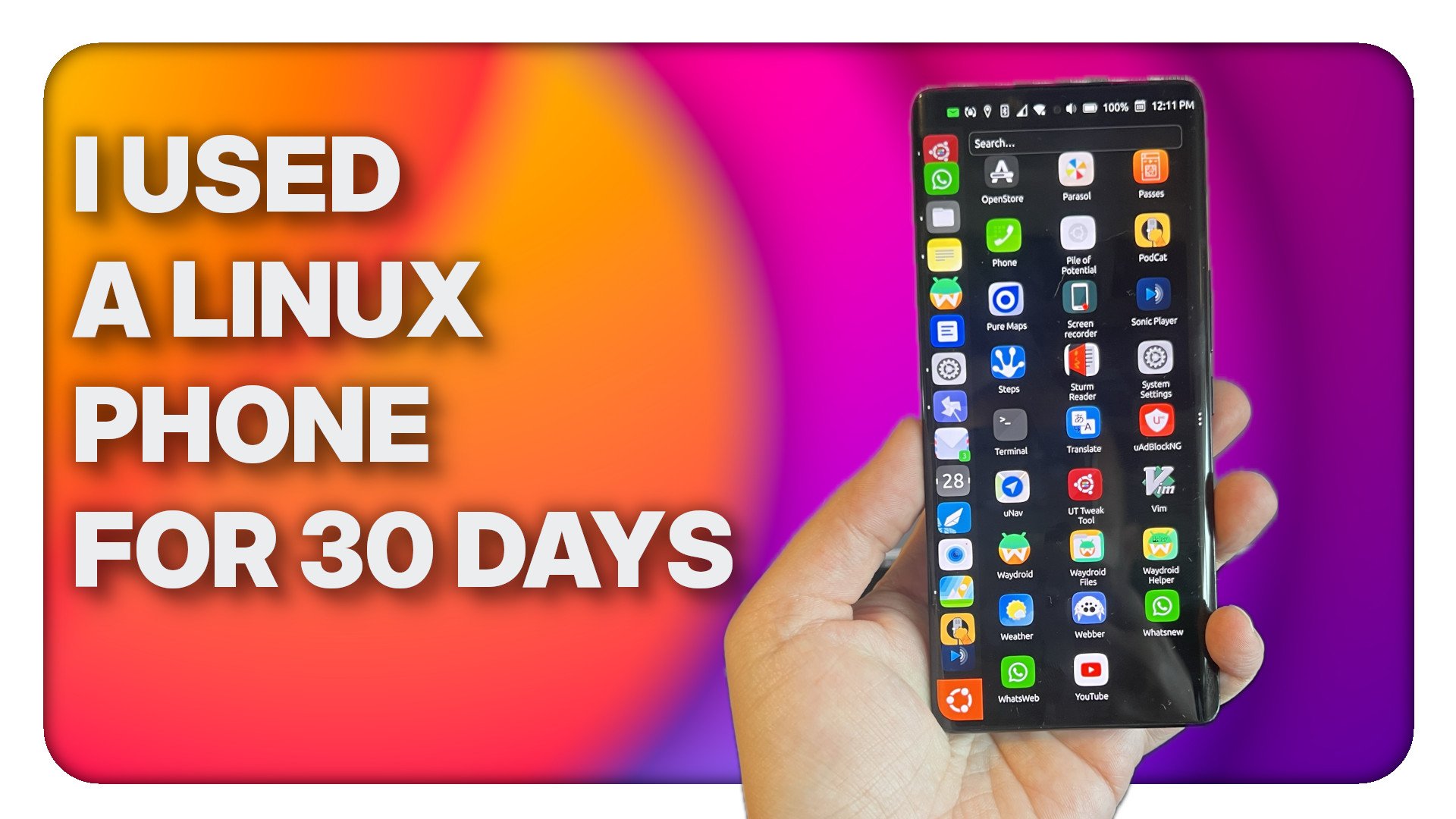
cross-posted from: https://tilvids.com/videos/watch/976a535d-6f0e-4ae6-9d9f-e1010b35dc6b
Use a secure, encrypted, and fast VPN with Proton VPN: https://protonvpn.com/TheLinuxEXP
Grab a brand new laptop or desktop running Linux: https://www.tuxedocomputers.com/en
👏 SUPPORT THE CHANNEL:
Get access to:
- a Daily Linux News show
- a weekly patroncast for more thoughts
- your name in the credits
YouTube: https://www.youtube.com/@thelinuxexp/join
Patreon: https://www.patreon.com/thelinuxexperimentOr, you can donate whatever you want:
https://paypal.me/thelinuxexp
Liberapay: https://liberapay.com/TheLinuxExperiment/👕 GET TLE MERCH
Support the channel AND get cool new gear: https://the-linux-experiment.creator-spring.com/Timestamps:
00:00 Intro
01:05 Sponsor: proton VPN
02:08 What worked well
06:56 Applications I used
14:26 The Waydroid Problems
19:19 Other issues
23:06 What almost broke me
16:10 Will I stick with it
29:37 Sponsor: Tuxedo Computers#linuxphone #android #linuxdesktop #ubuntutouch
They have. But he isn’t talking about the banking bit. He is talking about 2FA. Banks all over Europe have all but dropped SMSTan in favour of app based solutions. You need your banks app to authorise any transaction.
The upside for this is (other than that the communication is encryted now while SMSs are not) that you see the transaction details on your phone while authorising which prevents certain types of scam.
The problem is that this isn’t a standardised solution. Instead every bank either built its own thing or bought a white label solution from a different vendor. There is some EU legislation that would allow a motivated developer to built a banking app for your phone (and if you’re German then Saldo already exists) but that doesn’t matter because the 2FA problem means that you still need an Android or iOS device.