

10·
2 days agoMight want to put a warning that this may be “habit forming.” Yuk yuk yuk.
Neat little app, although I don’t think it will help me stop picking my nose.
Our News Team @ 11 with host Snot Flickerman
Yes, I can hear you, Clem Fandango!
Might want to put a warning that this may be “habit forming.” Yuk yuk yuk.
Neat little app, although I don’t think it will help me stop picking my nose.

Diff’rent strokes
I gotta pee so bad, my molars are swimming.
I gotta pee so bad I can taste it.
You really don’t want a snake eye in your brown eye

With the way the Trump admin is going I’m surprised they haven’t totally dismantled the ADA already.
People without a mobile device are fucked out of being able to pass a captcha
As if this isn’t a way for them to associate multiple sessions on multiple specific devices with one another, this is just another avenue for data collection, period. Hidden under the guise of “more secure.”

“How do you kill that which has no life?”

Had me in the first half.
A good, tightly written film is still a joy to me. They’re rarely tightly written anymore. Out of all new releases I looked at recently, only 3 were under two hours, and only one was at the nearly-perfect-90-minutes.
Not every filmed media needs to be an adaptation of a 15 book set. A movie is more like a short story whereas modern TV series are more like novels.

Yep, it’s still called scrobbling. I have very old tracks in my history that don’t have any timestamps because of the imperfect database changeover when they went from Audioscrobbler to Last.fm. I found that out when exporting my scrobbles to use elsewhere and noticed that my earliest scrobbles weren’t actually pulling timestamps at all, and it was defaulting to them all played on the same day at the same time.
Hell yeah!
I was just looking for a most self-hosty and privacy respecting solution initially. I will keep running it alongside Last.fm in case there’s a reason I need to dump Last.fm or if I decide I don’t want my listening habits on a public site.
EDIT: To be more clear, I have no issues with Listenbrainz at all, I just wanted to self-host.
Nah, I find new music via Bandcamp and piracy sites (which I used to check out music and then buy the stuff I really enjoy and will listen to a lot from Bandcamp).
You can also self-host with Maloja and Multi-scrobbler. This is the most privacy-respecting-option.
https://github.com/krateng/maloja
https://github.com/FoxxMD/multi-scrobbler
I rolled them out with Docker and imported my Last.fm listening history using this tool:
I actually somehow have kept mine going strong for over 20 years now. I even have some early tracks from before they changed how the system worked that don’t have any timestamps from when they got moved from the old system to the new (which was about early/mid 2005).
From about 2014 to 2016 I was having trouble finding listening solutions that actually consistently scrobbled to Last.fm but then got it working again by 2017. I think 2017 is when I paid for a Plex Lifetime pass (back when it was like $90 and not… $750) and that was also the year the Plexamp came out and worked with Last.fm scrobbling. I’ve used Plexamp since.
Also, for my 20 year anniversary I successfully listened to more music in 2025 than I had listened to in one year on 20 years. Worth it, it was fun.

Holy shit.
I have been struggling with a not-quite-perfect scrobbling setup between Maloja and Multi-Scrobbler because I was trying to slowly move away from Last.fm because of lack of trust in ownership.
If they can pull this off and truly be independent again, I will actually stop moving away from them for a while.
Interesting, I wonder why the choice to remove blog spot dot com specifically, this is actually the first time I have ever seen a “removed” from this instance, which is why I assumed at first it must be remote (also I had just woken up). Now that I’m more awake I realize, you’re right, it must be my instance. Maybe I’ll ask my admin sometime if there’s a reason why they block that phrase.
Whatever the last part of the link is it is getting caught in the content filter and being replaced with “removed”.
Can anyone actually share the actual end of the link without triggering the content filter?
False copyright notices should be instant major fucking fines all the way up to complete dissolution of the compay.
We are going on thirty years of this DMCA shit and all it’s ever been used for is a back door for corporations to silence critics.

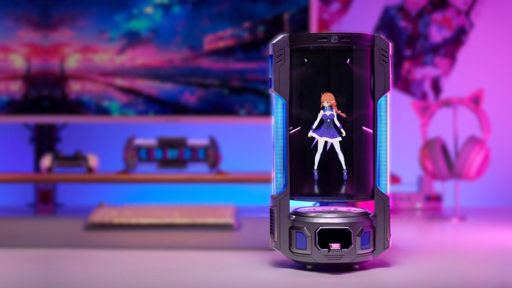

Then this ones for you.