

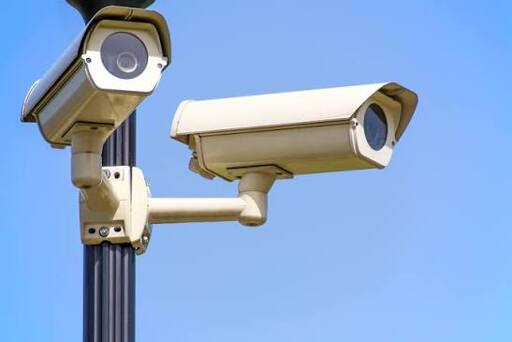
A woman drives with both hands on the wheel. Her phone sits face-down on her lap. No officer pulls her over. No lights flash. Weeks later, a $1,251 ticket arrives in the mail. The evidence: a single frame from a Camera surveillance app. The charge: phone use while driving.
Automated camera companies market their devices as automated license plate readers — tools for catching stolen cars, flagging warrants, and aiding serious investigations.
Sold as a Crime Tool. Used as a Fine Machine.
I remember the NSA massive surveillance machine during the George W. Bush administration and Obama administration that tracked phone metadata and internet traffic that left or entered the US (which was used to justify a lot of surveillance of US citizens). Even after the Snowden disclosures of 2013 we were promised that the system was only meant to track foreign terrorists.
Then we learned that DEA had full access to it, and that NSA was sending hints to law enforcement about large amounts of cash in transit so it could be intercepted for purposes of asset forfeiture, what is nothing short of robbery of civilians by law enforcement officers.
This is an example of mission creep, in this case how it affects the surveillance state. Once we allow a method or technology to be used for major crime (like terrorism), it will eventually be used even for minor crime (like drug possession or distracted driving).
It’s very common for courts to forgive a violation of fourth amendment protections against unreasonable search when the violation presents evidence for a major crime, but then that case will be used as precedent when the same violation occurs and discovers a minor infraction.
This is how, during the aughts and 2010s, the Fourth Amendment was gutted by a long run of carve-outs. Now, a police officer or state agent can violate your privacy without a warrant via a whole range of exceptions:
~ If the crime they discover is significant (SCOTUS suggested controlled substance possession as an example)
~ Using specialized technology, say long-range multi-spectrum cameras, or using a drone.
~ If probable cause can be established. A favorite is a detection dog that signals on anything and has a 90%+ false positive rate.¹ (This is a particular beef of mine, since fake detection dogs are now more common than actual detection dogs, and dogs are losing their presumption of regularity as a result.)
~ If the police officer was acting in good faith, which is obtusely defined and is very hard to disprove.
~ If the suspect is non-white or otherwise suspicious due prejudice. Really, in a lot of counties, law enforcement are allowed to operate on hunches, or have a suspicious activity parameter list that is so encompassing (and often contradictory) that it’s impossible to not be suspicious.
If you want to know how we got here these were already problems during the Obama administration when we had allegedly reasonable people in elected offices. And while they discussed the risk of too much power falling into the wrong hands, they felt compelled to keep it.
Whether the One Ring, or the Ring of Gyges, power without consequence is too seductive.
¹ A similar issue is the $2 roadside drug test which reacts to a lot of substances that aren’t controlled, such as glazed sugar off a donut. These were originally supposed to be then verified later in a lab, but instead were used to establish probable cause, and eventually were used as evidence in court.
This is wildly whack:
https://www.propublica.org/article/common-roadside-drug-test-routinely-produces-false-positives
The system must do everything in its power to drive false convictions down to absolute zero.
Blackstone would agree with you.
Many, many people, in law enforcement and the judiciary would disagree…
…especially when it comes to minorities.