

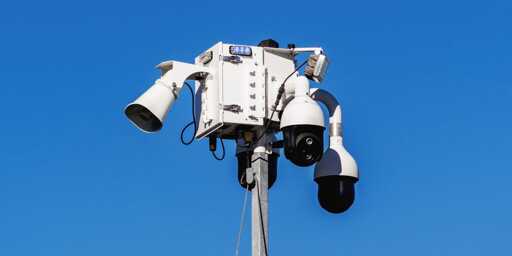
In 2023 and 2024, Flock sent 1,427 alerts to the Roseville [CA] Police Department.
Roseville police found that Flock misread license plates in 71% of those alerts.
Max Isaacs, director of technology law and policy with the Policing Project at New York University’s School of Law, described Roseville’s misread data as “stunning.”
“A 71% misread rate is really beyond the pale,” he told Business Insider, referring to Roseville’s reported error rate for stolen and felony vehicle alerts. He added that “in the absence of concrete rules that directly address the problem of misreads, this technology is not safe to be deployed in communities.”
This has nothing to do with weather conditions or lighting. It has to do with basic statistics: if you are looking for a very small subset of identifiers in a very large pool, and you have a system that has a (pretty good btw) 96% chance to read an identifier correctly, you will get more and more false positives the more identifiers you scan.
That means expanding the Flock network also expands the amount of false positives.
This cannot be avoided, except if you are able to make the 96% rate better; but be reminded if this system would get upgraded from 96% to 99.6%, total precision would only increase about 1% (from 29.1% to 30.1%). reducing the number of false positives in this example by only 15 licence plates.
To actually reduce the amount of false positives, you would have to make the system less sensitive - which isn’t possible in this context.