I did my best to find any technical data about the flight. Couldn’t find any actual numbers. FWIW it’s not intended to be a standalone method of powering the aircraft for commercial use; they plan on making it a hybrid, which makes far more sense as far as range and payload are concerned. Best guess a 25000 lb aircraft like this will probably cruise around 120-150Kt at a nice, slow, efficient airspeed for a test like this. So maybe a 40-50 mile flight because “air time” probably started as soon as they lifted off.
Yeah the problem is they also don’t tell us the load during the flight. From the lift equation (let’s be hand wavey) if they’re a similar size to a regional jet (same planform area) your heavy lift is better driven by speed than lifting coefficient. Of course, it’s hard to go fast with electric props, so I wonder if a safe ceiling is probably 400Kt 300Kt?
Gives a nice range of you know… 40 to 200 150 miles.
Edit:
No way. The speed record for a prop aircraft currently stands at about 300Kt. If we use that generously our new ceiling is lower.
25,000lb. Reading the article it says “more than 25,000 lb”.
We should assume they used a highly efficient airfoil that can maintain the most efficient possible cruise for the demonstration aircraft probably at L/D max if they’e looking for time aloft, so I doubt it’s even worth considering top speed or ceiling. It would be interesting to know what NACA profile they used and what the top speed characteristics would be.
Edit: looks like a Vne of 140 Kias. This is not a fast aircraft. Also a minimal useful load. If you make a couple clicks through to the site of the test it’ll give you more info.
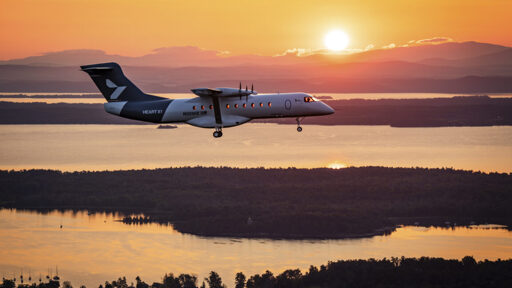
The first flight of the largest battery-electric aircraft to take to the skies lasted nearly half an hour while costing just $5 of electricity.
The X1 aircraft is comparable in size to a small regional airliner and can achieve a maximum takeoff weight exceeding 25,000 pounds with the help of four wing-mounted electric motors. The battery-electric propulsion system delivered more than one megawatt of power during the maiden flight.
It doesn’t tell us what the load was for the test flight at this price point.
You’re probably right that it is good and slow and much less weight.


I did my best to find any technical data about the flight. Couldn’t find any actual numbers. FWIW it’s not intended to be a standalone method of powering the aircraft for commercial use; they plan on making it a hybrid, which makes far more sense as far as range and payload are concerned. Best guess a 25000 lb aircraft like this will probably cruise around 120-150Kt at a nice, slow, efficient airspeed for a test like this. So maybe a 40-50 mile flight because “air time” probably started as soon as they lifted off.
Yeah the problem is they also don’t tell us the load during the flight. From the lift equation (let’s be hand wavey) if they’re a similar size to a regional jet (same planform area) your heavy lift is better driven by speed than lifting coefficient. Of course, it’s hard to go fast with electric props, so I wonder if a safe ceiling is probably
400Kt300Kt?Gives a nice range of you know… 40 to
200150 miles.Edit:
No way. The speed record for a prop aircraft currently stands at about 300Kt. If we use that generously our new ceiling is lower.
It’s right there, friend.
25,000lb. Reading the article it says “more than 25,000 lb”.
We should assume they used a highly efficient airfoil that can maintain the most efficient possible cruise for the demonstration aircraft probably at L/D max if they’e looking for time aloft, so I doubt it’s even worth considering top speed or ceiling. It would be interesting to know what NACA profile they used and what the top speed characteristics would be.
Edit: looks like a Vne of 140 Kias. This is not a fast aircraft. Also a minimal useful load. If you make a couple clicks through to the site of the test it’ll give you more info.
It doesn’t tell us what the load was for the test flight at this price point.
You’re probably right that it is good and slow and much less weight.
Likely a short flight.