I think that these days centres should absolutely not be built. They are on a scale we can’t justify economically or ecologically and the technology they support are national security threats.
These are not the AWS-like data centres that “host the internet”. These are compute only. They’re for AI and big-data. Centralisation of the world computation into a few locations under the control of a few billionaires.
So point 1. Destroying these does not harm the internet. It preserves it. The 90s internet was one where anyone could put up a web-server and serve whatever they wanted. Sure, it might get given a hug-of-death when a site became popular, but it was only that one site that was affected. The internet was distributed and not centralised.
Then came the cloud.
Point 2. This is centralising information. I suspect we are already past the point where people are asking chatbots “who should I vote for?”. That alone places millions of votes under the control of whoever trains the LLM model they ask.
The owners become the owners of all information. It’s so handy. Why read a book? In fact let’s destroy books to create the machine. Now you can ask it anything. How do I make a cake? How do I fix my car? Is there a war in Palestien Ba-sing-se?
Point 3. The cost is too high. The American stock market is teetering on the edge of a huge crash. Bigger than 2008, it threatens to take out several of the world’s most valuable companies. If the damage was limited to them, I wouldn’t worry. Sadly, the banks and investment funds we all use are invested in them. This is Enron x4 plus the banking failure of 2008 in a dot.com bubble wrapper. All whilst the economy in all other sectors is shrinking.
Wall street knows it’s a bubble, but they all want to ride the upside of the bubble, thinking it won’t be them left holding when the crash comes. They could calmly unwind their positions and avoid the crash, but ego and hubris don’t allow that.
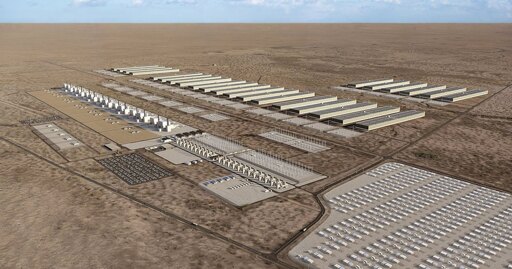
Then there’s the ecological cost. Lake Mead, on the Colorado river, is at it’s lowest level since it was created by the Hoover Dam being constructed. Drought and water use in the south-western states have steadily drained it for years …and they want to add a water guzzlers on the scale of an additional cities. Now I know this one is in Texas, and not in the Colorado river basin, but this isn’t the only one and I’m sure Texas rivers have their own issues.
Then you have the power supply. Whilst the rest of us are trying to move away from fossil fuels, these guys run towards them. Natural gas turbines (which can’t be built to schedule) belching out CO2 whilst heatwaves, drought, and wild fires are happening across the globe. I guess it gives the fossil fuel companies a reason to keep going though.
So yes, I’m against building these centres. The benefits are low, the societal dangers are huge and…


I think that these days centres should absolutely not be built. They are on a scale we can’t justify economically or ecologically and the technology they support are national security threats.
These are not the AWS-like data centres that “host the internet”. These are compute only. They’re for AI and big-data. Centralisation of the world computation into a few locations under the control of a few billionaires.
So point 1. Destroying these does not harm the internet. It preserves it. The 90s internet was one where anyone could put up a web-server and serve whatever they wanted. Sure, it might get given a hug-of-death when a site became popular, but it was only that one site that was affected. The internet was distributed and not centralised.
Then came the cloud.
Point 2. This is centralising information. I suspect we are already past the point where people are asking chatbots “who should I vote for?”. That alone places millions of votes under the control of whoever trains the LLM model they ask.
The owners become the owners of all information. It’s so handy. Why read a book? In fact let’s destroy books to create the machine. Now you can ask it anything. How do I make a cake? How do I fix my car? Is there a war in
PalestienBa-sing-se?Point 3. The cost is too high. The American stock market is teetering on the edge of a huge crash. Bigger than 2008, it threatens to take out several of the world’s most valuable companies. If the damage was limited to them, I wouldn’t worry. Sadly, the banks and investment funds we all use are invested in them. This is Enron x4 plus the banking failure of 2008 in a dot.com bubble wrapper. All whilst the economy in all other sectors is shrinking.
Wall street knows it’s a bubble, but they all want to ride the upside of the bubble, thinking it won’t be them left holding when the crash comes. They could calmly unwind their positions and avoid the crash, but ego and hubris don’t allow that.
All in pursuit of an impossible goal
Then there’s the ecological cost. Lake Mead, on the Colorado river, is at it’s lowest level since it was created by the Hoover Dam being constructed. Drought and water use in the south-western states have steadily drained it for years …and they want to add a water guzzlers on the scale of an additional cities. Now I know this one is in Texas, and not in the Colorado river basin, but this isn’t the only one and I’m sure Texas rivers have their own issues.
Then you have the power supply. Whilst the rest of us are trying to move away from fossil fuels, these guys run towards them. Natural gas turbines (which can’t be built to schedule) belching out CO2 whilst heatwaves, drought, and wild fires are happening across the globe. I guess it gives the fossil fuel companies a reason to keep going though.
So yes, I’m against building these centres. The benefits are low, the societal dangers are huge and…