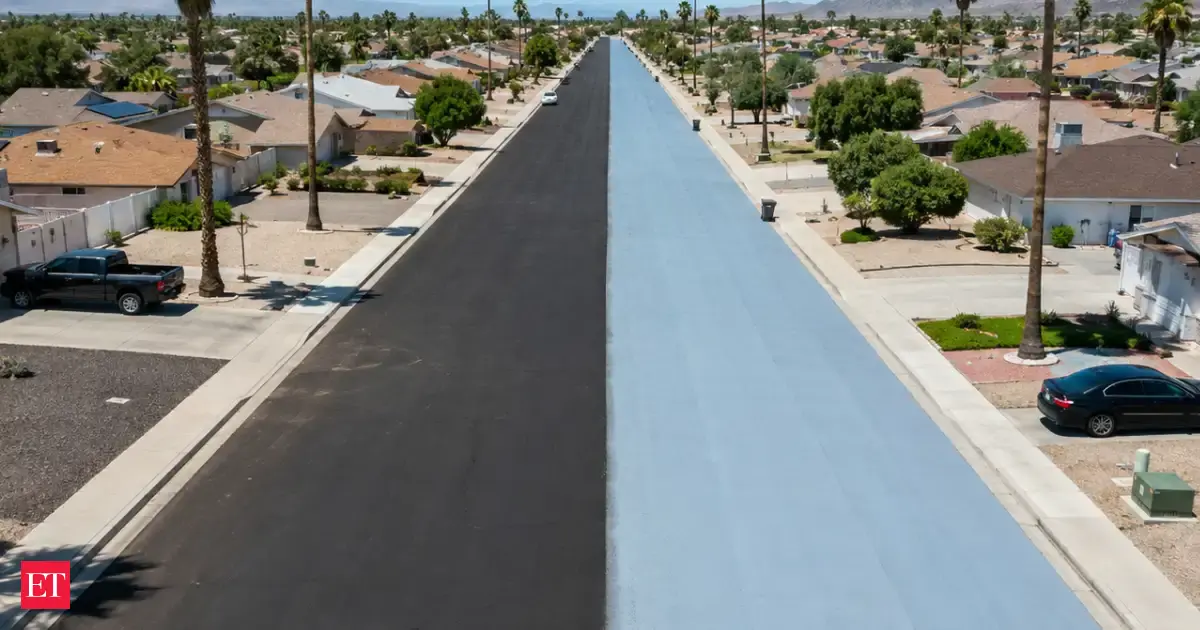
Explore Phoenix's innovative Cool Pavement initiative that reduced surface temperatures but increased heat exposure for pedestrians. Discover the pros and cons of this reflective road coating based on thorough research by ASU.
Absolutely. You would get double the dose, like skiing in a bathing suit. I’ve seen people come off the hill just fried because it’s cool enough they don’t notice getting burned to a crisp by the snow reflection.
Yep. Got a good sunburn when camping in the mountains for the first time in Arapaho National Forest. Snow 2 feet deep on the ground under the trees, but the UV up that high is pretty brutal and got my arms and legs pretty good. Thankfully was wearing a hat with a nice wide brim all the way around so my face, neck, and ears were unscathed. Definitely a learning experience.
I’ll quote the relevant passages for you. It describes the results from two different studies.
Study #1:
The research found that mean radiant temperature, a measure of the thermal radiation absorbed by the body outdoors, rose by an average of 5.5°F on the coated streets.
Study #2:
It noted […] mean radiant temperature over the [coated] pavement rose about 4°C (7.2°F) at midday
Yes, but most of the time, on most of the street, there isn’t a person or other object absorbing sunlight from both directions. So the vast majority of the heat that would’ve been absorbed into some kind of temperature increase in the road itself (and surrounding air and objects) gets rejected back into the sky/space, at the cost of a little bit more sunlight being absorbed directly by the cars and people who happen to be walking by.
I think the argument is that being hit by sunbeams from both sides causes less heat exposure than by the sun from above and asphalt that gets beat on by the sun and radiates heat back up.
I think I’ve seen other places use infrared reflective paint only to avoid excess heat and get similar results.

Am I thinking wrong?
If you walk down the street and there is reflective coating under you, don’t you now get hit by sunbeams from top and bottom?
it’s in the article.
Also, Phoenix uses mostly white concrete for roads, it’s too hot for asphalt.
Bold of you to assume humans can walk outside in Phoenix.
I lived in NC for years. I could never understand how so many people could be so fat in that weather.
Some of us are not from your planet.
47°C in Phoenix this week. You’re going to die outside regardless of how they paint the asphalt.
I’m American, what’s that in Fahrenheit?
Approximately 12 football fields or 34690 bananas.
Really? What the fuck? At what point does meat start to cook? Can’t be far of.
That’s still survivable below 40% humidity. We can deal with a wet bulb temperature of 35°C or below. At 47°C that works out at around 40% humidity.
The wonders of an active cooling system.
Absolutely. You would get double the dose, like skiing in a bathing suit. I’ve seen people come off the hill just fried because it’s cool enough they don’t notice getting burned to a crisp by the snow reflection.
Yep. Got a good sunburn when camping in the mountains for the first time in Arapaho National Forest. Snow 2 feet deep on the ground under the trees, but the UV up that high is pretty brutal and got my arms and legs pretty good. Thankfully was wearing a hat with a nice wide brim all the way around so my face, neck, and ears were unscathed. Definitely a learning experience.
Imagine walking outside in an uninhabitable wasteland like Phoenix.
Did you not read the article? It talks about this.
Nope.
I’ll quote the relevant passages for you. It describes the results from two different studies.
Study #1:
Study #2:
Yes, but most of the time, on most of the street, there isn’t a person or other object absorbing sunlight from both directions. So the vast majority of the heat that would’ve been absorbed into some kind of temperature increase in the road itself (and surrounding air and objects) gets rejected back into the sky/space, at the cost of a little bit more sunlight being absorbed directly by the cars and people who happen to be walking by.
I think the argument is that being hit by sunbeams from both sides causes less heat exposure than by the sun from above and asphalt that gets beat on by the sun and radiates heat back up.
I think I’ve seen other places use infrared reflective paint only to avoid excess heat and get similar results.