If you allow llm to infect code, you will have no programmers that can code once your pre-ai ones (like linus) phase out.
It’s not really ai that is the problem but the skills it eliminates. You can’t properly fix bad ai code if you don’t do code without ai, you will not gain the experience of decades of manually coding properly.
The most experienced coders that exist today are the equivalent of artisanal stone carvers and wood workers who built some of the most beautiful buildings that exist of older times. Modern construction methods phased them out and now the number of people with their skill is tiny worldwide compared to thousands of them in every country in the past.
The tech industry is going to eat itself and won’t realise until it’s too late.
Okay but 99% of corporate codebases are already insane crap. The LLMs write boring, overly safe code, but at least they don’t make obvious IDOR bugs like my human coworkers.
Yeah but when you’re gone nobody is going to even be able to tell the difference between one set of code or the other. Instead the competent programmers will be replaced with tech priests preaching to the machine.
Embracing this technology eliminates competency. Consider how the art industry is currently refusing to embrace it and instead fighting it, what does this do? It ensures that the future has artists who remain competent and does not turn the field of art into a bunch of people who give prompts to an AI.
To really understand this you need to imagine a future where the art field embraced AI and all manual art stops, instead being replaced by people that give prompts to AI to make art. This is the future of the programming field by embracing AI. All future programmers when the manual programmers phase out will just be people that only know how to prompt.
It is incredibly shortsighted and only the realisation that everyone in the field will become like ai “artists” once the current experience phases out really makes this clear. It will suffer a total skill collapse.
But the art field is making final products that have no formal correctness. The programming field is making infrastructure that never gets seen by end users, and we do have formal verification. Two completely different things.
The skill collapse already happened after the 90s which is why all the software is so shit right now. Now the competent people can take over again and rewrite everything in immutable functional languages with complete unit test coverage and viral copyleft licenses.
I work with frontier models every day that I participate in gainful employment activities, and I don’t think I would call them reliable. Definitely not reliable enough to design complicated software correctly on a language there’s relatively little training data on.
But hidden in what you’ve said about construction is that the world moves on and we can now build things faster and more affordably than ever.
This is a very aristocratic ‘Marxist’ take, denying the value of a technology because of its deskilling potential. Truth is every major technological revolution was accompanied by the same misguided doomerism.
And I hate like 95% of what LLMs are being used for and what they produce, for what it’s worth. I just think this argument is a bad and potentially dangerous one to make.
That argument makes sense for construction, it does not make sense for technology.
What do you value more? Innovating new things or mass producing already-existing things?
I particularly don’t enjoy the argument I’m being “aristocratic”. The skills in this field currently exist incredibly broadly, making them accessible even to the average person with huge communities of people capable of teaching and helping one another advance in the craft. When you deskill the field you make it so that the only people with access to those skills are the bourgeoisie, in the future the extreme few people with those skills will be buried away in highly advanced private research institutes and no such community will exist anymore. Those people will be doing much the same thing that this field is currently doing at even the average level of programmer, except it will be prestigious and overblown due to the rarity of the skill, and the quantity of genuinely new things will be far far smaller because they will only be coming out of those organisations, and they will only be private.
If you deskill the entire field say goodbye to anything new and innovative being open source ever again.
Again, held in your statement smuggled in behind the argument is another important wedge. The unmoving and unchanging state of ownership and the permanence of bourgeois rule is presupposed by your argument. Not very communist, and not particularly dialectical in approach.
The unmoving and unchanging state of ownership and the permanence of bourgeois rule is presupposed by your argument.
You are trying to prove the insufficiency of an argument by making a counterargument that is even more insufficient.
We have seen centuries of proto-capitalism, centuries of early capitalism, a century of conflict between hegemonic capitalism and socialism in which the majority of communist gains and inroads were turned back by the bourgeoisie. Bourgeois rule is chaotic and systematically self-reproducing (like the rule of nobility was), but the historical sample and trajectory does not suggest its imminent defeat by the proletariat.
As technology advances, so too do the mechanisms of social control. Global capitalism has proven its ability to adapt to change and subsume any threats, and we are now facing a potentially species-ending polycrisis. You can’t simply wave your hand and say “Marx assures us this specific outcome will happen, therefore the workers will be in control over AI”. It’s 100% counterfactual.
Having a fully informed perspective, or a clear foundation, for all of human technology is what Awoo is arguing for.
unmoving and unchanging state of ownership and the permanence of bourgeois rule is presupposed
Are you saying that Awoo has a negative attitude towards AI because they aren’t taking into account a possible future where we have revolutions, or otherwise seize the means of production? They are negating the agency of the working class to become organized, then fix the problems they raise? And since this might happen, it is treasonous against the future society to raise and perhaps even attempt to address the problems as they present themselves now?
It reminds me of that tech ideology (effective altruism? Or another one?) where they consider all potential future people as valuae as currently living people. So anything done today can be justified if in their theoretical future, it might result in an increase of humans.
Is this how you read Capital? Snarking at any time Marx saw the silver lining in the creation of the industrial proletariat and the massive improvement in the concentration and power of industry like the chapter on cooperation?
I just find it really short sighted and un-marxist, clinging to a version of the world now instead of fighting for a better one that is possible if we work together. You all have a very pessimistic view of the world.
But Communism is meant to stand above the battle for supremacy between the proletariat and the bourgeoisie, which, taken alone, is the realm of chartism and trade unionism.
Taken dialectically, the mass unemployment of a strata of workers also causes massive repercussions for the stability of the capitalist system. Without workers earning wages, an integral part of the the circulation of capital, that of the reproduction of variable capital I.e. the consumption of goods and services by the proletariat is interrupted. This then causes shockwaves in the form of crises of overproduction that throw even more people into poverty, joblessness and disarray. This then produces opportunities for the proletariat to fight back against a weakened system that is no longer functioning to keep them fed and placid. The attack against labour invokes its opposite, an attack of labour against capital. It is at this point the communists put forth their argument - it is not enough to wring concessions from the ruling class that put you in this mess, you must seek to transform society by their overthrowal and by the collective and democratic ownership of the means of production.
I can assure you that while a strike is a powerful weapon against the bourgeoisie, an uprising and revolt is certainly a greater power that doesn’t rest simply on labour downing tools and not showing up to work.
I understand the frustration against the way capital is wielding LLMs and similar technologies as a cudgel against tech and art workers in particular, but we have to think a level above the current clash between labour and capital. We have to think about the war not just the battle.
Taken dialectically, the mass unemployment of a strata of workers also causes massive repercussions for the stability of the capitalist system. Without workers earning wages, an integral part of the the circulation of capital, that of the reproduction of variable capital I.e. the consumption of goods and services by the proletariat is interrupted. This then causes shockwaves in the form of crises of overproduction that throw even more people into poverty, joblessness and disarray. This then produces opportunities for the proletariat to fight back against a weakened system that is no longer functioning to keep them fed and placid. The attack against labour invokes its opposite, an attack of labour against capital. It is at this point the communists put forth their argument - it is not enough to wring concessions from the ruling class that put you in this mess, you must seek to transform society by their overthrowal and by the collective and democratic ownership of the means of production.
Yes and this is all very bad for average people. Therefore which side of the struggle are we to take? One in favour of bringing about the conditions that will destroy the lives of working people or one in favour of protecting those lives?
One side is accelerationism. The other is authentically fighting to protect the lives of average people.
I can assure you that while a strike is a powerful weapon against the bourgeoisie, an uprising and revolt is certainly a greater power that doesn’t rest simply on labour downing tools and not showing up to work.
This won’t be an uprising. It will be a war of survival. If bourgeoisie no longer need labour then the protection that the working class receives for its usefulness is removed. The bourgeoisie will recognise that the uprisings are existential for themselves, they will not seek to simply bring people back under control to exploit them because that incentive will be gone, they will seek to exterminate all threat to themselves. This can and will be carried out through any means necessary, including deadly chemical weapons at a mass and unprecedented scale. The bourgeoisie will seek to be the surviving class, then they will live in fully automated luxury and abundance after they win.
Call me a revisionist but I do not think Marx was correct in his assumption that the contradiction could only resolve in one direction - an inevitable working class victory. Marx only envisioned a world in which the working class would be permanently necessary for their labour, he did not and could not imagine a world where the working class could have that taken away. When you do take that away this contradiction can resolve with a bourgeois victory as well. They can win and they can live in the communism that follows by themselves.
This argument is just longtermism, and Elon Musk cites it regularly to defend against any and all criticisms of newly developing technology. All harms in the present are fine and good because in the inevitable future we are going to create everything will be better!
You want to claim I’m not thinking like a communist and I’m not being dialectical. Yet your yourself are supporting a position that opposes struggle whereas I stand with using struggle in all of its forms, and the radical change of a form of production such as the mass automation of previously manual labour in programming that AI represents is certainly a theater of struggle.
They’re trying to say, in a roundabout way, that LLM bullshit is heightening alienation of workers and there are bad effects that’s going to have on the workers and society.
Artists, more proletariat consciousness, resist LLMs, desire to not be alienated from their labour processes, care about quality of output, will likely not scapegoat political minorities for why society is worse under LLM-sloptocracy
Dipshit tech workers, more bourgeois consciousness, embrace LLMs, accepting of alienation from the labour process, don’t care about quality of output, will project blame onto scapegoats as things get worse
The synthesis would be non-alienated labour process where people still care about developing themselves and not just shitting out code for the market - maybe using LLMs as like a doublecheck like Spellcheck in word processors - but how long that would take IDK. China likely hasn’t even hit that stage of worker consciousness/development.
Yeah but if they don’t write code they won’t learn. A lot of coding isn’t really like learning to drive a car and once you know how you’re done, it’s a persistent lifelong accumulation of experience in architecture.
The field absolutely will suffer a skill collapse when the existing generations of experienced pre-ai programmers phase out. There is no replacement mechanism in the system and the industry is young enough to have never even had to think about this problem ever occurring.
I’m not pro-LLM but this already happens all the time at corporate levels when the bean counters decide to fire (usually constructively dismiss) their senior talent. They have a complex codebase that captures domain specific logic well and uses good practices but then they try to have a dev team that’s half the size and 1/10th as experienced try and fail to maintain it. Then customers complain and it gets poorly patched over and over again until something important breaks and they have to stop touching entire parts of the stack or they leak a db dump or get ransomed or the site goes from 99.9999% uptime to 90%.
I do understand that at an industry level you’re describing something like the memes where only millennials can edit a pdf because the boomers/gen x never tried to learn tech and the zoomers were never exposed to non-mobile-app workflows as kids. Where the skill itself is mostly generationally bound. But I do think the skillet will remain, just not at the corporate shovelware factories where it was already actively despised as a cost center to be done away with at the earliest opportunity. Because they already deskill there! And outsource with zero investigation of competency (not a dig at workers getting the outsourced jobs, even the ones that don’t know their stuff, because hell yeah I salute that).
Makes me think it is also representative of the trend in physical production and construction. In the US there were decades of high output. Starting nineteenth century, even more after WW2. But then everything became complacent, outsourced, unmaintained, deregulated.
It is a general trend for sure, not a new innovation. Like elon musk doging the government. Same effect. Now all that skill is gone. Did you see the post that FBI now can now hire people with criminal records of bestiality?
All the stuff about Iran vs US military production and capacity also. Iran was exempted from the trend due to circumstances.
Maybe they try to eliminate the middle class as much as possible so it will not be an annoyance for them in the future.


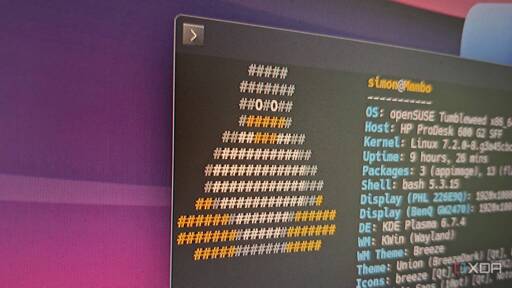
I actually disagree with a lot of people here.
If you allow llm to infect code, you will have no programmers that can code once your pre-ai ones (like linus) phase out.
It’s not really ai that is the problem but the skills it eliminates. You can’t properly fix bad ai code if you don’t do code without ai, you will not gain the experience of decades of manually coding properly.
The most experienced coders that exist today are the equivalent of artisanal stone carvers and wood workers who built some of the most beautiful buildings that exist of older times. Modern construction methods phased them out and now the number of people with their skill is tiny worldwide compared to thousands of them in every country in the past.
The tech industry is going to eat itself and won’t realise until it’s too late.
Okay but 99% of corporate codebases are already insane crap. The LLMs write boring, overly safe code, but at least they don’t make obvious IDOR bugs like my human coworkers.
I’ve seen LLMs put sensitive secrets in git just like any incompetent junior dev
Not to mention that it’s quite common to see them delete the database if they can get access to it
critical support?
It’s done randomly and infrequently so at best it’s a form of adventurism if you’re ok with anthropomorphizing.
Harness + got hooks + formal verification trivially prevents everything like that. You’re just holding it wrong.
Yeah but when you’re gone nobody is going to even be able to tell the difference between one set of code or the other. Instead the competent programmers will be replaced with tech priests preaching to the machine.
Embracing this technology eliminates competency. Consider how the art industry is currently refusing to embrace it and instead fighting it, what does this do? It ensures that the future has artists who remain competent and does not turn the field of art into a bunch of people who give prompts to an AI.
To really understand this you need to imagine a future where the art field embraced AI and all manual art stops, instead being replaced by people that give prompts to AI to make art. This is the future of the programming field by embracing AI. All future programmers when the manual programmers phase out will just be people that only know how to prompt.
It is incredibly shortsighted and only the realisation that everyone in the field will become like ai “artists” once the current experience phases out really makes this clear. It will suffer a total skill collapse.
But the art field is making final products that have no formal correctness. The programming field is making infrastructure that never gets seen by end users, and we do have formal verification. Two completely different things.
The skill collapse already happened after the 90s which is why all the software is so shit right now. Now the competent people can take over again and rewrite everything in immutable functional languages with complete unit test coverage and viral copyleft licenses.
Great, so why has that not happened?
Cause the models have only been reliable for like 6 months, and only cheap for the past two weeks
I work with frontier models every day that I participate in gainful employment activities, and I don’t think I would call them reliable. Definitely not reliable enough to design complicated software correctly on a language there’s relatively little training data on.
Cool! Where is the git repo?
Im still working on it but you can use Pharo for now
But hidden in what you’ve said about construction is that the world moves on and we can now build things faster and more affordably than ever.
This is a very aristocratic ‘Marxist’ take, denying the value of a technology because of its deskilling potential. Truth is every major technological revolution was accompanied by the same misguided doomerism.
And I hate like 95% of what LLMs are being used for and what they produce, for what it’s worth. I just think this argument is a bad and potentially dangerous one to make.
That argument makes sense for construction, it does not make sense for technology.
What do you value more? Innovating new things or mass producing already-existing things?
I particularly don’t enjoy the argument I’m being “aristocratic”. The skills in this field currently exist incredibly broadly, making them accessible even to the average person with huge communities of people capable of teaching and helping one another advance in the craft. When you deskill the field you make it so that the only people with access to those skills are the bourgeoisie, in the future the extreme few people with those skills will be buried away in highly advanced private research institutes and no such community will exist anymore. Those people will be doing much the same thing that this field is currently doing at even the average level of programmer, except it will be prestigious and overblown due to the rarity of the skill, and the quantity of genuinely new things will be far far smaller because they will only be coming out of those organisations, and they will only be private.
If you deskill the entire field say goodbye to anything new and innovative being open source ever again.
Again, held in your statement smuggled in behind the argument is another important wedge. The unmoving and unchanging state of ownership and the permanence of bourgeois rule is presupposed by your argument. Not very communist, and not particularly dialectical in approach.
You are trying to prove the insufficiency of an argument by making a counterargument that is even more insufficient.
We have seen centuries of proto-capitalism, centuries of early capitalism, a century of conflict between hegemonic capitalism and socialism in which the majority of communist gains and inroads were turned back by the bourgeoisie. Bourgeois rule is chaotic and systematically self-reproducing (like the rule of nobility was), but the historical sample and trajectory does not suggest its imminent defeat by the proletariat.
As technology advances, so too do the mechanisms of social control. Global capitalism has proven its ability to adapt to change and subsume any threats, and we are now facing a potentially species-ending polycrisis. You can’t simply wave your hand and say “Marx assures us this specific outcome will happen, therefore the workers will be in control over AI”. It’s 100% counterfactual.
Having a fully informed perspective, or a clear foundation, for all of human technology is what Awoo is arguing for.
Are you saying that Awoo has a negative attitude towards AI because they aren’t taking into account a possible future where we have revolutions, or otherwise seize the means of production? They are negating the agency of the working class to become organized, then fix the problems they raise? And since this might happen, it is treasonous against the future society to raise and perhaps even attempt to address the problems as they present themselves now?
It reminds me of that tech ideology (effective altruism? Or another one?) where they consider all potential future people as valuae as currently living people. So anything done today can be justified if in their theoretical future, it might result in an increase of humans.
Is this how you read Capital? Snarking at any time Marx saw the silver lining in the creation of the industrial proletariat and the massive improvement in the concentration and power of industry like the chapter on cooperation?
I just find it really short sighted and un-marxist, clinging to a version of the world now instead of fighting for a better one that is possible if we work together. You all have a very pessimistic view of the world.
I was asking if I understood what you were saying properly. Your answer is some accusations against me.
Answer me a question: Where do workers get their power to fight from?
I assume you want me to say labour.
But Communism is meant to stand above the battle for supremacy between the proletariat and the bourgeoisie, which, taken alone, is the realm of chartism and trade unionism.
Taken dialectically, the mass unemployment of a strata of workers also causes massive repercussions for the stability of the capitalist system. Without workers earning wages, an integral part of the the circulation of capital, that of the reproduction of variable capital I.e. the consumption of goods and services by the proletariat is interrupted. This then causes shockwaves in the form of crises of overproduction that throw even more people into poverty, joblessness and disarray. This then produces opportunities for the proletariat to fight back against a weakened system that is no longer functioning to keep them fed and placid. The attack against labour invokes its opposite, an attack of labour against capital. It is at this point the communists put forth their argument - it is not enough to wring concessions from the ruling class that put you in this mess, you must seek to transform society by their overthrowal and by the collective and democratic ownership of the means of production.
I can assure you that while a strike is a powerful weapon against the bourgeoisie, an uprising and revolt is certainly a greater power that doesn’t rest simply on labour downing tools and not showing up to work.
I understand the frustration against the way capital is wielding LLMs and similar technologies as a cudgel against tech and art workers in particular, but we have to think a level above the current clash between labour and capital. We have to think about the war not just the battle.
Yes and this is all very bad for average people. Therefore which side of the struggle are we to take? One in favour of bringing about the conditions that will destroy the lives of working people or one in favour of protecting those lives?
One side is accelerationism. The other is authentically fighting to protect the lives of average people.
This won’t be an uprising. It will be a war of survival. If bourgeoisie no longer need labour then the protection that the working class receives for its usefulness is removed. The bourgeoisie will recognise that the uprisings are existential for themselves, they will not seek to simply bring people back under control to exploit them because that incentive will be gone, they will seek to exterminate all threat to themselves. This can and will be carried out through any means necessary, including deadly chemical weapons at a mass and unprecedented scale. The bourgeoisie will seek to be the surviving class, then they will live in fully automated luxury and abundance after they win.
Call me a revisionist but I do not think Marx was correct in his assumption that the contradiction could only resolve in one direction - an inevitable working class victory. Marx only envisioned a world in which the working class would be permanently necessary for their labour, he did not and could not imagine a world where the working class could have that taken away. When you do take that away this contradiction can resolve with a bourgeois victory as well. They can win and they can live in the communism that follows by themselves.
This argument is just longtermism, and Elon Musk cites it regularly to defend against any and all criticisms of newly developing technology. All harms in the present are fine and good because in the inevitable future we are going to create everything will be better!
You want to claim I’m not thinking like a communist and I’m not being dialectical. Yet your yourself are supporting a position that opposes struggle whereas I stand with using struggle in all of its forms, and the radical change of a form of production such as the mass automation of previously manual labour in programming that AI represents is certainly a theater of struggle.
They’re trying to say, in a roundabout way, that LLM bullshit is heightening alienation of workers and there are bad effects that’s going to have on the workers and society.
Artists, more proletariat consciousness, resist LLMs, desire to not be alienated from their labour processes, care about quality of output, will likely not scapegoat political minorities for why society is worse under LLM-sloptocracy
Dipshit tech workers, more bourgeois consciousness, embrace LLMs, accepting of alienation from the labour process, don’t care about quality of output, will project blame onto scapegoats as things get worse
The synthesis would be non-alienated labour process where people still care about developing themselves and not just shitting out code for the market - maybe using LLMs as like a doublecheck like Spellcheck in word processors - but how long that would take IDK. China likely hasn’t even hit that stage of worker consciousness/development.
This is why anyone who uses llms should know how to code and they should review the code.
Yeah but if they don’t write code they won’t learn. A lot of coding isn’t really like learning to drive a car and once you know how you’re done, it’s a persistent lifelong accumulation of experience in architecture.
The field absolutely will suffer a skill collapse when the existing generations of experienced pre-ai programmers phase out. There is no replacement mechanism in the system and the industry is young enough to have never even had to think about this problem ever occurring.
I’m not pro-LLM but this already happens all the time at corporate levels when the bean counters decide to fire (usually constructively dismiss) their senior talent. They have a complex codebase that captures domain specific logic well and uses good practices but then they try to have a dev team that’s half the size and 1/10th as experienced try and fail to maintain it. Then customers complain and it gets poorly patched over and over again until something important breaks and they have to stop touching entire parts of the stack or they leak a db dump or get ransomed or the site goes from 99.9999% uptime to 90%.
I do understand that at an industry level you’re describing something like the memes where only millennials can edit a pdf because the boomers/gen x never tried to learn tech and the zoomers were never exposed to non-mobile-app workflows as kids. Where the skill itself is mostly generationally bound. But I do think the skillet will remain, just not at the corporate shovelware factories where it was already actively despised as a cost center to be done away with at the earliest opportunity. Because they already deskill there! And outsource with zero investigation of competency (not a dig at workers getting the outsourced jobs, even the ones that don’t know their stuff, because hell yeah I salute that).
Makes me think it is also representative of the trend in physical production and construction. In the US there were decades of high output. Starting nineteenth century, even more after WW2. But then everything became complacent, outsourced, unmaintained, deregulated.
It is a general trend for sure, not a new innovation. Like elon musk doging the government. Same effect. Now all that skill is gone. Did you see the post that FBI now can now hire people with criminal records of bestiality?
All the stuff about Iran vs US military production and capacity also. Iran was exempted from the trend due to circumstances.
Maybe they try to eliminate the middle class as much as possible so it will not be an annoyance for them in the future.
People don’t exactly stay on top of their game by reviewing slop code.
You don’t learn that stuff get your degree and remain an expert for the rest of your life.
Ok but if you put it like that it doesn’t sound like a bad thing.
Until you realise that software is in everything from government services, to hospitals, to the means of communication
A lot of that is still paper records here.
Or COBOL that nobody dares to touch anyway.
But like, for job security
Surely in 50 years it would be ok if the only people that hand wrote C/C++/rust were Amish or working on an obscure hobby.
Like sure everything sucks now and will suck in 5 years, but remember cold fusion only took 50 years.