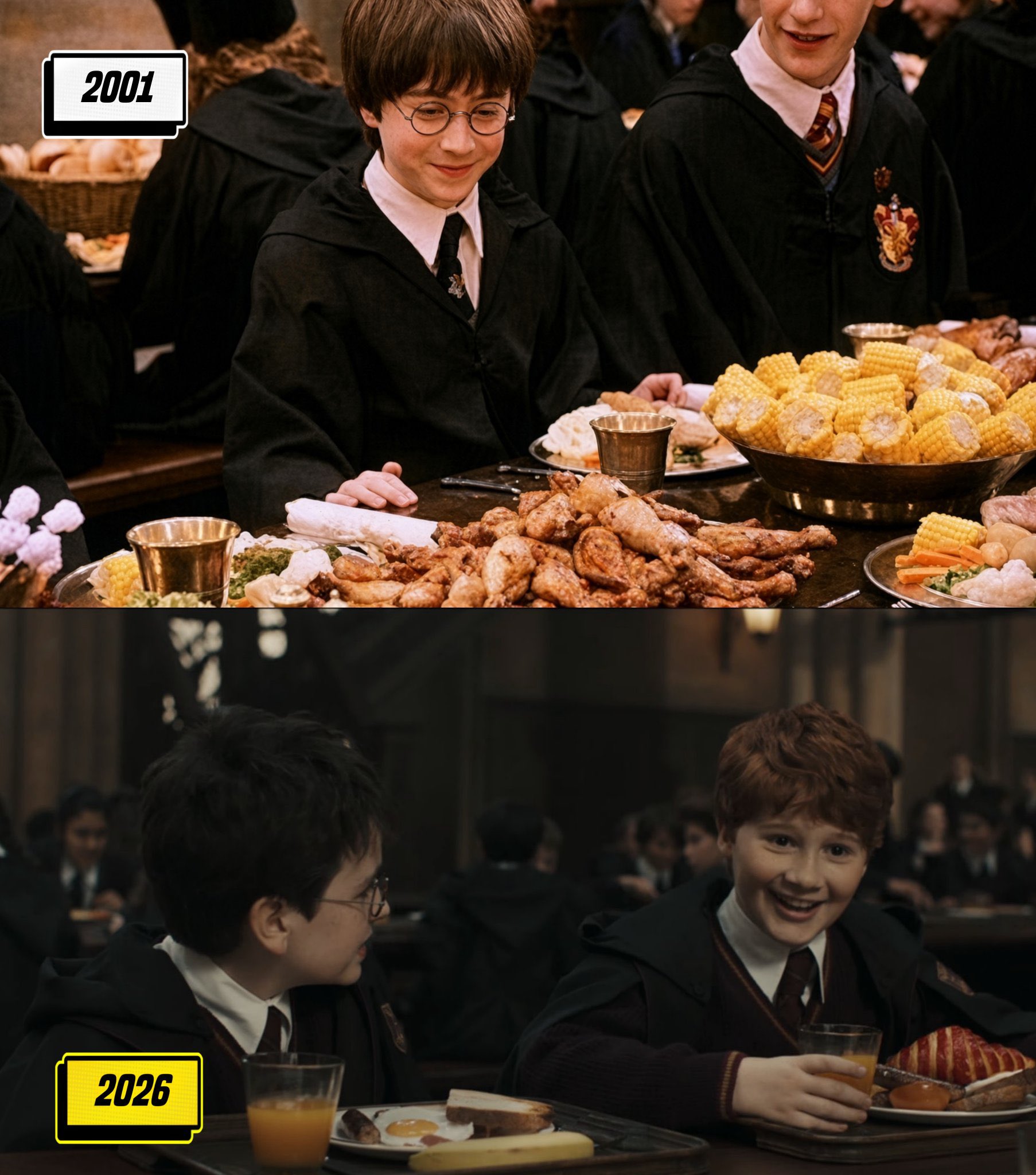
TV panels are light years better at displaying lower light colors and differentiating between blacks than they were in 2001.
As things like OLED technology and HDR offerings have advanced, directors, set designers, consumer designers, cinematographers, and editors across all of post production have been able to work with more of the palette as a result.
Older works needed to be over lit and wash out nearly everything on screen just so that every pixel darker than light tan didn’t meld into one blob of color. That is no longer necessary and, as a result, the worlds shown to us in our living rooms look more real and lived in than ever.
This is likely the case, done like the matrix where there are differing scenes, exposures, coloring and/or filters between worlds so the viewers can differentiate.
This is proven bc I can watch old HP on my old 2011 FHD TV and it doesn’t look entirely different than my newer UHD HDR screen. It’s that way on purpose. Otherwise older films would all be blown out with coloring or contrast too, and they’re not. Only retouching when going from VHS to DVD and/or DVD to Blu Ray, etc. Format changes do usually get a remastering.

TV panels are light years better at displaying lower light colors and differentiating between blacks than they were in 2001.
As things like OLED technology and HDR offerings have advanced, directors, set designers, consumer designers, cinematographers, and editors across all of post production have been able to work with more of the palette as a result.
Older works needed to be over lit and wash out nearly everything on screen just so that every pixel darker than light tan didn’t meld into one blob of color. That is no longer necessary and, as a result, the worlds shown to us in our living rooms look more real and lived in than ever.
Unless you have a TV from the 2010s in which case fuck you.
Yes, but really, no, in this situation… Look at the other comment https://pawb.social/comment/24159500
This is likely the case, done like the matrix where there are differing scenes, exposures, coloring and/or filters between worlds so the viewers can differentiate.
This is proven bc I can watch old HP on my old 2011 FHD TV and it doesn’t look entirely different than my newer UHD HDR screen. It’s that way on purpose. Otherwise older films would all be blown out with coloring or contrast too, and they’re not. Only retouching when going from VHS to DVD and/or DVD to Blu Ray, etc. Format changes do usually get a remastering.