

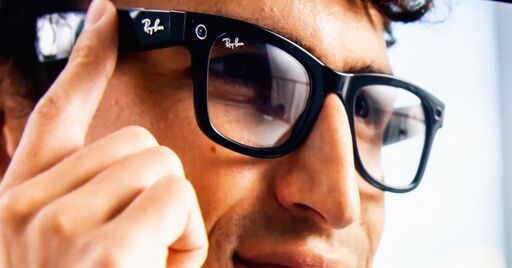
They met at a bar in midtown Manhattan. He arrived wearing a baseball cap pulled low and sported a pair of black-framed glasses, she says. As conversation flowed, from discussions about navigating life in New York to past relationships, he mentioned that his glasses were Meta Ray-Bans.
“I wasn’t familiar with them,” McAnuff, a 28-year-old project manager who now lives in Toronto, tells WIRED. It was her first time seeing the smart glasses up close, which can record images and video from the wearer’s viewpoint. He let her try them on and even showed her a couple of videos that he’d taken previously, she says. “That was it. We stopped talking about it after that. I figured that was the end of the use.”
The next day, checking her Instagram, McAnuff noticed she’d been tagged in one of his story posts. To her surprise, it was footage of them at the bar and on the subway together, en route to a basketball game uptown. In the video, McAnuff is captured from an above angle, sitting across from her date who is holding a drinking glass; WIRED has seen screenshots of the footage. “I felt super violated,” McAnuff says. “Like, what if I don’t want everyone knowing what I’m up to? He felt so free to film me and post it. There was no conversation about it.”
Meta sold more than 7 million pairs of the Ray-Bans in 2025, as its smart glasses have infiltrated public spaces thanks to pranksters with dreams of viral fame, some of whom even film people while they’re at work. The phenomenon, which has also spread to pickup artists hitting on women, has earned the hardware the nickname “creep glasses.”
Among singles, and particularly women, Meta’s AI-powered eyewear has become a recurring nuisance, as people share a spreading unease about being covertly filmed on dates.
I still like the original Glass Hole.