
Echo chambers, and manipulation sold as freedom: the need for a superior social-media design.
Anonymity, freedom of expression, and abuse through bot net, farm campaigns. Thinking about an architecture for the social media of the future. The conflicting interests surrounding anonymity include its abuse through hate speech, as well as by economically powerful actors who manipulate public debate and conduct mass surveillance of social media through OSINT. They may even design opaque and biased algorithms. We need to develop a better design that addresses these problems.
I was thinking about a new, improved design for social media. Many of its problems stem from the abuse of bot farms and the lack of privacy and anonymity, which are exploited by companies and governments.
The future technology for human ID and social media must be conceived and built around key principles: guaranteeing freedom of expression, anonymity, and privacy, while at the same time mitigating the abuse of bot farms and the unchecked hate speech that hides behind the misuse of privacy.
Today, blockchain technology is the closest available option. One possible architecture—or a rough draft of the idea—would be for each human to have a unique hash, and for a recognized, neutral entity, such as the United Nations, to use that ID and zero-knowledge technology—meaning that the UN could never associate or link the ID to a specific person—to issue that individual a pair of identity keys. These keys would be interoperable across the internet, allowing the person to have an account on social media platforms.
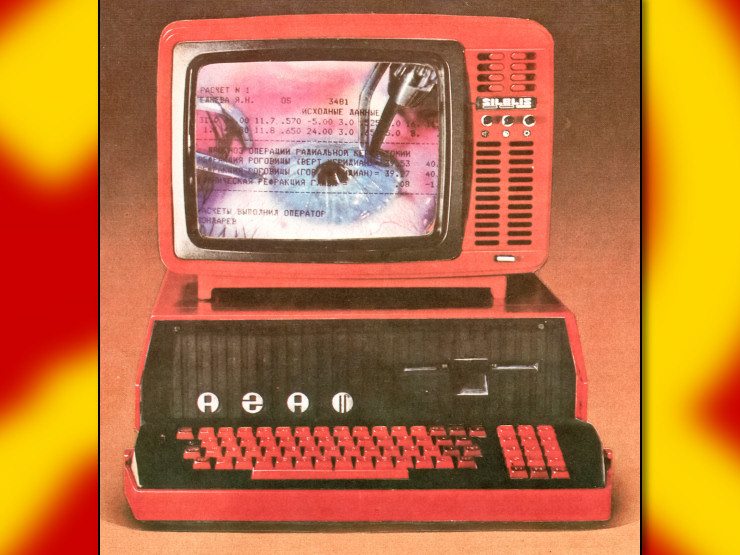
“Cybertonia was a fictional “cybernetic republic” created in the Soviet Union around 1960 by scientists connected to cybernetics researcher Viktor Glushkov. It functioned as a playful scientific community and social experiment, complete with imaginary passports, certificates, money, a constitution, and a robot leader. Cybertonia explored the idea of organizing society through computers and networks, while the real Soviet attempt to build a nationwide computer network was OGAS, a system intended to coordinate the planned economy. Although OGAS was never completed, Cybertonia symbolized an early vision of a digitally connected society governed by information and technology. A cybertopia is a vision of a human-centered digital society built around freedom of expression, privacy, anonymity, and trustworthy participation. It combines decentralized identity, zero-knowledge proofs, and unique proof-of-humanity credentials to verify that users are real people without revealing their personal identities. Its goal is to reduce botnets, mass manipulation, surveillance, algorithmic bias, and hate speech while preserving open public debate and individual autonomy.”*
As you can see, the problem is hard; the challenge is enormous—just like what humanity needs, and it requires an ingenious, superior solution. That’s why discussing it is a first step. What do you think?
A centralized source of trusted credentials for humanity would mean no anonymity from the source, as well as the ability to fraudulently impersonate someone, both by bots and state actors. Block chain also has issues because it’s possible to take a block chain over.
Off the top of my head, I would suggest a technique much like a credit score. Moderation and bot detection actions are reported to several trust servers, which relay this data to websites such that they can choose to take action against the suspected not. This, of course, implies that a user must supply proof of multiple accounts on different websites all have the same owner, which again limits privacy and anonymity. But this has been something I have been thinking about with the age verification laws. I’ll link my youtube and twitter accounts before I’ll upload a picture of my ID.
Thanks for your comment. Makes sense. That’s why a zero-trust mechanism is needed. What I was suggesting is a unique hash-ID per person that, for example, the UN could issue. However, it would be private and completely anonymous, with no way (by design—not even the UN should be able to know it, using something like E2E or zero-trust) to associate the ID with the person. Then this person… and then, starting from this anonymized ID, connect it interoperably with platform IDs. Regardless, what exists today is a government-issued ID framework, with many platforms stripping away that privacy. Or, alternatively, completely anonymous accounts, but with the weakness that economic actors can create bot farms of hundreds of thousands of accounts to interfere with or manipulate social media algorithms, and thus influence elections, etc.
