That’s a limitation of Li-Ion. They’re impissible to charge faster than in minutes without extremely deteriorating. Even then, a massive power distribution and active cooling system is required, greatly increasing the battery’s size and cost for the same capacity. Dumping all the energy into one in 1 second is basically guaranteed to make it explode. The only rechnology that can charge this fast is (super)capacitors, which reach mowhere near the required energy density.
I’m mostly expressing the enthusiasm that comes from the fact that China has a very active research field, and is constantly delivering real world improvements in technology & quality of life improvements.
What kind of range and charge time could a super capacitor car have?
Charging spots along the motorway that you just drive slowly past and boom 5GW charging for 3 seconds from one of the many fusion reactors on the network keeps you going for another 10 miles!
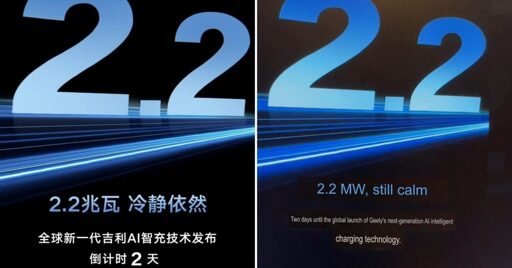
Well, power needs to be delivered to supercapacitors via metal contacts. You’re going to reach physical limits of voltage (safety, isolation distance) or current (conductor cross-section) that can be reached inside the space of a car way before you reach the 100MW mark. Even the 2.2 MW delivery system is not something to drive over, the connector is probably a set of big metal pads that a spring or screw holds together. And not all supercapacitors can charge in a second, it’s usually a trade-off between power capability and energy density. Think 10 Wh/𝑙, about 40x less than Li-Ion, for charging below 10 seconds.
If you’re considering things this far-fetched, just forgo onboard storage for highway trips and build a trolley system.
Pairs of wires like for trolleybuses are required. Grids are for free roaming in an area, which almost nobody needs, and only work when the traction surface is conductive, at which point best just build metal-on-metal rails.


That’s a limitation of Li-Ion. They’re impissible to charge faster than in minutes without extremely deteriorating. Even then, a massive power distribution and active cooling system is required, greatly increasing the battery’s size and cost for the same capacity. Dumping all the energy into one in 1 second is basically guaranteed to make it explode. The only rechnology that can charge this fast is (super)capacitors, which reach mowhere near the required energy density.
Oops! Double post!
I’m mostly expressing the enthusiasm that comes from the fact that China has a very active research field, and is constantly delivering real world improvements in technology & quality of life improvements.
What kind of range and charge time could a super capacitor car have?
Charging spots along the motorway that you just drive slowly past and boom 5GW charging for 3 seconds from one of the many fusion reactors on the network keeps you going for another 10 miles!
Well, power needs to be delivered to supercapacitors via metal contacts. You’re going to reach physical limits of voltage (safety, isolation distance) or current (conductor cross-section) that can be reached inside the space of a car way before you reach the 100MW mark. Even the 2.2 MW delivery system is not something to drive over, the connector is probably a set of big metal pads that a spring or screw holds together. And not all supercapacitors can charge in a second, it’s usually a trade-off between power capability and energy density. Think 10 Wh/𝑙, about 40x less than Li-Ion, for charging below 10 seconds.
If you’re considering things this far-fetched, just forgo onboard storage for highway trips and build a trolley system.
Well my next idea was going to be a metal grid above the motorway like bumpercars.
deleted by creator
Pairs of wires like for trolleybuses are required. Grids are for free roaming in an area, which almost nobody needs, and only work when the traction surface is conductive, at which point best just build metal-on-metal rails.