
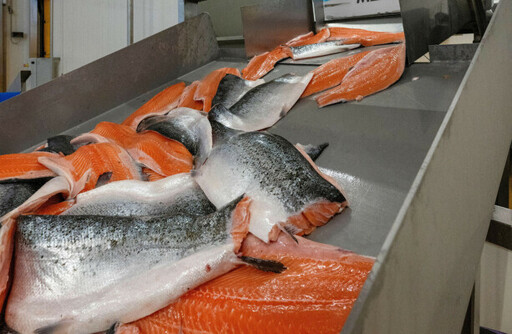
Now, increased demand for traditional fishmeal – which is made from small species caught in the open ocean – has sent the industry scrambling for alternatives.
The stuff being used to make fish feed is a byproduct of the poultry industry – it’s what is left over after the parts of the chicken consumed by humans and the remains used for cat and dog food have been removed.
Yeah, I think you need to look up Indians and their diets better. Some Indians eat meat, others are completely vegetarians, around 50%. I know they have religious rules against eating meat, any meat.
It’s really a Hindu, rather than a specifically Indian, thing. But India is majority Hindu, so.
Hinduism encourages vegetarianism, and it is considered more moral than eating meat since you aren’t killing an animal. However, only Brahmins are required to be vegetarian; other castes can eat non-cow meat if they like, though refraining from doing so is considered better. Since the Brahmins are the highest caste, vegetarianism is a conservative position in India, while the woke SJWs defend religious minorities’ traditions of eating meat.
But, as has been said, this all means that India has a higher than average proportion of vegetarians, and even the lower-caste vegetarians are no less healthy than foreigners of comparable social class.
There are also degrees of vegetarianism. A former housemate of mine is a vegetarian for religious reasons, but he didn’t mind eating a cupcake I’d made which he didn’t realise had egg in it.
One of my current housemates eats meat but his dad is a Brahmin, and said dad can’t even eat vegetarian food that was prepared in cookware which had meat in it at some point. To cater to the really strict Brahmins, there are “double vegetarian” restaurants, where all the food is meat-free and the staff are all vegetarians.
Indians recognise the word vegan because of English hegemony, but they don’t use it themselves. They refer to such people as “true vegetarians”; I think the Jains fall here.