QuantumEraser@fedia.io to Programmer Humor@programming.dev · 21 hours agothis is the start of everything falling apart, i can feel itmedia.fedia.ioimagemessage-square211fedilinkarrow-up1680arrow-down131
arrow-up1649arrow-down1imagethis is the start of everything falling apart, i can feel itmedia.fedia.ioQuantumEraser@fedia.io to Programmer Humor@programming.dev · 21 hours agomessage-square211fedilink
minus-squareCTDummy@piefed.socialcakelinkfedilinkEnglisharrow-up10·14 hours agoIs that graph actually real/based on data?
minus-squareQuantumEraser@fedia.ioOPlinkfedilinkarrow-up5·8 hours agoYep, I cloned the git repo and wrote a script to step through commits a week at a time and count the total em dashes in the repo at each point in time
minus-squareEquinox1289@sh.itjust.workslinkfedilinkarrow-up1·2 hours agoCould you divide this by the total number of lines. That would help tell the rate of change better.
minus-squareotto@feddit.orglinkfedilinkarrow-up19·12 hours agogit grep -I '—' master | wc -l just did a quick check, my graph looks similar.
minus-square∃∀λ@programming.devlinkfedilinkarrow-up1·5 hours agoHow does it look for double hyphens? I would expect those to be more common in code comments (before the LLMageddon at least) as an em dash just looks like a hyphen in the typically displayed monospace type.


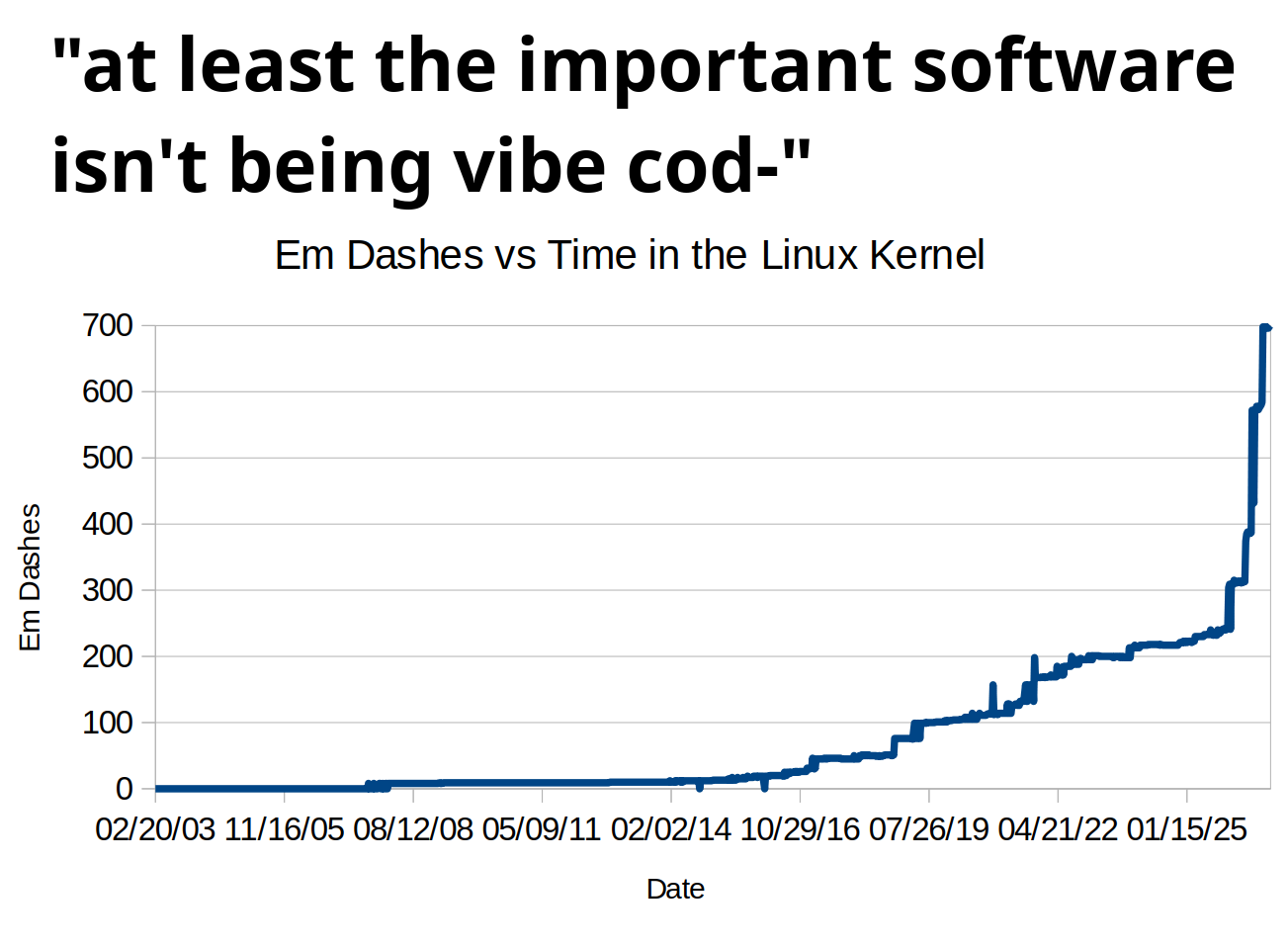
Is that graph actually real/based on data?
Yep, I cloned the git repo and wrote a script to step through commits a week at a time and count the total em dashes in the repo at each point in time
Could you divide this by the total number of lines. That would help tell the rate of change better.
git grep -I '—' master | wc -ljust did a quick check, my graph looks similar.
How does it look for double hyphens? I would expect those to be more common in code comments (before the LLMageddon at least) as an em dash just looks like a hyphen in the typically displayed monospace type.