He or she must enjoy the endless confusion and friction in the interaction with others.
That said, some idiotic IT systems use the US format to. Causes a lot of problems.
I’m in the US and have had problems with C-level douches misreading dd-mm-yyyy dates in some system we had that logged in that format and freaking out (and also missing that the log time stamps were in UTC-0, causing further confusion/freakout)
Anyway, this is part of why I always use yyyy-mm-dd, because nobody will confuse that date string for any other date, and everyone who can understand dates at all will be able to read it.
you should never make the assumption that software you use is smart, or even not complete garbage
…and file managers aren’t the only things that display lists of files. low-level tooling should not be “smart” beyond the most basic sorting without specifically being told first
Then there’s the problem with “smart” sorting like Windows Explorer does: in a folder with hex based naming, such as the gpo policy folders for an AD domain, it blends alphabetic and numeric in weird ways where it treats number strings as whole numbers in the middle, where a123e would show up after a19bc, as an example, even though it should sort first
It’s close, sure, but actually no. That standard currently requires the letter T (and no white-space) between date and time when both are present, and, frankly, that’s ugly and a space should be allowed.
An old version of the standard allowed the space, and GNU’s coreutils seem to have carried on the tradition, so I’m not alone in thinking this.
you should also always specify YYYY-MM-DD because often M and D ignores leading zeros, YY means the 2 digit suffix, and Y… well, i don’t even know what that is but i’m sure it’s something less specific than YYYY
if we’re going to be picky about being clear about things, let’s be truly clear about things
YYYYY would be something like “The Year of Our Lord, Two-Thousand and Twenty-Six” (or probably just “Twenty Twenty-Six”, but the other is more ridiculous so I’ll go with that)
Y would just be “6” but I can’t think of any context where that would ever be used


?
The weird US American Date scheme is not used in most of the world.
I wish. Am European. I know one person that voluntarily uses their date and time formats. For reasons I will never comprehend.
He or she must enjoy the endless confusion and friction in the interaction with others. That said, some idiotic IT systems use the US format to. Causes a lot of problems.
I’m in the US and have had problems with C-level douches misreading dd-mm-yyyy dates in some system we had that logged in that format and freaking out (and also missing that the log time stamps were in UTC-0, causing further confusion/freakout)
Anyway, this is part of why I always use yyyy-mm-dd, because nobody will confuse that date string for any other date, and everyone who can understand dates at all will be able to read it.
D/M/Y > M/D/Y
There is only YYYYMMDD
sadly for everyone that’s factually incorrect, but the phrase DD/MM/YYYY > MM/DD/YYYY does not preclude YYYYMMDD > DD/MM/YYYY > MM/DD/YYYY
your pedantery is apreciated.
Because one lives the other should not long live Y-M-D
NO. You need a character per digit and you always want the leading 0 shown.
YYYY-MM-DD
At least it makes my folders really easy to sort through…
Only if you leave the leading zeros!
…or your file manager is smart enough to do numeric sorting
you should never make the assumption that software you use is smart, or even not complete garbage
…and file managers aren’t the only things that display lists of files. low-level tooling should not be “smart” beyond the most basic sorting without specifically being told first
Then there’s the problem with “smart” sorting like Windows Explorer does: in a folder with hex based naming, such as the gpo policy folders for an AD domain, it blends alphabetic and numeric in weird ways where it treats number strings as whole numbers in the middle, where a123e would show up after a19bc, as an example, even though it should sort first
(Sorry, tangent)
I only objected to the use of “only” in the comment above. I’d like to object to “never” as well.
…And you assume you will only ever look at those files with that file manager forever…
There is no downside to writing the leading zeroes pretty much anywhere except when aesthetics matter (event flyers, etc)
I am a big fan of ISO8601, and I only objected to your use of “only” in the comment above.
ISO 8601 is the only correct way.
It’s close, sure, but actually no. That standard currently requires the letter T (and no white-space) between date and time when both are present, and, frankly, that’s ugly and a space should be allowed.
An old version of the standard allowed the space, and GNU’s coreutils seem to have carried on the tradition, so I’m not alone in thinking this.
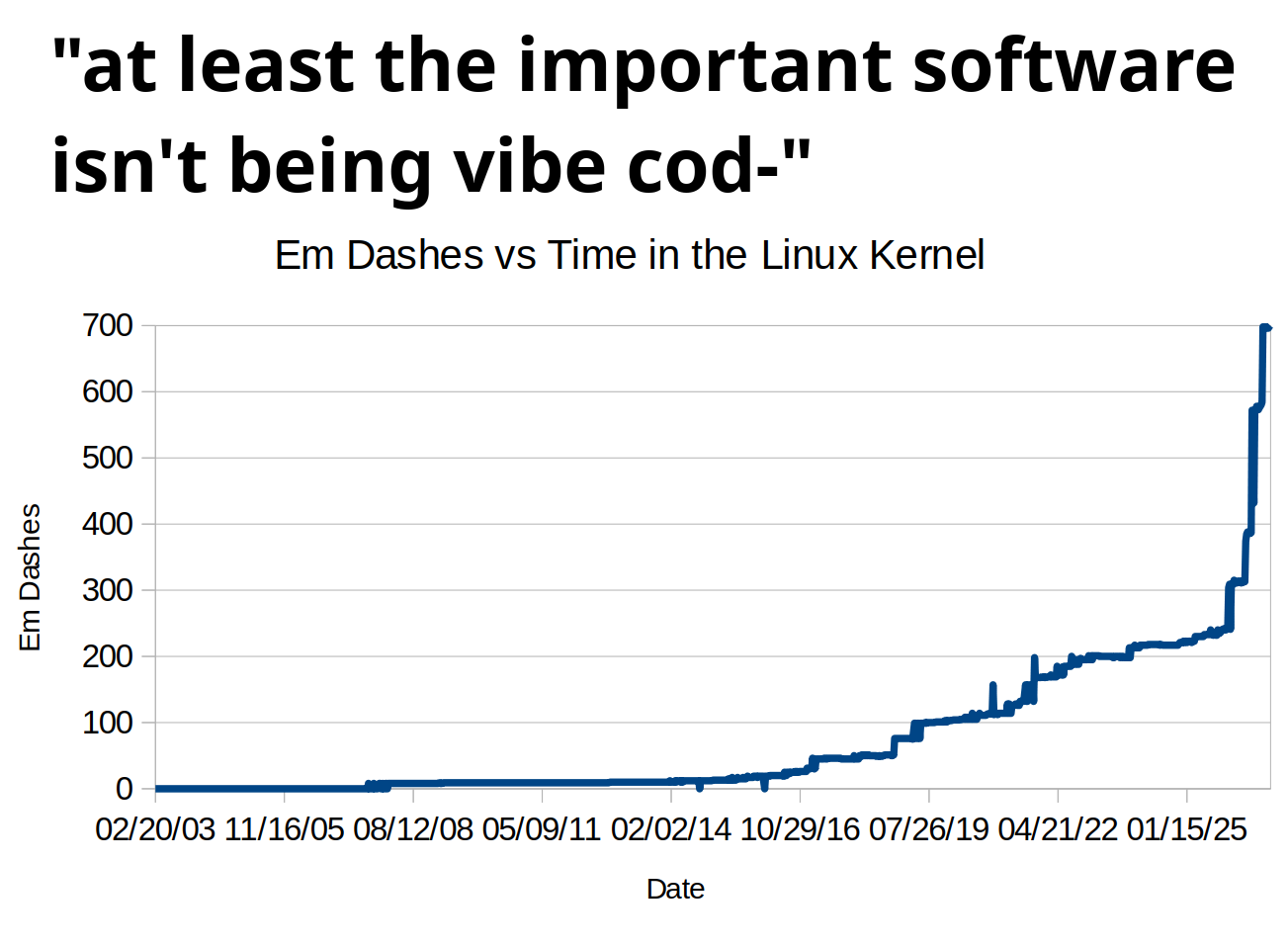
OP’s graph uses slashes.
Dashes would remove all the confusion.
No because it’s the global format that typically uses periods.
D.M.Y (normal)
Y-M-D (superior)
M/D/Y (mental illness)
Mixing up the formats and denominators makes this mess even worse.
you should also always specify YYYY-MM-DD because often M and D ignores leading zeros, YY means the 2 digit suffix, and Y… well, i don’t even know what that is but i’m sure it’s something less specific than YYYY
if we’re going to be picky about being clear about things, let’s be truly clear about things
YYYYY would be something like “The Year of Our Lord, Two-Thousand and Twenty-Six” (or probably just “Twenty Twenty-Six”, but the other is more ridiculous so I’ll go with that)
Y would just be “6” but I can’t think of any context where that would ever be used
Yep, I do it in every format. Just kept it short for readability.
The dates below the graph
What about them? They’re normal dates.
Pretty much only in the US.
Some BS AI “visionaries” keep blurting.